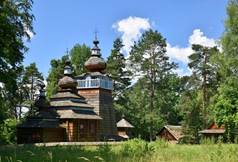
A church in Sanok
Like many Polish Americans, my ancestors lived in a historic region called Galicia, coming from its numerous small villages and towns. Once one of Europe’s most impoverished regions, southeastern Poland is now a captivating destination filled with outdoor ethnographic villages, scenic mountain ranges, aristocratic palaces, and outstanding museums. For those interested in World War II history, the area holds profound significance as the site of Blizna, where the largest SS training camp outside of Germany, Camp Heidelager, was established in 1939, alongside the Pustków forced labor and extermination camp.
Although this trip is easiest to navigate by car, we successfully visited most of these places using only public transportation, supplemented by local taxis, Uber, and Bolt, which are all very inexpensive in Poland.
I have traveled to this region numerous times because my Polish cousins live in the small village of Niwiska, just outside Kolbuszowa. I recommend using Kolbuszowa as your home base for exploring the area. Hotel Dworek in Kolbuszowa is a delightful, modern facility where you can relax and experience how everyday Poles live away from the big, crowded tourist hubs.
The Wooden Architecture Trail
The Wooden Architecture Trail is Europe’s largest initiative dedicated to rescuing historic timber structures from oblivion, and many of its sites are on the UNESCO World Heritage list. Spanning more than 1,864 miles across three provinces in Poland, the trail lets visitors explore precious historic wooden buildings, including churches, chapels, manor homes, and villas.
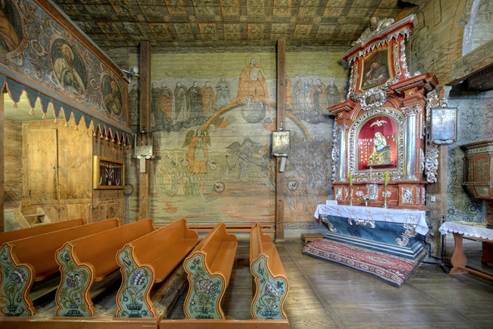
One of my personal favorites is the All Saints Church complex in Blizne, a remarkably preserved wooden landmark with unique interior furnishings. A UNESCO World Heritage Site, this church dates back to 1470 and was once surrounded by defensive walls. It reminds us that in centuries past, churches were not merely places of worship; they also served as vital refuges where local villagers could shelter from raiders, Tatars, and rogue bands of stray soldiers.
In 1674, local villagers successfully repelled a Tatar invasion here, an event commemorated by a nearby shrine on St. Michael’s Hill. The church’s interior walls feature vivid scenes from that battle alongside figurative wall paintings from the 1500s, including a remarkably well-preserved depiction of the Passion of Christ. The pews, confessional, and lectern are decorated in charming traditional folk patterns.
Stepping Back in Time: Poland’s Open-Air Ethnographic Villages
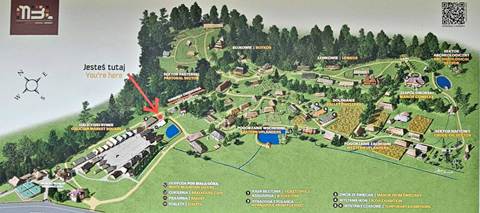
Map of Sanok Skansen
Southeastern Poland is home to two of Poland’s forty spectacular skansens, or open-air ethnographic museums. I like to describe these as “villages that never were,” and they offer an unmatched window into how our ancestors once lived.
To create a skansen, ethnographers and historians locate historic cottages, workshops, and churches slated for demolition or needing relocation. They meticulously dismantle each structure timber by timber and transport it to a large, carefully chosen site for reconstruction. Over the decades, these open-air museums grow as more buildings find a permanent home there. Occasionally, a landmark such as a manor house stood on the original grounds for centuries. The surrounding structures were gathered from across the surrounding region to reflect its dominant historical culture.
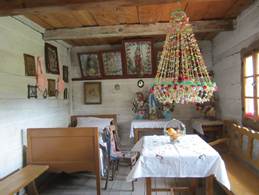
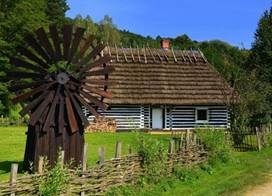
The Museum of Folk Culture in Kolbuszowa
Spanning nearly 75 acres of scenic meadows, ponds, and woodlands near Kolbuszowa, this open-air park preserves the turn-of-the-century rural heritage of the Lasowiacy and Rzeszowiacy ethnic groups. The skansen features more than 80 authentic wooden structures, including thatched-roof cottages, barns, windmills, a watermill, a schoolhouse, a fire station, and the historic St. Mark’s Church. Notably, it also houses Poland’s only surviving wooden Jewish tavern.
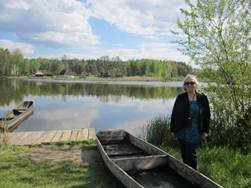
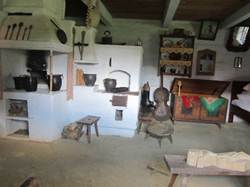
Author visiting Kolbuszowa skansen, in the region where her grandparents once lived and her favorite house with large clay oven and no chimney
The buildings are arranged alongside traditional gardens, orchards, and live farm animals. Inside these preserved homesteads and workshops, thousands of period artifacts, folk costumes, and handcrafted tools bring the everyday domestic life, seasonal traditions, and rural industries of 19th- and early 20th-century Galicia vividly to life.
Sanok Ethnographic Village of Folk Architecture
Sanok’s Museum of Folk Architecture is Poland’s largest skansen and my personal favorite. Visitors can explore roughly 120 historic buildings and gain deep insight into the cultures of the region’s ethnic groups, including the Boykos and the Lemkos. Highlights include three timber churches, an early 18th-century synagogue, an inn, a school, and a fire station. Sadly, a fire in 2026 destroyed one of the museum’s historic wooden churches. While the exact cause has not yet been determined, investigators confirmed the electrical wiring was not at fault.
The museum is laid out geographically so each sector reflects its own distinct regional identity and architectural style. Many cottage interiors are furnished just as they would have been a century ago, while other buildings house specialized exhibitions, including one dedicated to a collection of 200 religious icons.
The Magnificent Łańcut Castle
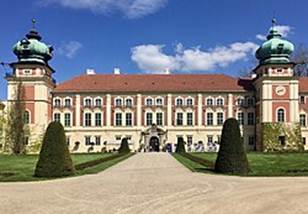
Just a short distance from Kolbuszowa or Rzeszów, the charming town of Łańcut invites visitors to step back in time at one of Poland’s most magnificent aristocratic residences: Łańcut Castle. Set within an expansive, manicured English-style park complete with a vibrant Orchid House, this 17th-century magnate palace survived World War II remarkably intact, offering a rare glimpse into the opulent lifestyle of the Polish nobility.
Inside, guests can wander through a dazzling sequence of lavishly decorated rooms, from rococo salons and grand ballrooms to private royal suites. Beyond the palace walls, the estate’s historic stables and coach house showcase one of Europe’s finest collections of antique horse-drawn carriages. Just steps away stands the town’s beautifully preserved 18th-century synagogue, rounding out a rich cultural and historical stop.
A Polish Ornament Factory and “Museum Bombki Choinkowej”
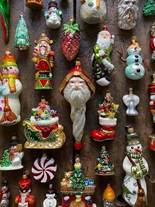
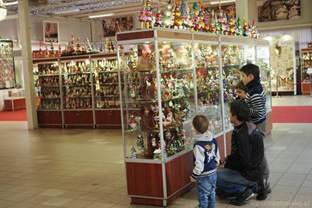
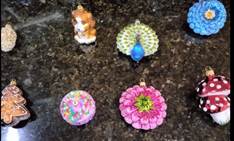
Not far from Kolbuszowa, in the town of Nowa Dęba, sits a delightful Christmas ornament factory and museum. Founded in 2012 by Janusz Biliński, a longtime producer of hand-painted glass decorations, the museum began when he started collecting vintage ornaments so future generations would not forget these timeless crafts. Biliński’s treasures now adorn the museum’s towering old Polish Christmas tree, alongside thousands of ornaments produced in his factory over the years.
The artisans welcome visitors to watch their delicate glassblowing and hand-painting work, and you can buy their creations on-site at wonderful prices. They also create custom pieces; they personalized several ornaments for my husband and me, which now hang on our tree at home.

A Walk Through Wartime History: Blizna Historical Park
Visiting the Blizna Historical Park is a fascinating and deeply moving experience, especially for anyone interested in World War II history, technology, and covert operations. It holds profound personal meaning for me because my great-grandparents lived right here inside what became Camp Heidelager, the largest SS training camp outside Germany. My Cudecki great-grandparents, like many locals, were forced to abandon their homes and move elsewhere. They found an abandoned home far outside the camp boundaries.
The Pustków concentration camp and Germany’s secret V-2 rocket program were all centered in this immediate area. Blizna served as a top-secret German V-2 rocket testing and launch facility. Following the Allied bombing of Peenemünde (Germany’s main rocket center) in 1943, the Germans relocated much of their testing eastward into the secluded forests around Blizna. It quickly became one of the most critical sites for developing and testing the V-2, the world’s first long-range guided ballistic missile, a terrifying weapon intended to turn the tide of the war in Germany’s favor.
The V-2 program was a technological marvel for its era and later laid the groundwork for postwar rocketry, including both the U.S. and Soviet space programs. Many of those pivotal test launches took place right here in Blizna.
Before long, the Polish Home Army (Armia Krajowa, or AK) uncovered the facility’s purpose and launched daring intelligence operations against it. Resistance fighters collected rocket fragments, documented technical details, and smuggled vital intelligence to the British. My own great-uncle and several cousins served in the Polish Home Army, risking their lives in surveillance, sabotage, and espionage. I am endlessly proud of them, and you can read about their real-life heroism in my novel, War and Resistance in the Wilderness: A Novel of WWII Poland.
One of the resistance’s most famous triumphs was Operation Most III (“Operation Wildhorn III”), a bold mission that transported captured V-2 rocket components from Poland to Britain via a secret makeshift airfield. Thanks largely to intelligence gathered at Blizna, the Allies gained crucial insight into German missile technology, helping them prepare defenses against the V-2 attacks on London and Antwerp in 1944 and 1945. At the same time, the massive German installation brought immense suffering to local residents through forced labor, mass displacements, and brutal hardships the museum thoughtfully honors.
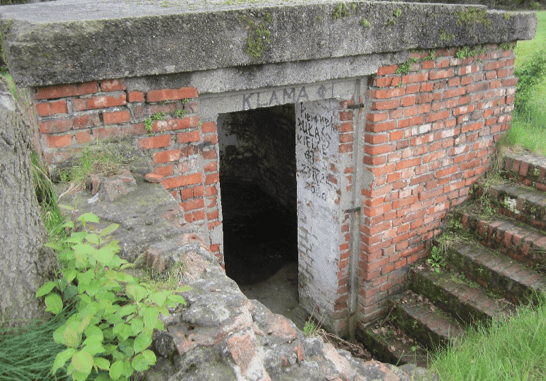
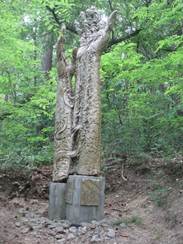
Bunker at Blizna and WWII Memorial Park at Pustkow
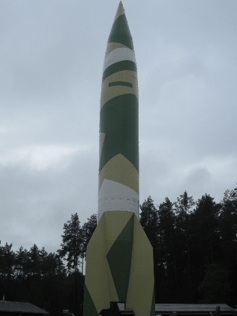
Carefully arranged within the actual forested grounds of the wartime base, the Blizna Historical Park features reconstructed launch ramps and bunkers, life-size replicas of a V-2 rocket and other experimental weapons, and exhibits detailing the Polish underground’s intelligence work through photos, artifacts, and documents. Walking the forest paths among the bunkers makes it easy to imagine the secretive wartime operations that unfolded here. Blizna and Pustków are located about 31 miles northwest of Rzeszów.
Ulma Family Museum of Poles Saving Jews in World War II
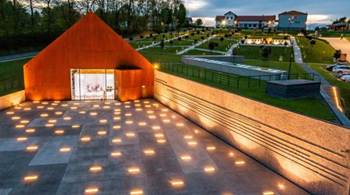
A poignant stop for travelers exploring the Subcarpathian region, the Ulma Family Museum in the quiet village of Markowa offers a deeply moving window into wartime courage. Located just a short drive east of Rzeszów, this striking, modern architectural landmark mirrors the silhouette of a traditional village cottage, anchoring a space dedicated to ordinary Polish citizens who risked everything to shelter their Jewish neighbors during the Holocaust.
Visitors step inside a dimly lit, contemplative gallery centered around a life-size glass replica of the home where Józef and Wiktoria Ulma hid eight Jewish neighbors before they were all tragically executed by German forces in March 1944. Through intimate family photographs taken by Józef himself, personal artifacts, and English-friendly multimedia displays, the museum brings their story vividly to life before leading guests outside to reflect along the illuminated plaques of the memorial plaza and the peaceful neighboring Orchard of Remembrance.
The entire Ulma family, including their unborn infant, has been beatified by the Roman Catholic Church. Their story is unforgettable and shows visitors how far-reaching the Holocaust was across rural Poland.
Roots and Timber: A Walk Through Kolbuszowa
Visiting Kolbuszowa offers a charming glimpse into the heritage of Poland’s Subcarpathian region. After settling in at Hotel Dworek, start your walk in the revitalized Market Square, where a bronze crocodile sculpture greets you. This unusual town mascot stems from a beloved local legend tied to the small river flowing through town, appropriately named the Nile. According to local lore, a nobleman from a nearby estate once brought a live crocodile back from Egypt and released it into Kolbuszowa’s Nile to acclimatize it. Although the reptile could not survive the Polish winter, the story endured and inspired the statue in the square.
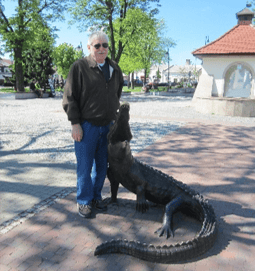
My husband, Mark, with the Kolbuszowa Crocodile and the well in the background
Just steps away stands another historic landmark, the Old Town Well, originally built in the 1880s and carefully restored as a centerpiece of the square. Throughout Kolbuszowa, you will also spot the town’s distinctive official flag. According to local historical accounts, its emblem originated around 1785. At that time, Kolbuszowa was divided into separate Catholic and Jewish administrative communities, each with its own seal. When they unified their municipal administration, they merged their symbols into a single coat of arms showing a Christian and a Jew shaking hands between a cross and a Star of David. Prior to World War II, Jewish residents made up half of Kolbuszowa’s population.
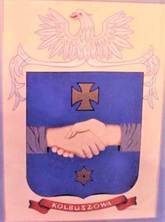
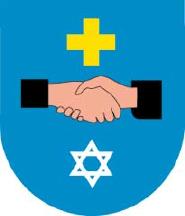
Towering over the town’s skyline is the Collegiate Church of All Saints, a stately Baroque-style brick church dating back to the mid-18th century. Though devastated by a great fire in 1852 and consecrated in its current reconstructed form in 1933, it still preserves late-Baroque side altars. It houses the underground burial crypts of the aristocratic Lubomirski and Sanguszko families.
Nearby on Piekarska Street stands the renovated 19th-century Jewish synagogue. Severely damaged during World War II, the brick building has been thoughtfully restored. It now keeps the memory of Kolbuszowa’s once-thriving Jewish community alive through exhibitions and cultural events.
To round out a day of sightseeing, enjoy a hearty, nostalgic meal at Restauracja C.K. “Galicja” on Mickiewicza Street. The restaurant immerses guests in a cozy, old-world atmosphere decorated with works by local artists. It is a favorite stop for sampling authentic regional classics, from bowls of Galician żurek soup to their signature pierogi kolbuszowskie stuffed with cheese, potatoes, sausage, and bacon. If you have the chance, ask to meet the owner, who is a noted local historian of World War II.
A Hidden Gem in Poland’s Forests: The Hupka Manor House in Niwiska
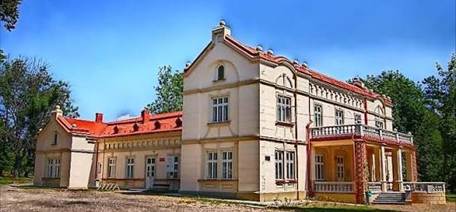
Tucked away in the nearby village of Niwiska is the historic Hupka Manor House. After passing through several prominent noble families, Franciszek Hupka acquired the estate in the mid-19th century, replacing an older wooden manor with the present two-story brick residence. In 1896, his son, Dr. Jan Ernest Hupka, a lawyer and Galician political figure, expanded the house with a southern wing, an entrance porch, and classical pillared arcades.
Inside, visitors can still admire whimsical Art Nouveau murals by the renowned artist Karol Frycz, including a former dining hall adorned with sweeping peacocks, as well as smaller chambers decorated with delicate poppies, crows, roosters, and seasonal allegories.
During World War II, German forces evicted Jan Hupka and quartered SS units on the property to oversee the nearby V-1 and V-2 missile operations in Blizna. Later, following the Soviet takeover of Poland, Hupka lost his estate entirely and died in poverty. After the war, the building served variously as a school, post office, and cinema before being entered into the register of monuments in 1978. Following a 2011 revitalization that uncovered historical friezes and restored original flooring, the manor now thrives as a vibrant community and cultural hub housing a library, a community center, and the Niwiska School of Music. Visitors can also stroll the park’s historic beech-and-hornbeam alley to admire a striking Neo-Gothic brick granary and the nearby 1880 St. Nicholas Parish Church.
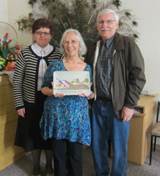
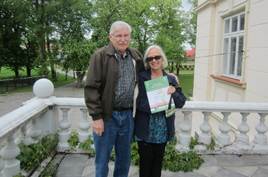
When I visited in 2026, the mayor and director of the Hupka Community Center graciously gifted me the village book and a plate with the Hupka peacock because my grandfather had worked there before WWI as a gardener and groom for Lord Hupka’s horses.
Practical Tips for Your Visit
Transportation: You can easily reach Kolbuszowa by train or bus from Kraków or Warsaw. Europe is famous for its modern, efficient public transit, and Poland is no exception. I have come to appreciate both FlixBus and NeoBus for regional travel, and you can easily reserve seats online in advance. Choosing between a bus or a train usually just comes down to which schedule fits your itinerary best.
Language: Like many visitors to Poland, I speak only English and about ten polite words of Polish, yet language has never been a barrier. Many younger Poles and nearly everyone working in the hospitality and travel industries speak wonderful English. When they do not, your smartphone will come to the rescue. Open any translation app with a conversation mode and set it to translate back and forth between Polish and English. It creates a remarkably smooth conversation with a shop clerk or museum guide. I still smile remembering a train ride where I demonstrated this to two Polish women sitting beside me; they were completely amazed!
Money: Poland’s currency is the złoty (PLN). While some places might accept foreign currency, you’ll get a poor exchange rate. I recommend using a credit card with no foreign transaction fees for almost everything, as hotels, restaurants, stores, and museums widely accept them. That said, it is smart to withdraw a small amount of złoty from a bank ATM upon arrival. Break a larger bill at a grocery store so you have coins and small notes on hand for street vendors, remote gift shops, or the occasional public restroom that requires a small fee.
Books by Donna B. Gawell
Rachelle’s Hidden Star (release on February 9, 2027). When a genealogy test reveals a hidden Jewish bloodline, journalist Eva Novak uncovers a labyrinth of wartime family secrets, sacrifice, and survival in WWII Poland.
Our Polish Ancestors: The Cultural History of the Polish People from the Middle Ages to WWI. An illustrated look into the daily lives, traditions, social history, and resilience of everyday Polish ancestors from the Middle Ages through World War I.
Our Galician Ancestors: The History and Culture of the People from Poland and Ukraine from the Middle Ages to WWI. A richly photographed exploration of the customs, village life, and complex history of the Polish and Ukrainian people who called historic Galicia home.
Poland at Your Pace: A Mature Traveler’s Guide. A practical, thoughtful companion for independent travelers covering transportation, accommodations, WWII memorials, ethnographic villages, and helpful travel tech across Poland.
War and Resistance in the Wilderness: A Novel of WWII Poland. Based on true family history, this novel follows Polish Home Army resistance fighters risking their lives in espionage and sabotage around the secret V-2 rocket base at Blizna.
The Young Rescuers: Inspired by true events, young cousins invisibly slip through occupied Poland to help their ancestors and a convent of sisters rescue Jewish infants under the constant threat of Nazi reprisals.
The Young Partisans: A Time Travel Adventure in WWII Poland. A young-adult time-travel adventure adapted from War and Resistance in the Wilderness, introducing younger readers to real-life courage in occupied Poland.

