Dedicated to my historical novels: War and Resistance in the Wilderness, In the Shadow of Salem, The Young Partisans and History, and Travel to Europe and Australia
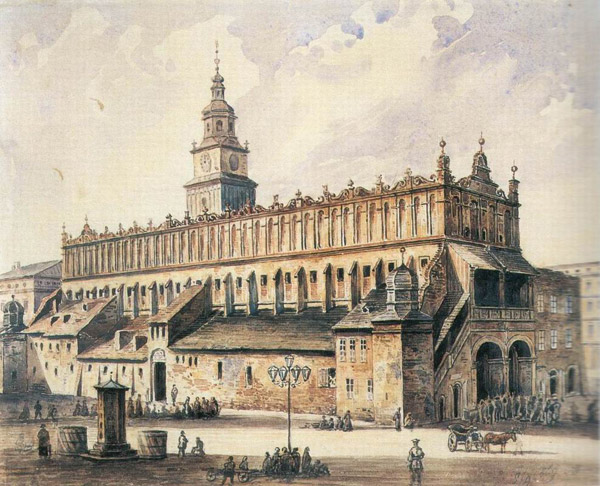
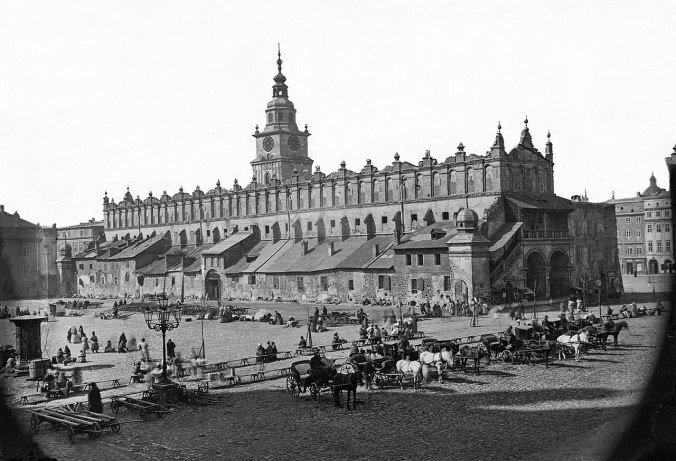
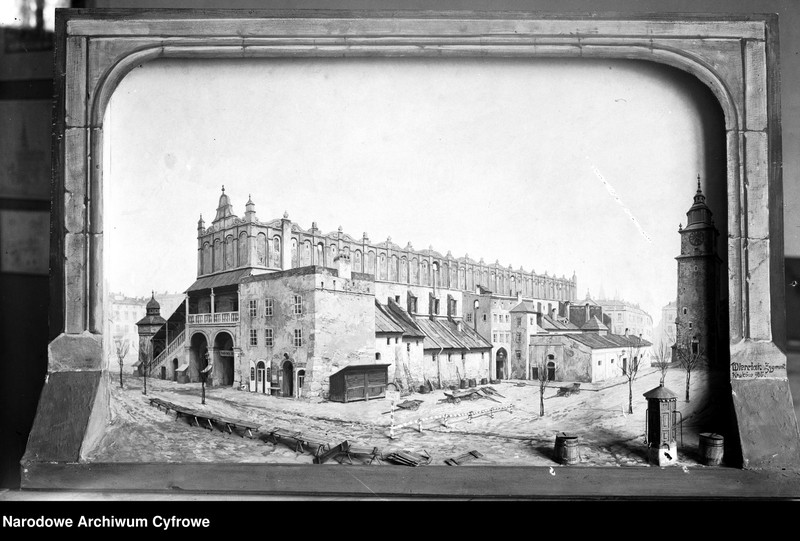
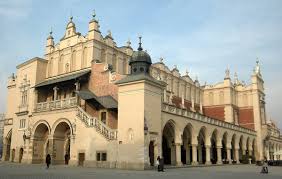
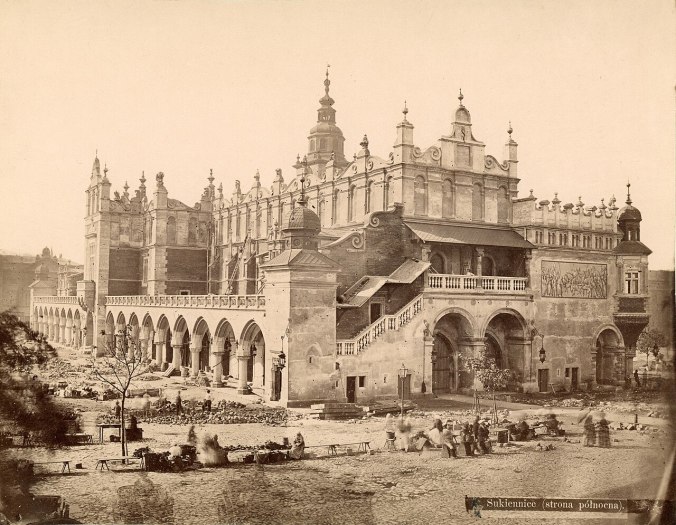
For centuries, the Cloth Hall, also known as the Sukiennice, has stood at the center of Kraków’s Rynek or main market square, welcoming merchants, students, kings, and travelers. Few buildings in Europe combine so much history, architectural beauty, and living tradition in one place. When you walk beneath its arches today, you’re experiencing a marketplace that has been operating for more than 700 years.
Cloth Hall is perhaps the most spectacular site in the town square, and St. Mary’s, the magnificent 800-year-old basilica, sits opposite it. The medieval town hall tower lies on the other side, providing great views and photo opportunities.
A Marketplace Born from Medieval Trade Routes
Kraków’s rise as a trading hub began early. The city sat at the crossroads of major medieval trading routes connecting Western Europe with the kingdoms of Ruthenia and the Black Sea, and the Baltic region with Hungary and the Mediterranean.
By the late 13th century, shortly after the city was rebuilt on a new grid plan under Magdeburg Law, a covered market hall stood in the center of the enormous Main Square. King Boleslaw the Bashful (1243-1279) is often credited with the design of the city square.
Merchants from England, Flanders, Germany, Italy, and the East passed through Kraków, making the town one of the major commercial stops in Central Europe. It is also believed that the counters’ exteriors provided lodging for traveling merchants.
The Gothic Hall and Medieval Trade
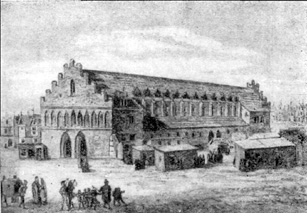
The earliest Cloth Hall was a long Gothic-style building with market stalls lining a central passageway. Here, cloth merchants sold English broadcloth, Flemish linen, and local Polish textiles. The hall also served as a customs point where city officials inspected and taxed imported goods. Sukiennice, which literally means “little cloth shops”, quickly became the economic heart of Kraków.
But it wasn’t just cloth that moved through Kraków. Records from the Middle Ages show an astonishing variety of merchandise:
Baltic amber
Hungarian copper and lead
Spices and leather goods from southern Europe
Beeswax, salt from the Wieliczka mine, and metalwork
A devastating fire in 1555 allowed Kraków to rebuild the Cloth Hall in a more elegant style. Under the influence of Italian Renaissance artists and architects working throughout Poland, the Sukiennice gained a beautifully decorated attic parapet (a low wall that runs along the edge of the roof), with carved faces and ornate details. It was also given a grander, more harmonious façade and improved interior stalls.
This Renaissance reconstruction created the iconic appearance most visitors recognize today. It also reflected the prosperity of Kraków’s Golden Age, when the city was home to the royal court, wealthy guilds, and a thriving university.
From Prosperity to Decline
The fortunes of Kraków changed over the next few centuries. Wars, invasions, and shifts in European trade routes brought economic decline. By the 18th century, the Cloth Hall had grown shabby and outdated.
Everything changed in the 19th century. During the era of the Austrian Partition, when Poland no longer existed on the map, Kraków’s leaders set out to restore the Sukiennice as a symbol of Polish pride and cultural identity.
The Great 19th-Century Restoration
Between 1875 and 1879, Architect Tomasz Pryliński was contracted to redesign the exterior in a stylish Neo-Gothic manner. He created elegant arcades along both sides, and the interior was reorganized and repaired.
The upper floor became home to the National Museum’s Gallery of 19th-Century Polish Art, the first national museum in Poland. This transformation solidified the Cloth Hall as both a cultural institution and a marketplace.
Sukiennice Today
A visit to Kraków wouldn’t be complete without stepping inside the Cloth Hall. Today, it remains a vibrant working marketplace and center for art and culture. The main hall still hosts rows of stalls, many run by artisans selling Polish folk art, amber jewelry, wooden carvings, embroidered linens, and other traditional crafts. In many ways, the Cloth Hall continues the commercial traditions of the medieval merchants who once worked here.
Upstairs, the National Museum displays some of Poland’s most important 19th-century paintings. Visitors can view dramatic historical scenes, romantic landscapes, and portraits that capture the spirit of the era.
A Window Underground
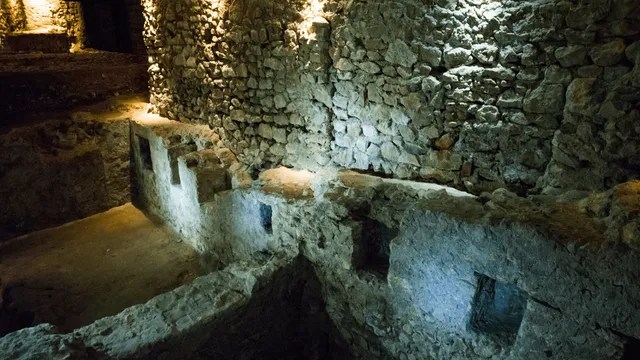
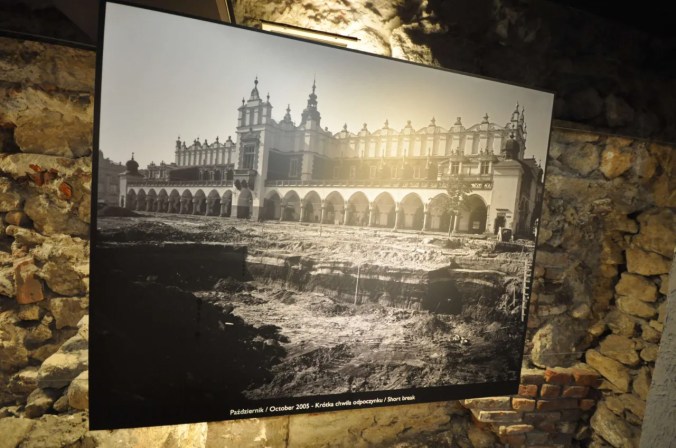
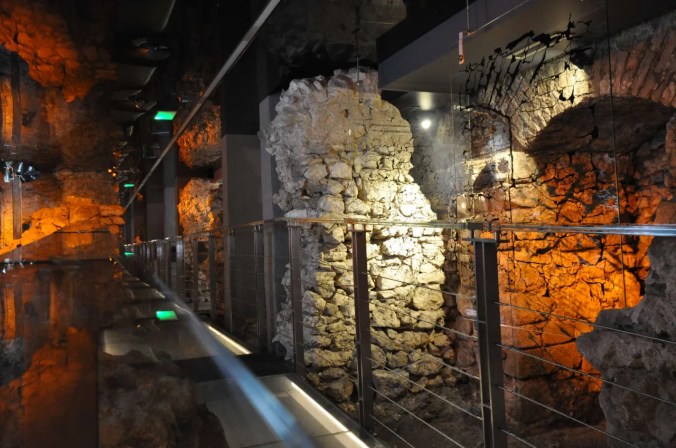
Beneath the building, the Rynek Underground Museum reveals the preserved foundations, stone roads, and merchant installations from medieval Kraków. It is one of the most fascinating archaeological museums in Europe. The entire town square was excavated from 1974 to the early 2000s.
The museum lets visitors walk through 800 years of Krakow’s history in a single underground corridor, revealing how the bustling market square evolved from a modest trading post to a Renaissance hub. You can see the foundations of the medieval town hall that burned down in 1498. The archaeologists found skeletal evidence of vampire burials that are on display.
More than anything, the Sukiennice brings together the threads of Kraków’s identity, trade, culture, architecture, and community into a single, beautifully preserved building.
If you are interested in the history of the Polish people, please check out my newly released book on Amazon: Our Polish Ancestors: The Cultural History of the Polish People from the Middle Ages to WWI. https://www.amazon.com/dp/B0G2GN43RH
Imagine traveling back to the centuries when our Polish and Ukrainian ancestors lived. “Our Galician Ancestors,” published in January 2024, provides fascinating information about the people who once lived in Poland and Ukraine. The book discusses their homes, dress, foods, and social customs and events through historical facts, stories, and pictures. It also explains their complex social, cultural, and political world and why many chose to immigrate.
The author’s comprehensive research and numerous trips to Polish museums, churches, and ethnographic villages allow the reader to understand all aspects of their ancestors’ lives, from the earliest inhabitants to just before World War I. Most ancestors were peasants and lived in extreme poverty and oppression but kept the spirit of independence in their hearts. The many full-color photos in this book will transport the reader to the wooden homes, churches, markets, and peasant villages typical of our ancestors.
The book is available in both paperback and eBook format:
Chapters include:
The history of our ancestors from the earliest time to WWI.
Serfdom
Family life and children
Marriages and weddings
Life on a typical farm and the houses
Clothing
Market days
Education
Holidays and holy days
Superstitions and Ancient Rites
Sickness, epidemics, and plagues
Death, funerals, and cemeteries
Art, Music, and Literature
The Elite and Landowners
The Jews in Poland and Ukraine
The German Colonists in Galicia
What Other Europeans and Americans thought of Galicia
Beekeeping and Mushroom Hunting
Immigration to the USA and Canada
Visiting the land of your ancestors
Donna Gawell and Mark, her husband, are descended from Polish immigrants. Donna’s grandparents came from Niwiska, a small village in Poland, in the early 1900s. She found her Polish cousins in 2015 and has visited them several times. Mark’s grandparents came from Ukraine and the Polish villages of Lutcza, Zawoja, and Bielsk.
Please visit Donna Gawell’s website, http://www.DonnaGawell.com, for more information on Poland, World War II in Poland, and travel to Poland and other exciting destinations.
Walking between the Cloth Hall and Saint Mary’s Church in Krakow, visitors may not realize that hidden under the ground is a treasure trove of knowledge about Kraków’s past. To discover it, you just step down into the Medieval Rynek (town square) below Cloth Hall.
The establishment of this interactive exhibition began with the archaeological study conducted from 2005 to 2010. There, researchers discovered traces of the many centuries of history. An archaeological reserve unique in Europe, covering nearly 43,000 sq. ft, was fashioned under the surface of the Rynek to provide a display for the treasures.
The Rynek Underground exhibition presents the connections between the city and medieval Europe’s chief centers of trade and culture and portrays the significance of the capital of Poland in the operation of the Hanseatic League. The historical objects on display are proof of the European cultural and trade exchange that continued here for hundreds of years. The tourist route under the Main Market Square leads between the stone and brick walls of the cellars and stalls of former trading sites, the Great Scales, and the Cloth Hall.
The exhibition shows medieval tools, historical coins, clay figures, decorations, dice, and toiletry articles used over 600 years ago, together with the Tartar arrowheads, beads, and medallions from the Orient.
Visiting the tourist route in the Rynek Underground, one can also become familiar with the history of Kraków from before the city’s foundation. A picture of the pre-charter settlement destroyed during the Tartar raid of 1241 emerges from the original foundations of cottages from the late 12th and early 13th century, as well as reconstructions of goldsmiths’ and blacksmiths’ workshops. The oldest history of the site is shown in reconstructions of 11th-century burials. The visitor will also learn about the vampire burials found during the excavations. Yes, vampires!
Visitors are immersed in Kraków’s Medieval market’s hubbub of bargaining. The exhibition is enriched with interesting models and multimedia – touchscreens, holograms, projections, and documentary films presented in the spaces of the cellars under the Cloth Hall arranged especially for that purpose.
The Book of Crafts
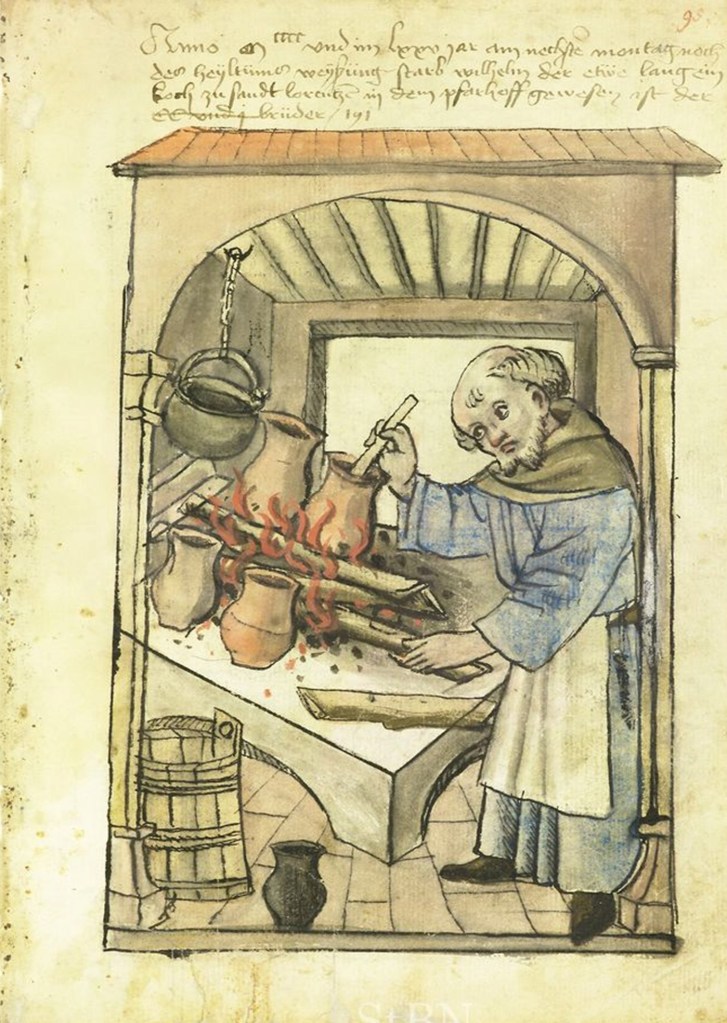
In 2023, I twice visited Kraków’s Rynek’s Underground Museum. Especially impressive was an electronic book displaying “The Book of Crafts,” pictures from the 1400s of men engaged in their skilled jobs. I carefully photographed all of them. On my return visit, I inquired about the origins of the pictures representing craftsmen from the Middle Ages. No tour guide had any information, nor was there any explanation.
Searching online for “The Book of Crafts” revealed nothing about this book. I then discovered what the museum called “The Book of Crafts,” a manuscript created in 1426 by Marquard Mendel (1425-1438). He was the caretaker for “The Twelve Brothers House Foundation,” founded by his ancestor, Konrad Mendel, in 1388.
In 1388, the wealthy merchant Konrad Mendel built a retirement home to accommodate twelve old Nuremberg craftsmen needing job training. He equipped the enterprise with enough capital for permanent management to train these men and future “brothers” with employable skills.
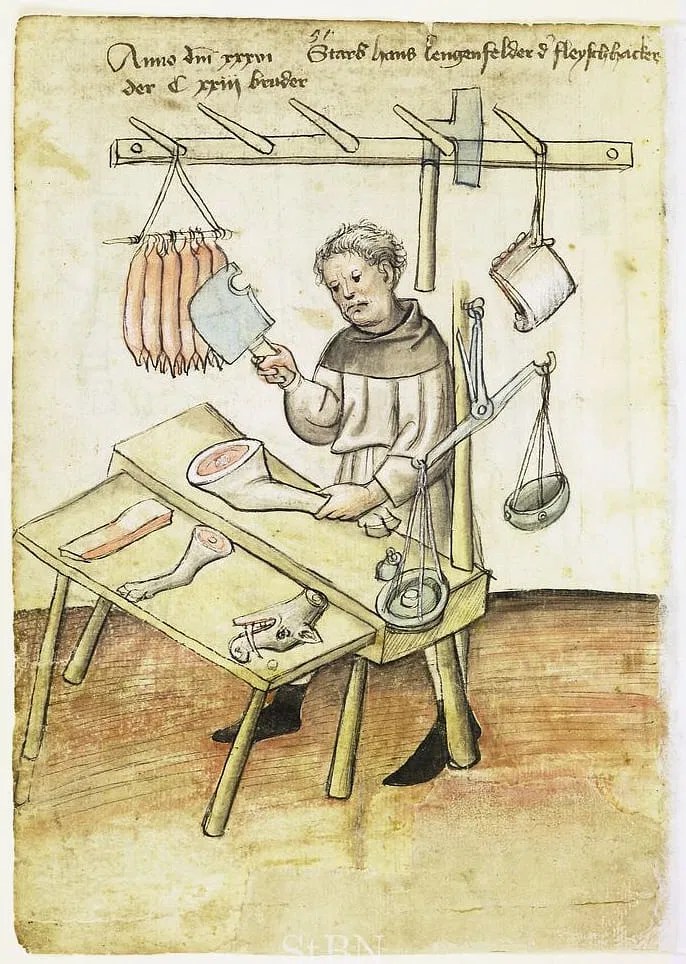
Since around 1425/26, every “Mendel brother” has been depicted in 765 pictures that have been restored and carefully preserved. The pictures show the brothers practicing their craft, with authentic descriptions of the manufacturing processes, tools, workshop equipment, materials, and products. Initially, only the brothers’ names and biographical data were included, but expanded in later centuries to include short biographies.
These pictures from the Middle Ages portray workers from central European towns and cities such as Prague, Krakow, Nuremberg, etc., who traded and learned from their interactions and travels. The ones in this article are from the 1400s.
Hans is cutting meat and selling other products, such as sausages. The job of butchering animals created a lot of smell and waste. Towns regulated where they could process the meat.
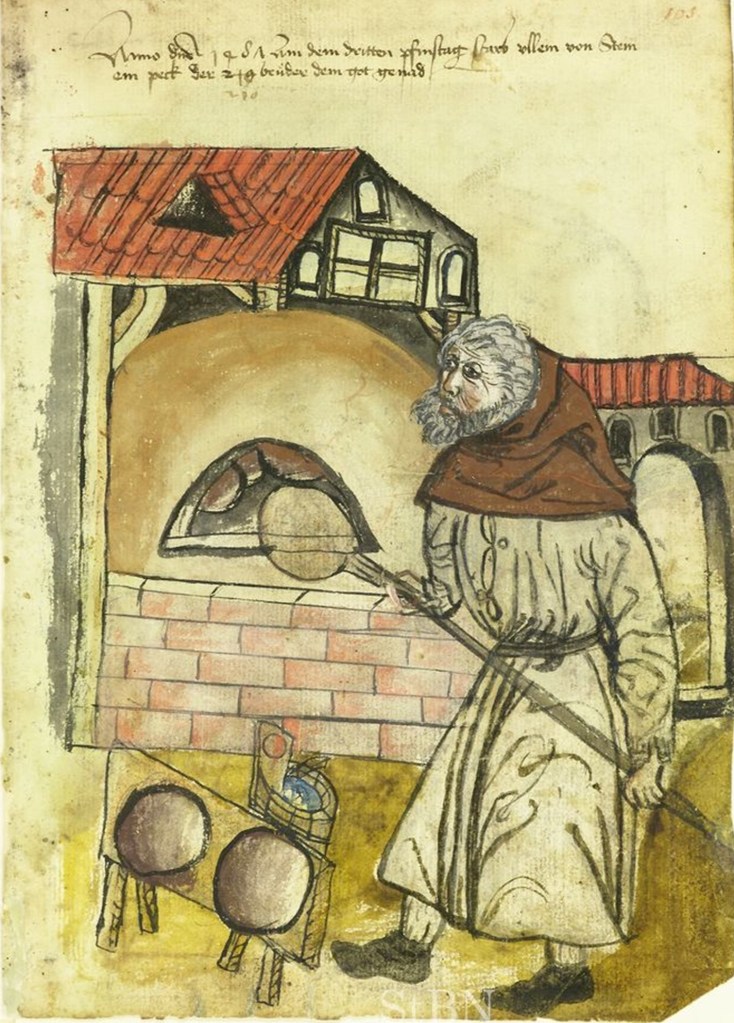
Ulrich, the baker, stands in front of his brick oven and takes out baked loaves of bread with a baking shovel. Below is a pail with water, and two loaves of bread lie on a somewhat unfortunately rendered storage table.
My sweet daughter bought me two prints of Polonia’s historical dress that were very impressive. Images such as these were painted by the famous painter of Polish history, Jan Matejko.
Polish Peasant Clothing by Matejko 1492-1497
My previous research told me that these people in the painting likely were not the class of Poles from which I descended. The reality of my Galician ancestors living under serfdom until 1848 in the remote villages of Poland wasn’t correctly portrayed in the finely tailored clothing of these more aristocratic or wealthy landowners. This elite class of Poles typically didn’t immigrate like my ancestors did, and why would they? Life was quite lovely for the landowners. Now, if I had a photo or painting of my ancestors from the 1800s, what would they look like?
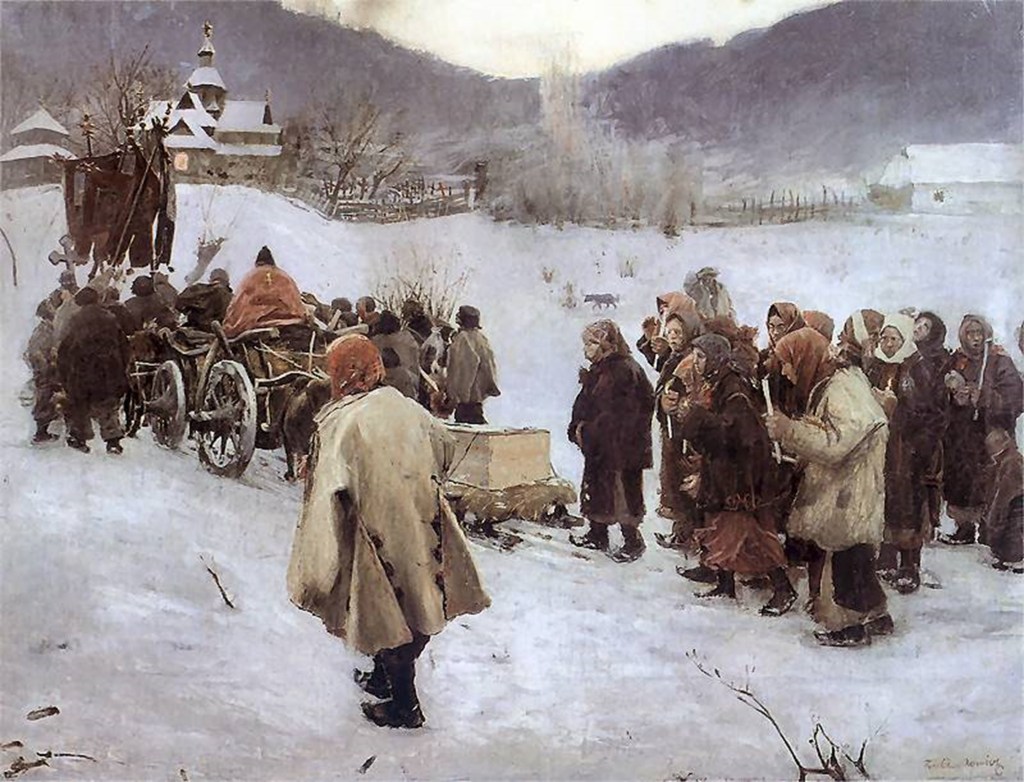
Hutzel Funeral painting by Teodor Axentowciz 1882
An article written for the Pittsburgh Dispatch in 1892 describes the two different worlds the visitor discovered in what was then Galicia in the Austrian Hungarian Empire. The author of “Wakeman’s Travels,” assumed to be Mr. Wakeman, was visiting the new petroleum fields of Austria. Describing the oil fields that were dug by hand as primitive, he noted that the Polish and Ruthenian peasants earned about 36 cents each day in the oil industry. In addition, they were given a daily allowance of cordwood for their fuel. That was far more than the average Pole in the villages of Galicia, who earned about twelve cents each day.
Peasant clothing 1507-1548
Wakeman also went to Galicia “to study the lowly” in their “purely peasant villages.” Of course, he was a guest at several manor houses of noblemen and gentlemen farmers, so Wakeman saw the people through their employers’ points of view. His condescending description of the laboring peasantry of the villages and those who served at the homes of the gentry reflects the arrogance of many from the elite and educated British class.
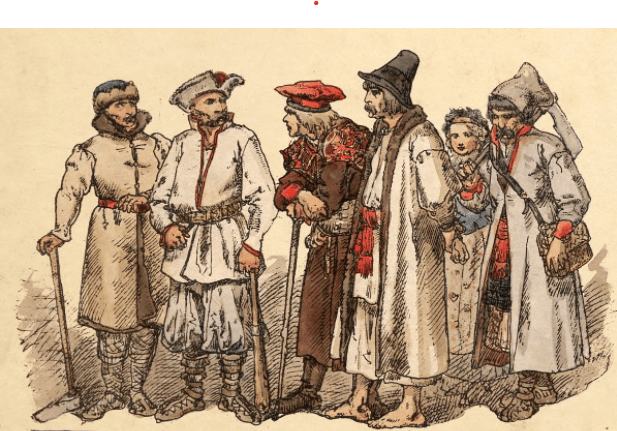
Galician Poles near Sanok around 1840
Wakeman describes the servants as “even more soddenly stupid and servile” than the laboring peasantry of the villages. Their physical appearance also doesn’t impress the author, saying,
“He is a curious-looking fellow. His hair is cut either straight across his forehead, or to a spear-like point upon it, and grows like a lion’s man about his shoulders and neck.
Dressed like Robinson Crusoe
His head covering is a mangy fur hood, often of squirrel skill with the tail dangling loosely upon his shoulder, or of sheep or goatskin with the fleece side next his head. A sort of greatcoat or robe hangs loosely from his shoulder to below his knees. This is of the skin of some animal, with the fur or hair next the body. The reversed exposed side is covered with ancient layers of grease for protection against the snow and rain. If he possesses undergarments of any sort, they are shreds of rags stuffed with chaff and straw.
Peasant costume by Jan Matejko1548 – 1572
He usually wears stockings of the heaviest and coarsest material, and high-legged pointed shoes of huge proportions. For not only are the precious hose protected by ropes of straw wound from above the knee to the ankle, but enough chaff and wisps of straw participate in occupancy of his cavernous shoes to provide sufficient warmth. Aside from this unique garb, his beard stands out from his face a massy, wiry chevaux-de-frise (a wooden defense with protruding sticks), in which enough straw and chaff have lodged to provide an adequate “comforter” for his face and neck.”
Peasant costume by Jan Matejko1548 – 1572
Wakeman described the Ruthenian woman as having “some odd ideas of dress.”
“The material is usually of coarse linen. Her gown, which is in reality her chemise, is open from neck to knees and is belted in loose folds about the waist. Another curious and distinguishing article of dress is her woolen apron. She is never without this, but it is worn behind, never in front. She has no stockings or undergarments but her feet are shod like her husband’s- with pointed and laced moccasins. Her head in winter and summer is always bound in a gaudy handkerchief, but she possesses no other article of clothing whatever, except a sheepskin coat for winter use. What she lacks next her skin she makes up in ornamentation. I have counted more than a score of brass ring on the fingers of her two hands. Her earrings of hollow brass would hold enough oil to light the family fireside for an evening; and her necklace of glass or imitation coral beads, coiled a half dozen times about her by no means charming neck, is always yards in length.“
Wakeman, to his credit, was shocked that the peasant servants in Poland were treated so poorly.
“Whenever my host and I moved about the estates, these white slaves first bent and kissed the hems of our great coats and then stood with bared head in silence until we had passed. No doubt this sort of thing gives the master a grand czar-like feeling, and it is lording it cheaply besides.“
The Galician female was responsible for the arduous task of producing the coarse linen from flax for everyday clothing. Starting in October, she worked with the flax by hackling (cutting), drying, and soaking. Spinning the yarn would wait until the winter. Sewing and embroidery kept them busy once the local weaver returned the woven cloth. Although ready-made clothing could be purchased at the town markets, homespun linen was still used for bedclothes and simpler dresses.
Unmarried young women worked on their wedding garments for the years preceding marriage. If she died prematurely, the youth would be buried in that garment.
Wakefield’s comments about the lack of underwear for women appear to be true. In Peasant Maids, Christiane Harzig mentioned a recent Chicago immigrant who noted that underwear was “not popular in the Polish countryside” and remembered underwear as the first time she ever felt warm. Underwear must have been worn by some. Jan Słomka, a man who wrote one of the only books on life during and after serfdom, refers to them as smaty, “rags,” or “slip-ons.”
Ethnographic interpreters from the 1950s at a museum
Jan Słomka’s important book “From Serfdom to Self-Government: Memoirs of a Polish Village Mayor, 1842-1927” details many aspects of life under and just after serfdom. His contemporaries were illiterate or certainly didn’t have the time or inclination to write such an amazing resource for historians. Słomka states (translated from Polish),
“We wore whatever clothing we could make at home. From ancient times, men’s dress in summer consisted of a shirt reaching down over the trousers to the knee, and a sleeveless vest. Women and girls also put on sleeveless vests over their shirts in the summer, or threw on a shawl; they also wore aprons of homespun.
Married women wore colored caps made from store-bought material, sometimes tying a kerchief on them, especially if the cap was old and worn. Girls went to weddings with bare heads, their hair woven in braids that fell down to their shoulders, adorned with ribbons, roses, periwinkles, and various other flowers.“
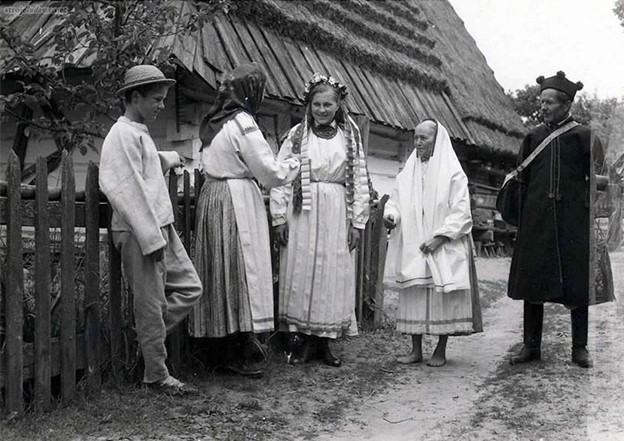
Polish women probably in the early 1900s. Note they are all barefoot.
Słomka’s observations agree with Wakemans in some respects. In all the photos and paintings, we see impoverished people who typically owned few clothing items and went barefoot in better weather. Everything in life was functional, and they purchased only essential items at the town market, stores, or from the village peddlers. Galicia was the poorest region in Europe, and what little money they had would be spent on items they couldn’t produce, such as salt and oil.
Słomka’s descriptions are closer to what we witness in historical photos. “During the winter, men wore sheepskins and vests over them for church. In many villages, the men dressed much better with their special clothing for weddings and large parades with overcoats of white cloth, like men in the big cities.
Everyone made a gallant effort to dress better for weddings than for church. The men wore white circular cloth Magyar caps on their heads, while the older and wealthier ones wore black lambskin caps trimmed with white, with a gray ribbon in the back.
Men always wore belts that were used to carry money. The older men wore wider calfskin belts. The younger farmers and unmarried men wore narrower belts called Kraków belts. Decorated with buttons and brass rings that clinked as they danced, these belts were so long they could reach around twice. A song from Krakow described these belts. ‘I’m from Kraków, you can see that about me. There are seventy rings on my belt. Seventy rings, each by itself. Count them, girl; maybe there are more.’
Boots were sown with cobbler’s thread, and boots studded with little cobbler nails became quite popular. “studded” boots, that is, with little cobbler’s nails, provoked a lot of awe among the people. Many people wore leather moccasins remade from old boot tops. The villagers who lived near forests wore clogs usually made from linden wood bark. For everyday life, the villagers worked in older, dirty, and threadbare clothing.”
As seen in the photo from an ethnographic museum, Coral beads were the most popular jewelry to display a woman’s wealth. Women adorned the white clothing with embroideries of different colors. The nicest and most popular designs earned the village seamstresses steady work. Colorful ribbons and braids also decorated the clothes of both genders.
After serfdom ended, the people began to dress in white in summer and winter and on holy days and regular workdays. The more prosperous woman displayed her wealth with colorful skirts and store-bought vests.
In the decades after serfdom, the villagers bought more clothing or fabric from stores in town. The Jewish retailers provided an ever-increasing variety of items to satisfy the tastes and preferences of the wealthier locals. It became fashionable for women to wear five or six skirts with the nicest worn on top. To appear broad and stout was a way women displayed they were fashionable. Then, the fashion trends dictated that women should try to have tiny waists, so they began to lace up.
Women’s hats, similar to a bishop’s miter, were made of cardboard trimmed with colorful materials and gained popularity. The milliners took orders at the town fairs or in front of the churches on Sundays.
Laundry was usually done weekly because linen was scarce, and it was typically changed on Sunday morning to dress well for church. Linen and rags were soaked in large tubs on the night before laundry day. After a first washing in the pond, the clothes were put in a trough on three high legs, called a tryfus. Layers of fine hardwood ash were sprinkled between the layers, and the hot lye was poured over them. The lye soaked through all the layers of linen and then ran out a hole in the bottom of the trough into a tub. This was repeated for several hours until the linen was soaked and steamed.
After being washed and then dried in the sun, the clothes had a pleasant smell. Starch was produced in the home from rye or wheat meal. Ironing was unknown, and hand mangles were used instead. A press and roller were set up in every house for this work. The clothes for church and holidays were folded after pressing and put up in wooden chests.
Wakeman’s observations of the peasants just forty-four years after the end of serfdom were harsh. He may not have realized that prosperity doesn’t come instantly after people gain freedom. The serfs had little experience with money before liberation. The new burden of paying taxes came with independence, something they didn’t do as serfs. They also lost the right to hunt on manor land. Then, the land that the serf was granted in 1848 no longer was sufficient. Inheriting a parent’s land meant that a meager amount had to be subdivided among siblings.
Faced with this problem and extreme poverty, the young Galicians likely were influenced by the stories from America and Canada. The impressive modern clothing worn by returning and visiting immigrants must have motivated them to move out of their homeland. We are glad that our ancestors did!
References:
Peasant Maids: City Women from the European Countryside to Urban America by Christiane Harzig
From Serfdom to Self-Government: Memoirs of a Polish Village Mayor, 1842-1927″ by Jan Słomka
Wakeman’s Travels Pittsburgh Dispatch April 30, 1892.
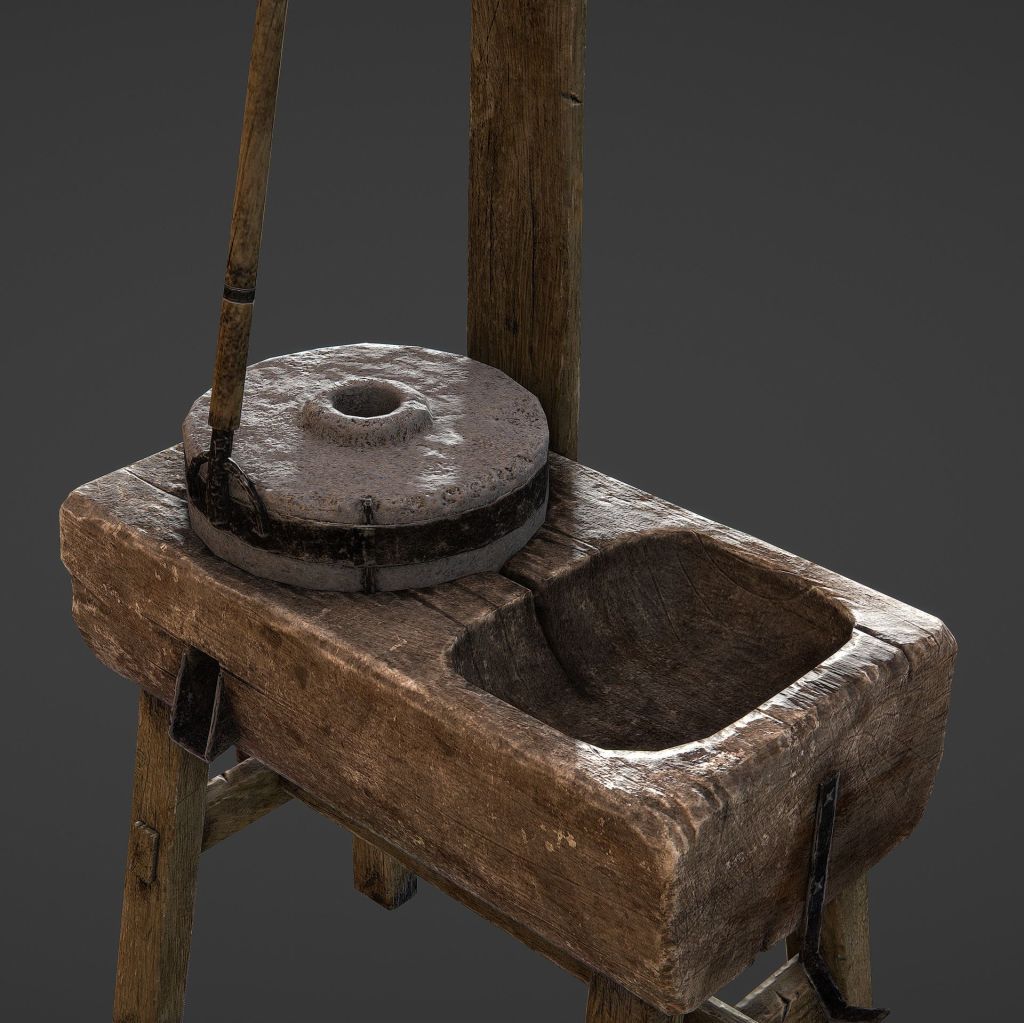
A simple quern, likely one passed down from her great grandmother, was probably a Polish village woman’s most treasured possession during the brutal years of the Second World War. A quern, or żarna in Polish, is a simple hand mill typically consisting of two circular stones for grinding wheat, rye and oats in flour.
To the Germans, this ordinary object was a threat to their complete control of the population through implementing food quotas. It was immediately outlawed during the first year of occupation, and the villagers had to turn over their querns that were then smashed and burned. To not comply and then later found with a quern resulted in immediate death by shooting or hanging. Even at risk of death, some women refused to hand over their precious quern. They instead hid their querns in the undergrowth of the wilderness forests and in specially dug pits.
Hand held Quern at Kolbuszowa Museum
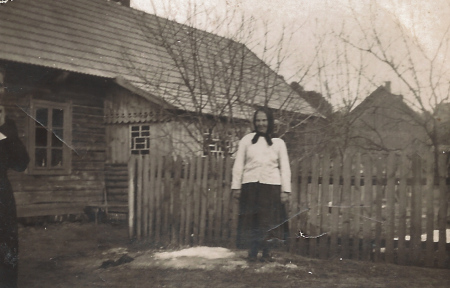
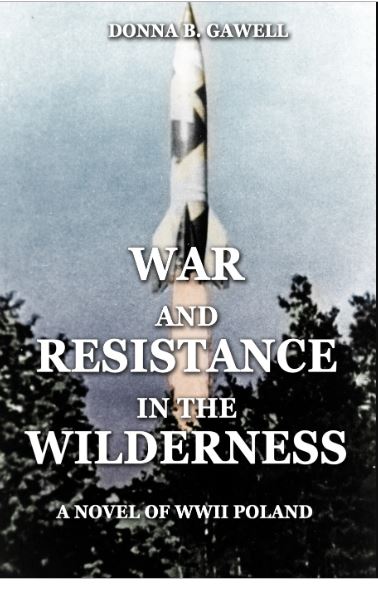
My great grandmother, Jadwiga Bryk likely she was one of the few who successfully hid her quern from the nearby SS and played an important role for many people during the Second World War. Jadwiga was mentioned in the letters of Anna Grabiec as a kind person who brought food to the starving forced laborers at a German farm near her home not far from Camp Heidelager in occupied Poland. She also was the person who brought food to Ks Jan Kurek, a priest while he hid from the SS in the roof area of his empty church for six months. Jadwiga lived across the street from the church and knew of his impending arrest. This true story is told in my historical novel “War and Resistance in the Wilderness.”
Jadwiga Bryk in front of her home in Niwiska, Poland
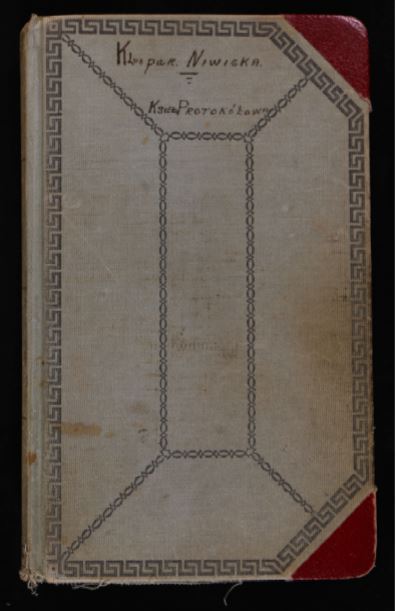
The Niwiska Klub Records and War and Resistance in the Wilderness, a historical novel set in Niwiska,
“What’s this dusty old book on the shelf of your closet? Dan Corning said as he brought the book to his 95-year old mother-in-law. “What’s ‘The Niwiska Klub’?” Loretta Frye broke into a huge smile as she paged through her parents’ old book with its handwritten title. She then told Dan of how her parents and other Polish immigrants had organized the group to help out their home parish of St. Nicholas in Niwiska, Poland as WWII was on the horizon. “The Niwiska Klub” recorded the groups’ meeting notes, the tragic news about Niwiska, their fund-raising activities, and charitable donations from 1939- 1969 of the Chicagoans who came from this parish. Dan quickly realized this almost forgotten book written in Polish by hand was the only one of its kind in existence.
The immigrants in Chicago knew of the dreadful situation facing their loved ones back in Niwiska, a small village in southeast Poland, by reading the Polish newspapers and the few letters that managed to get past the Germans and Russians during the decades of occupation. Although Poland had signed an agreement with England and France who promised to come to Poland’s defense if Hitler invaded, the savvy Poles of pre-WWII Chicago knew that Poland would be on its own if the threatened invasion occurred. In 1939, Poland had been a free country for only twenty years and wasn’t equipped to defend itself.
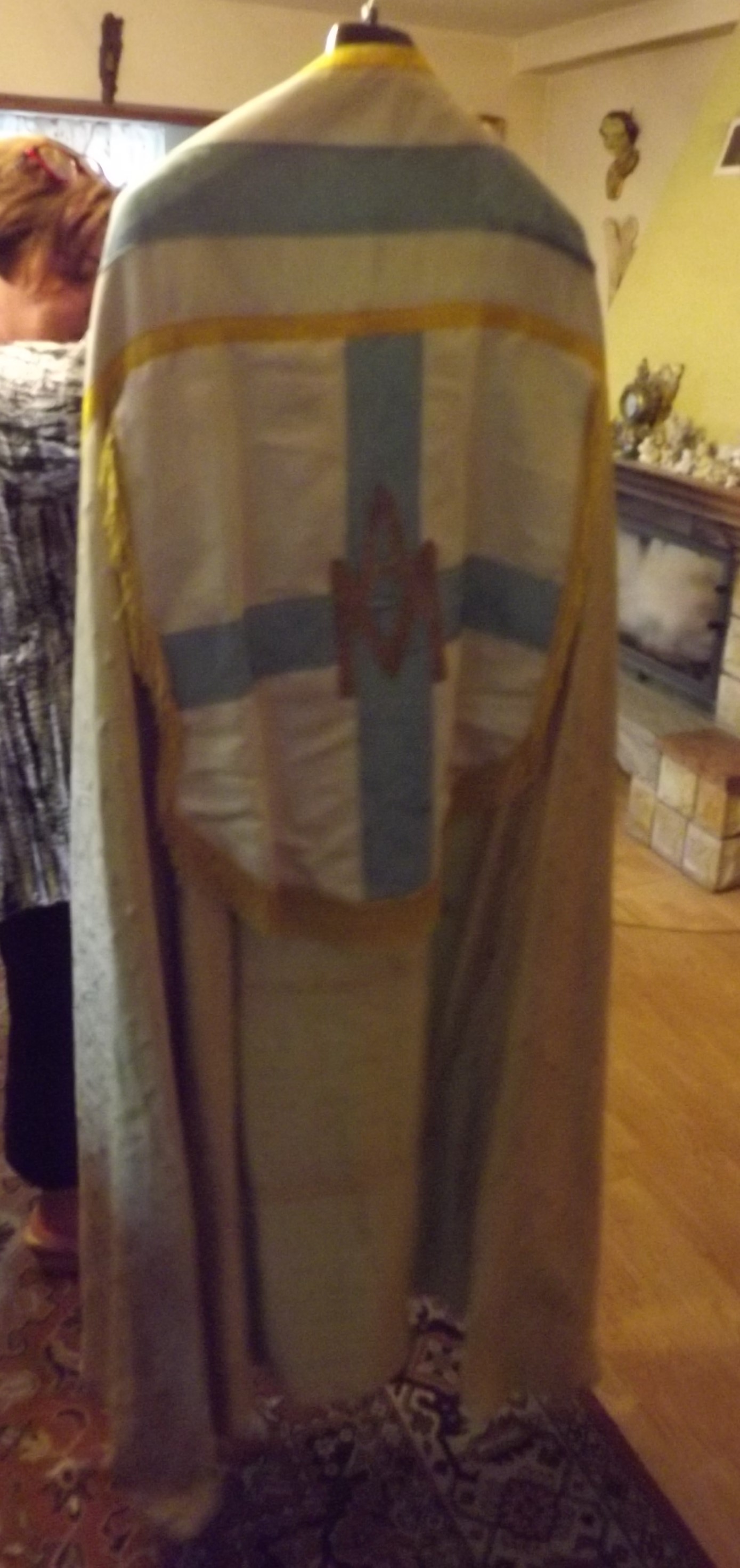
Vestment sent to Niwiska from the author’s Polish grandparents after WWII. The Germans stole all the church’s belongings. It was shown to her when she visited in 2018.Continue reading →
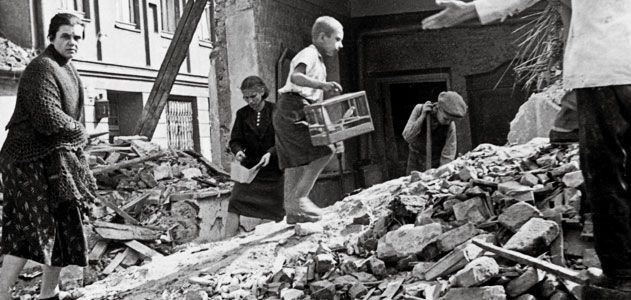
In late September 1939, the deafening roar of war was replaced with ominous silence on the streets of Warsaw. The survivors emerged from their cellars and other hiding places and glanced upward, expecting the hail of bombs and shells to resume their terrible destruction. It was a terrifying scene of utter destruction and tragedy.
Warsaw, like most Polish cities, had been cut off from the outside world since September 1. Rumors of surrender were whispered about, and the possibility was terrifying. Soon, the dreadful truth was revealed, and many officers committed suicide when it was clear the people were bitter with the military and now former government.
German soldiers marched into Warsaw on September 30, 1939, and were soon in complete control. Immediately, work began on removing debris and barricades, extricating corpses from beneath the ruined buildings, and removing the hundreds of dead horses lying in the streets. Restoring transportation, power, gas, and water were the top priorities.
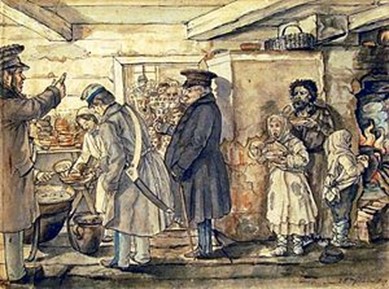
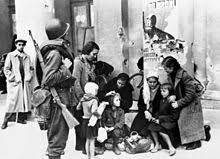
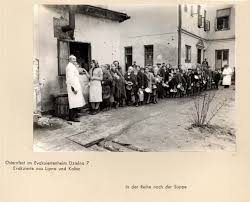
Soup Kitchen in Warsaw
Food supply was the most immediate and difficult problem, and at first, army field kitchens were used to feed the population. While the presence of the Germans was depressing to the Poles, these two weeks before Himmler’s men took control was relatively peaceful.Continue reading →
Americans who descend from Polish immigrants often have limited or no knowledge of their families who were left behind. Those of us who have found the parish, ancestors’ names, and dates are often missing the life stories of not only their ancestors but those of the families who did not immigrate. An understanding of their struggles helps us to comprehend the worries of our now deceased grandparents, especially when we learn what their families went through during the Second World War.
Most Polish Americans descend from the peasant class, and it is likely their families remained in the villages and small towns. Their wartime experience was vastly different than the Poles who lived in larger cities such as Warsaw and Krakow. Unfortunately, much of our information comes from romanticized movies and novels that place a compelling story over reality and facts.
During my research for my newly released historical novel, War and Resistance in the Wilderness, I visited Poland three times and interviewed numerous Polish priests and historians, and my relatives who still live in the villages. Their collective memory of WWII gave me insight into the Poles’ struggles, daily lives, and their efforts to provide food, shelter, and assistance to the persecuted Jewish population and compelling reasons why they couldn’t.
Nazi Germans forcing Polish peasants from their homes for the expansion of Camp Heidelager in 1941.
The Polish people throughout the country suffered deliberate targeting by the Germans with almost every city, town, or village affected by random raids and massacres. My relatives in the wilderness villages of Niwiska and Trzesn in southeastern Poland were at mass on Sunday, Sept 3rd, when German gunfire exploded around the peaceful church while planes dropped their bombs.
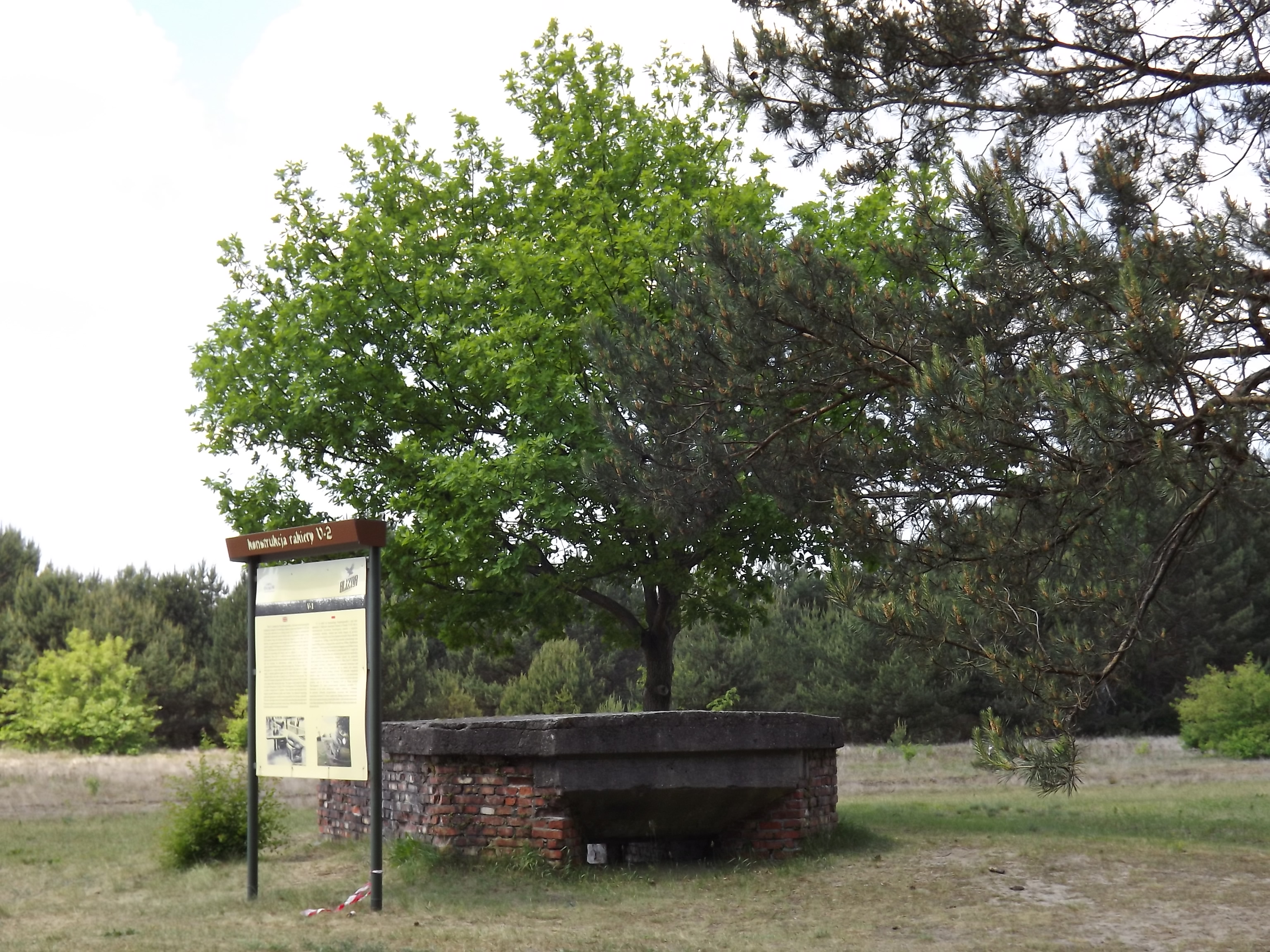
Hidden in the bucolic forests in southeastern Poland sits an important part of WWII history: Blizna Historical Park. When it was built in 1943, Blizna was already part of SS Camp Heidelager, the largest SS training camp outside of Germany. Visitors can now tour a small museum and remnants of the launching platforms and bunkers in the nearby woods.
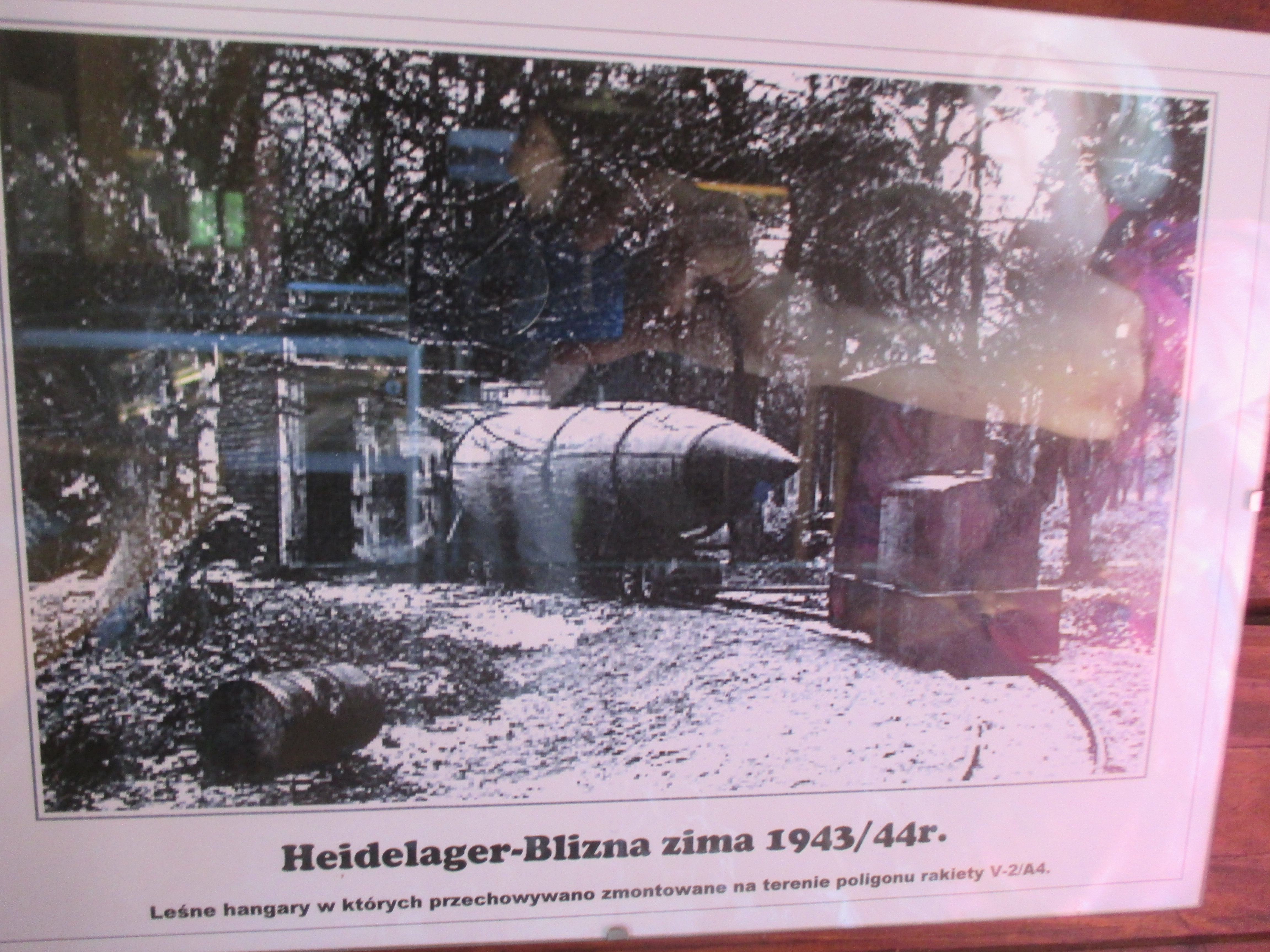
After the bombing raid on Peenemunde on August 17, 1943, the German Strategic Command decided to decentralize and divided the research and building of its V-2 missiles among three different geographical centers. The assembly plants were transferred to underground factories in the massive hollowed out cave complex in the Harz Mountains. Development and design were moved to offices in Ebensee, Austria. The main missile testing and training were transferred to Blizna which was perfectly situated outside the range of Allied bombers. Bliza became the main test launching site for the V-1 and V-2 missiles.
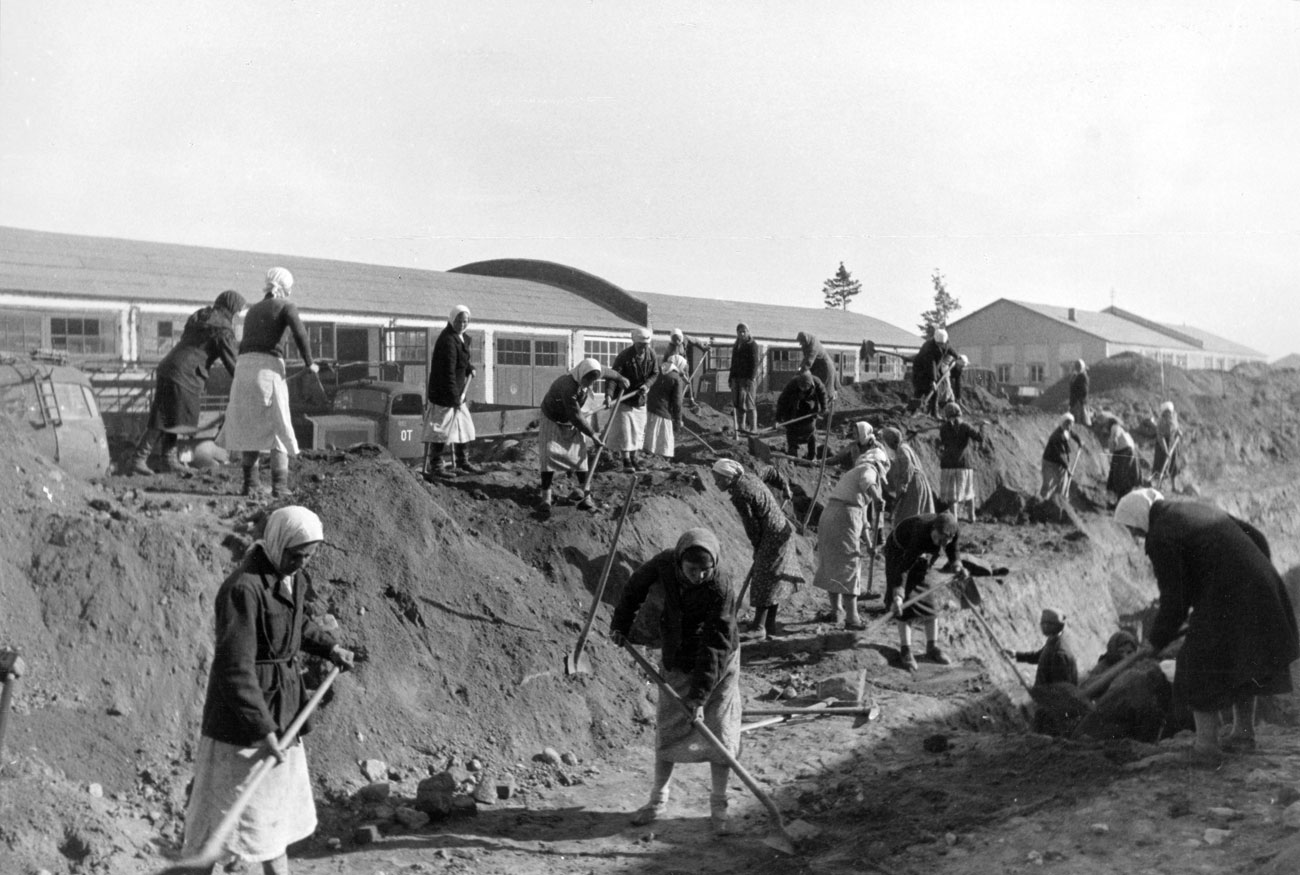
Construction at Blizna was accomplished through the work of slave laborers from the Pustkow Concentration Camp and local forced labors. The local Poles had been removed from their homes and farms and had no other options.
During WWII, 15,000 people died in the Pustkow Concentration Camp: 7,500 Jews, 2,500 Poles, and 5,000 Soviet captives. The next article will detail Pustkow.
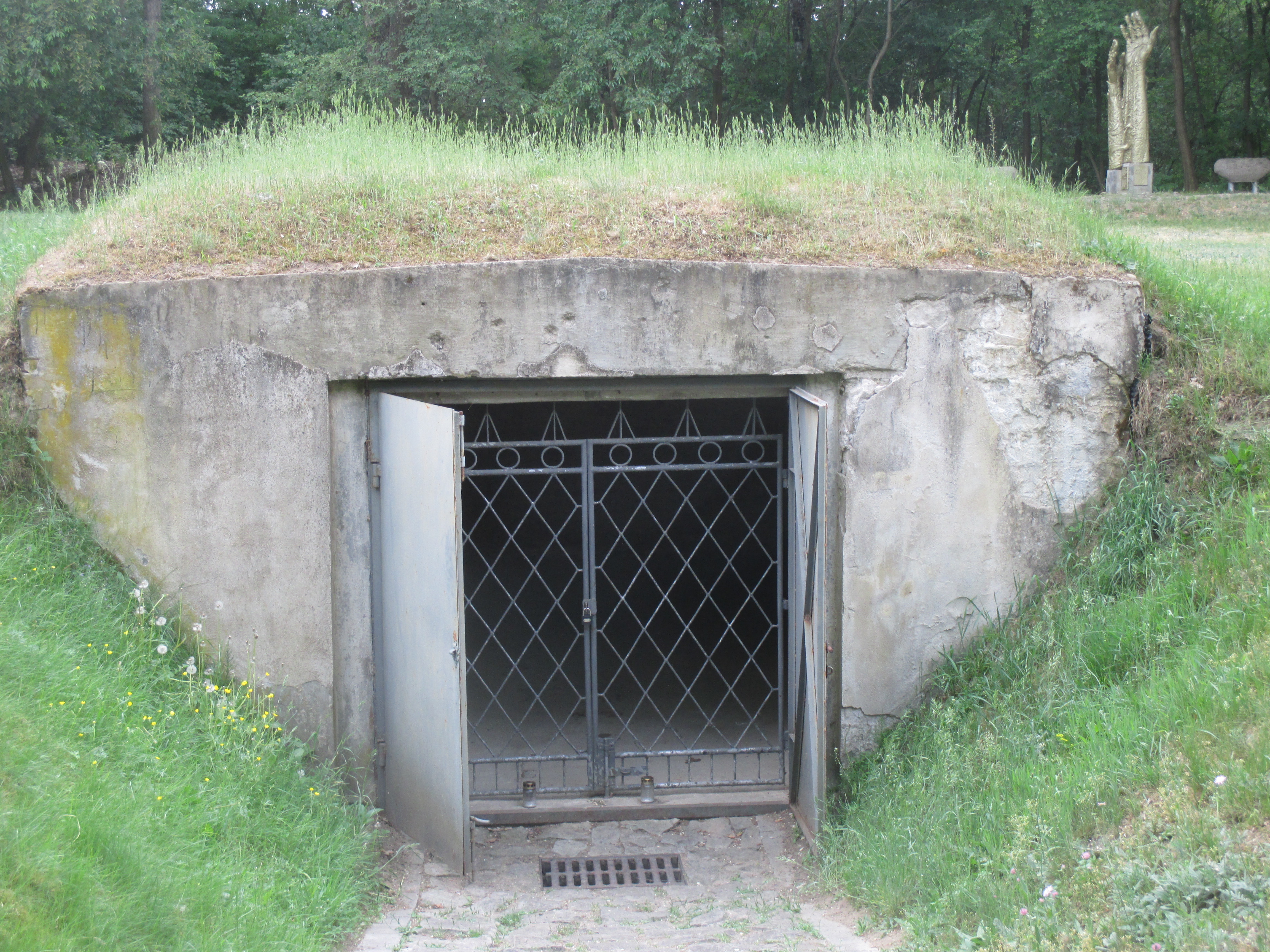
Bunker at nearby Pustkow Concentration Camp
Polish forced laborers working for the Reich
New infrastructure, starting with concrete roads and a narrow gauge railway, was needed for the transfer of these massive weapons. The workers also built barracks, bunkers, and the specialized equipment necessary for the operation and firing of the missiles.
Blizna, within Camp Heidelager, was the perfect covert wilderness setting, but it was supplemented by a mysterious fake village. The Germans built uninhabited wooden houses and barns, hung laundry on clotheslines, and placed statues of farm animals to create the impression of a peaceful village. This village was likely built because the Allies were taking aerial photos, and a village would give the impression innocent people would be killed if they dropped bombs near Blizna. The Polish Home Army (also known as the AK or Armia Krawoja) was the first to notice this setting.
The Germans started to remove the Polish population living in the area immediately after the September 1939 invasion. The residents of Blizna were moved on December 17, 1940, and most of the surrounding villagers were evacuated shortly after that. The Poles were forced to abandon their homes, leaving behind most of the moveable property for the perpetrators to loot. Most homes were torched, but a few were moved to be used for workers homes in an adjoining camp area. The brick buildings, like manor houses, schools, and churches were left untouched to serve the needs of the invaders.
On the outskirts of Camp Heidelager, the Reich created huge German farms managed by the SS using the local forced laborers. Everyone over the age of fourteen was required to work to serve the needs of the occupiers. The Nazi’s long-term goal was to colonize Poland with German citizens and to totally eliminate Poles from existence. (see reference at end.)
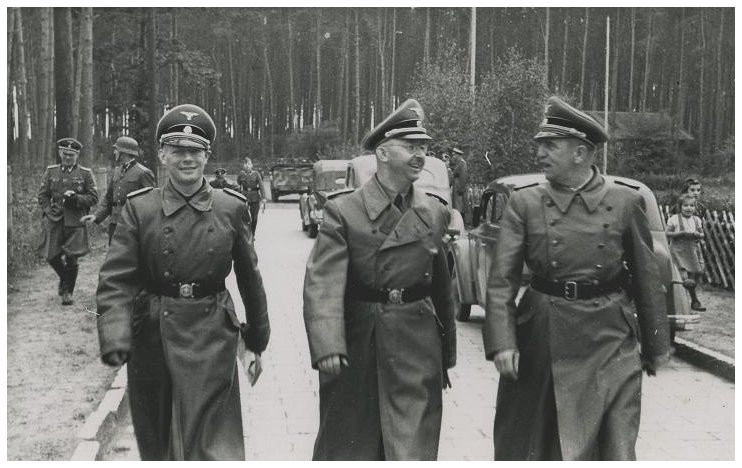
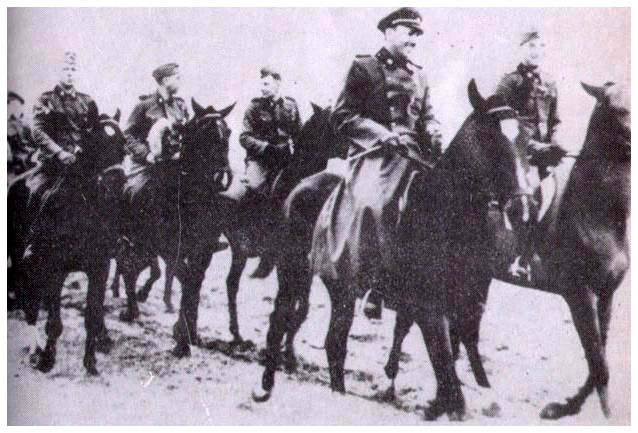
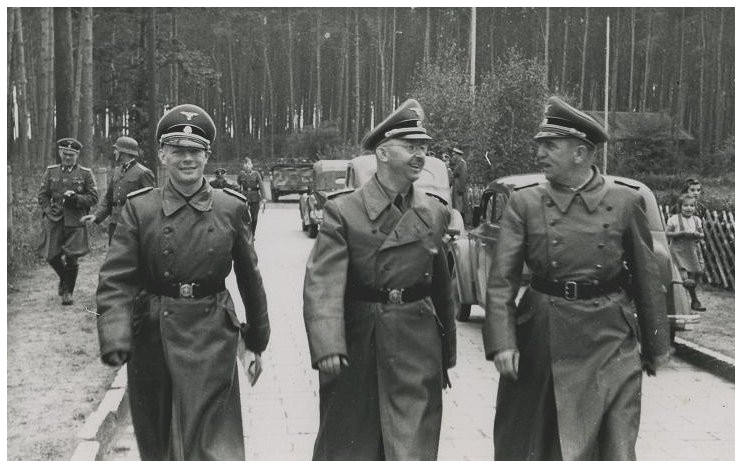
The site at Blizna was considered to be of such high strategic importance that it attracted personal visits from many of the Nazi régime’s most elite officers. Heinrich Himmler, Hans Kammler, and Gottlob Berger visited Blizna in September 1943. The commander of the site was Major General Dr. Walter Dornberger, leader of Nazi Germany’s V-2 rocket program. Adolf Hitler visited in the spring of 1944. Wernher von Braun, the creator of the V-2 and the central figure in Germany’s pre-war rocket development program, visited the test missile impact areas to troubleshoot any problems discovered during trials. After the war, he became director of NASA’s Marshall Space Flight Center.
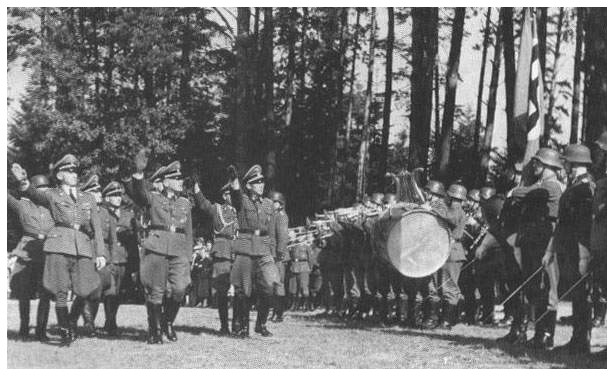
Himmler (in middle) during his 1943 visit
von Braun visiting Blizna
The first test firings began in November 1943 using both V-1 and V-2 missiles. 40% of all the missiles shot from Blizna did not reach their destination, and sometimes created huge craters in the local area.
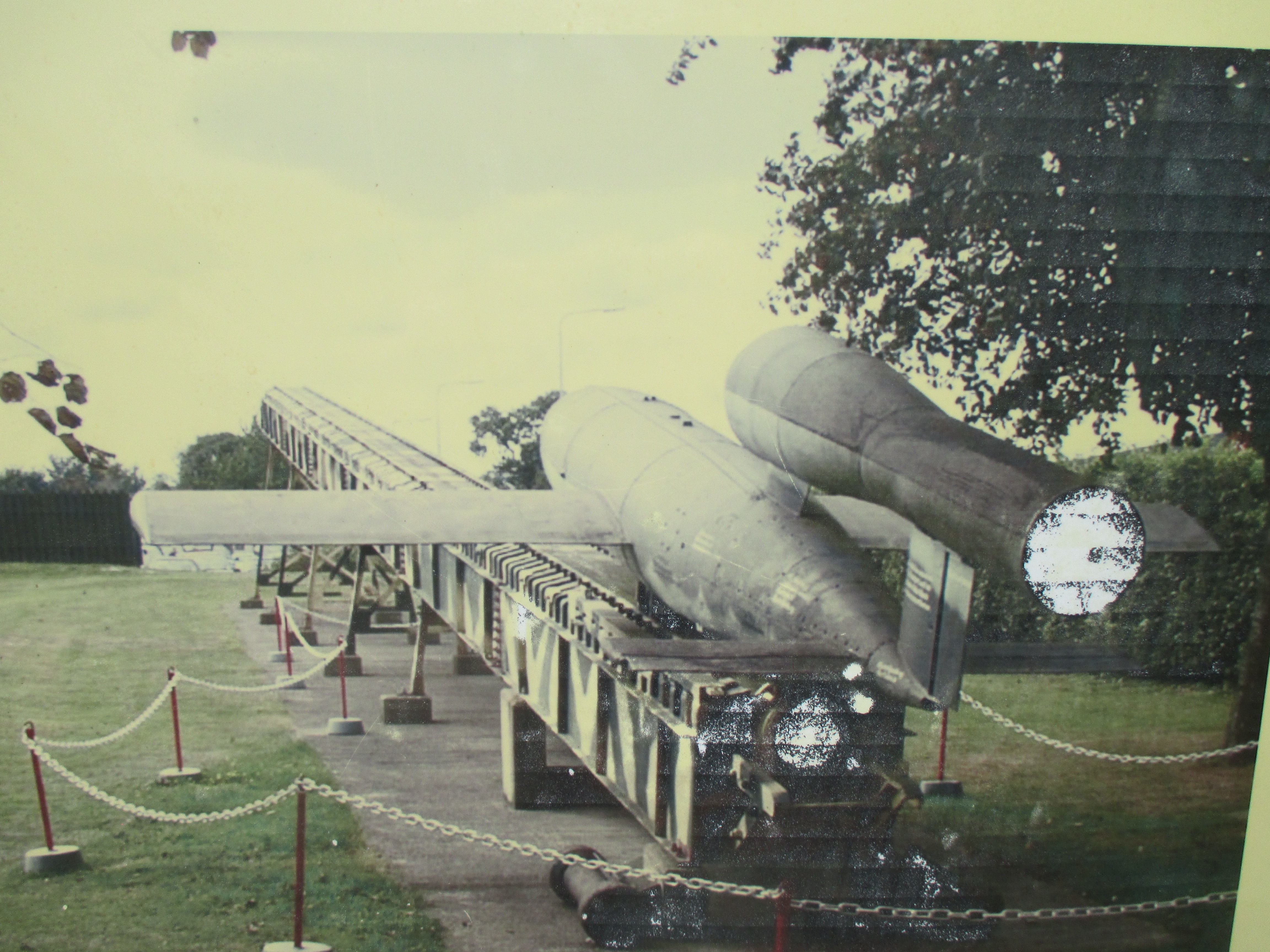
The V-1 or “flying bomb” was an automatically controlled unmanned aerial vehicle with a jet-propelled engine. The V-1 could be taken down by fighter and anti-aircraft fire before it even reached its destination. The launching was from a stationary ramp.
Because of the limitations of the V-1, the V-2 was created. It was the first long-range ballistic missile powered by liquid fuel. The speed and altitude of the V-2 meant there was no possibility of destroying them before they could reach their destination, but they were also known for their poor accuracy. The V-2 was launched from an upright position on mobile platforms. The first test runs showed poor reliability with only 20% of the missiles reaching their target destinations. Both the V-1 and V-2 were mostly used to terrorize the civilian populations in England and never created the damage Hitler envisioned.
The partisans of the Home Army immediately began sending reports to the Allied Command about this previously unknown weapon. With the assistance of the foresters, railway workers, and local farmers, the Polish soldiers risked their lives to gain information. They performed extensive surveillance of the Nazi’s activities and sabotaged the equipment and railroads.
Germans watching a V-2 launch from the trenches
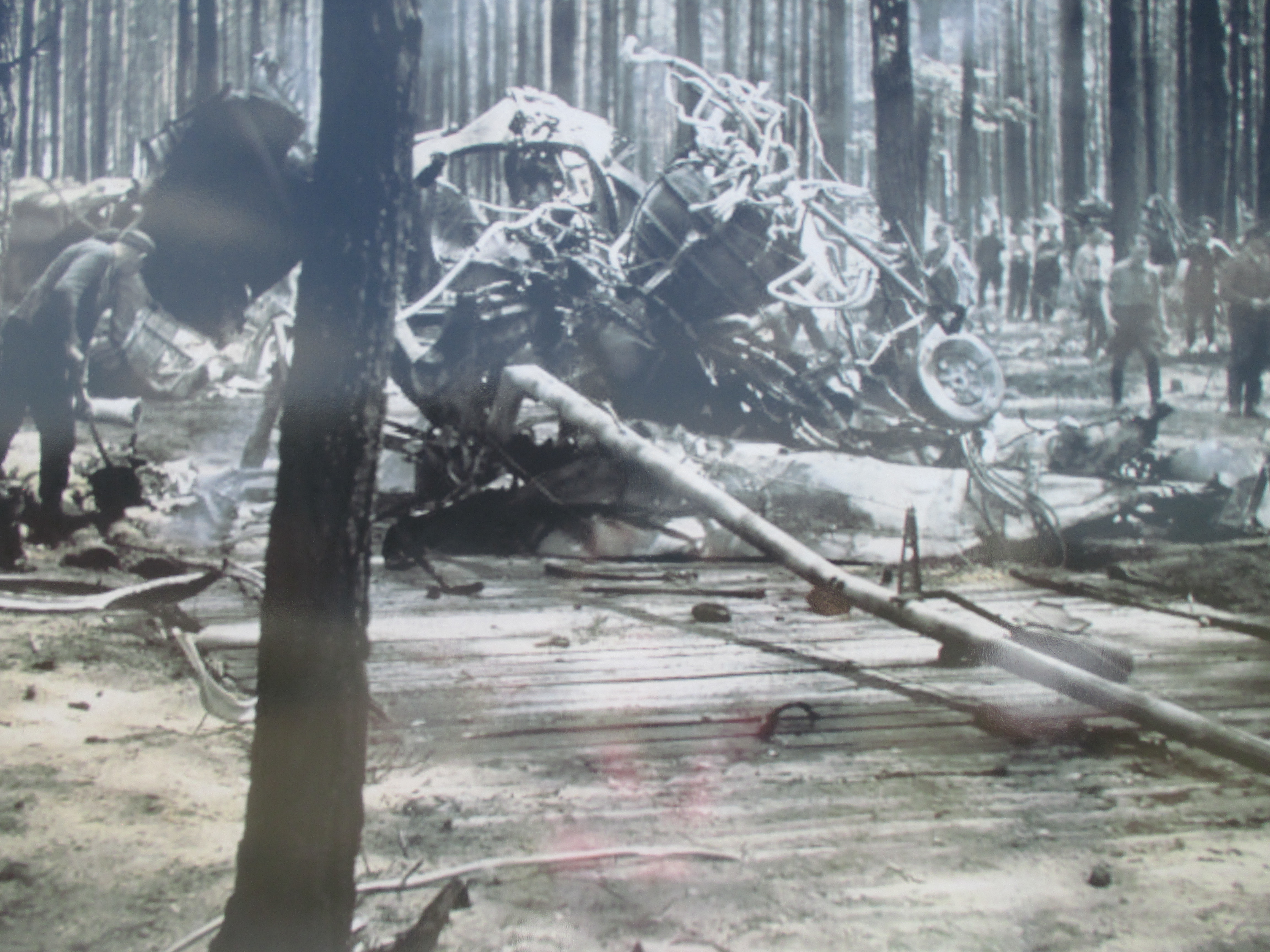
A group from the Polish underground infiltrated the crew and often sabotaged the construction of the missiles. Once the flawed rockets were placed on their launching pads, they did not follow the programs and commands of the microcomputers. The rockets would lift off but then fall back either directly on the spot or would fly off course. The saboteurs had either cut the wires or slackened the fuel conduits.Exploded missile fragments found near Blizna were routinely collected and smuggled to the Allies for decoding. Sometimes, local farmers repurposed the high-grade metal into shovels and tools. These heroic acts of sabotage came at a high price: an average of 300 workers working on the missile production at the three sites were killed every day.
Crashed V-2 near Blizna
Learning of this sabotage, Von Braun intervened and decided that the rockets should be dismantled before transport and later reassembled in Blizna. This was done in the assembly hall close to the barracks near the road to Blizna.
In the summer of 1944, local partisans discovered a fully intact and unexploded V-2 rocket, analyzed the components, and then smuggled the parts to London as part of Operation Wildhorn III. A full explanation of this operation can be found in this article:
In late July 1944, the advance of the Red Army forced the Germans to evacuate their work at Blizna. The Red Army reached Blizna on August 6, 1944, about ten days after the Germans had moved out. Before they left, the Germans blew up remaining missiles and removed anything of military or material value, including valuables stolen from the locals. The remaining structures built as SS Camp Heidelager were torched and destroyed.
Many remnants of V-2 missiles were recovered by the Russians. British intelligence agents were eventually granted access to the launch site in September 1944. By this time, the Red Army had already cleared out most of what the Germans had left. The British managed to fill several crates with some useful V-2 rocket parts, which were then transported to England with the full co-operation of the Soviets. When the crates were opened in London, they did not have the expected contents. Instead, they contained old rusty truck and tank parts. Likely, the Soviet agents had switched the boxes.
The soldiers of the Home Army fought bravely to prevent the Russians from gaining access to the information about the top-secret missile program. A great number of people were killed during the numerous attempts to overtake Hitler’s retaliatory weapons making it the bloodiest operation in the history of the Polish Home Army. Polish officers, cadets, and the Home Army soldiers were arrested by the Red Army after it took control over Poland.
Unfortunately, the Western Allies did not remember the Polish Home Army’s contribution to this great effort. As a result, these brave men and women were sent to a communist prison in Poland and Gulag prison camps situated in the Union of Soviet Socialist Republic. Many of these prisoners, known as “the doomed or cursed soldiers,” lost their lives, and only a few were able to emigrate west.
Today, an attractive historical park is surrounded by the remnants of the war years in the exact location where the missiles were tested and launched. The people in the area and the community wanted to save the historical truth of the place from oblivion. Blizna played an important role in the history of World War II and the subsequent shaping of military technology, including the space programs in the USA and USSR.
The museum emphasizes the important role of the Home Army that once operated in this area and its contribution to the unmasking of one of Hitler’s most guarded secret projects. Thanks to these Home Army soldiers and local informants, their efforts helped change the direction of many V-2 missiles, preventing them from reaching their targets.
If the Germans and the V-2 had been successful, these large-scale weapons and the adaption of missiles carrying nuclear charges could have produced an entirely different outcome in the war and the history of the modern world.
More photos from Blizna Historical Park (taken by Donna Gawell during her two visits in 2016 and 2018:
Portable Radio Station used during WWII
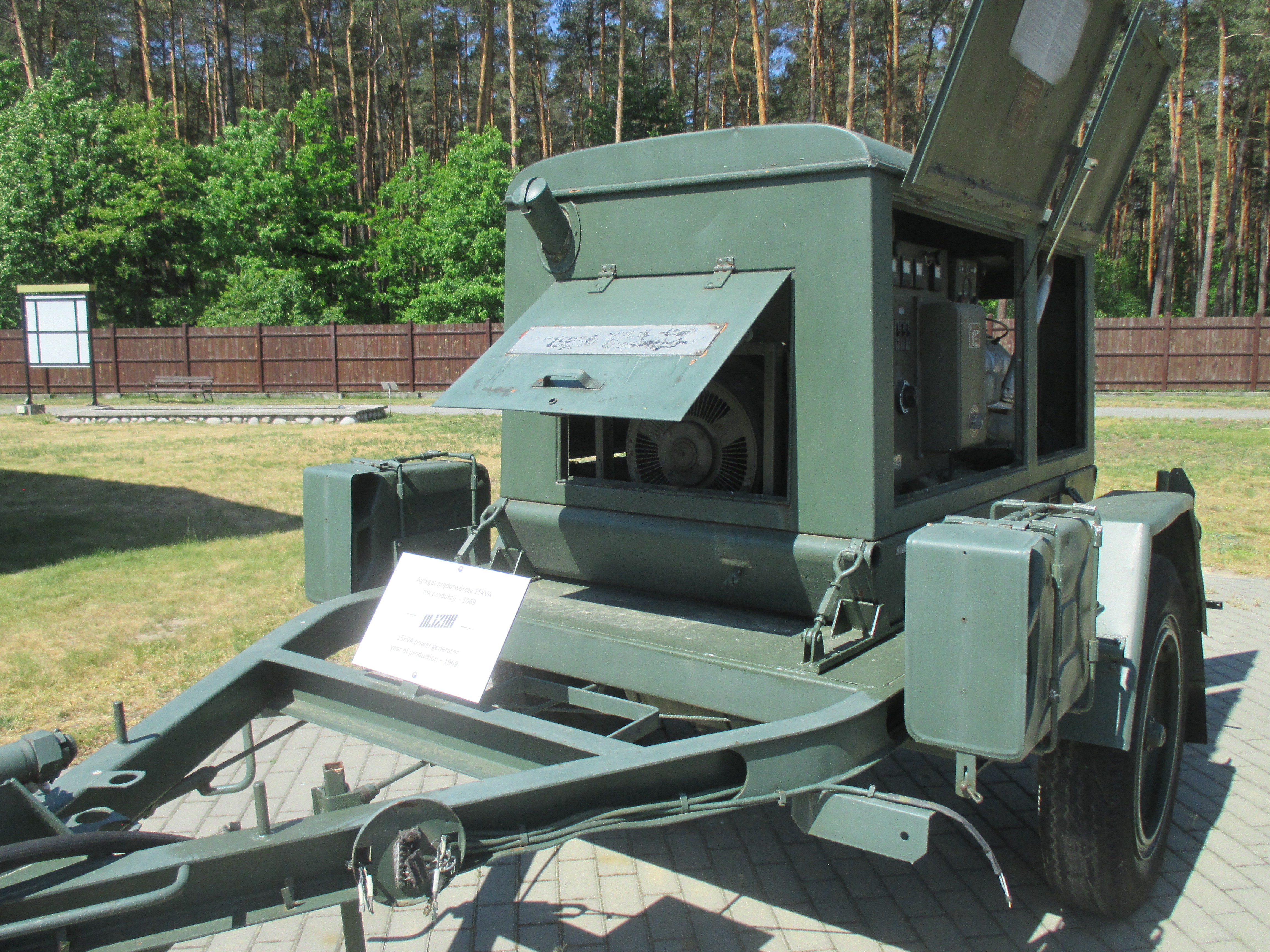
Power Generator at Blizna
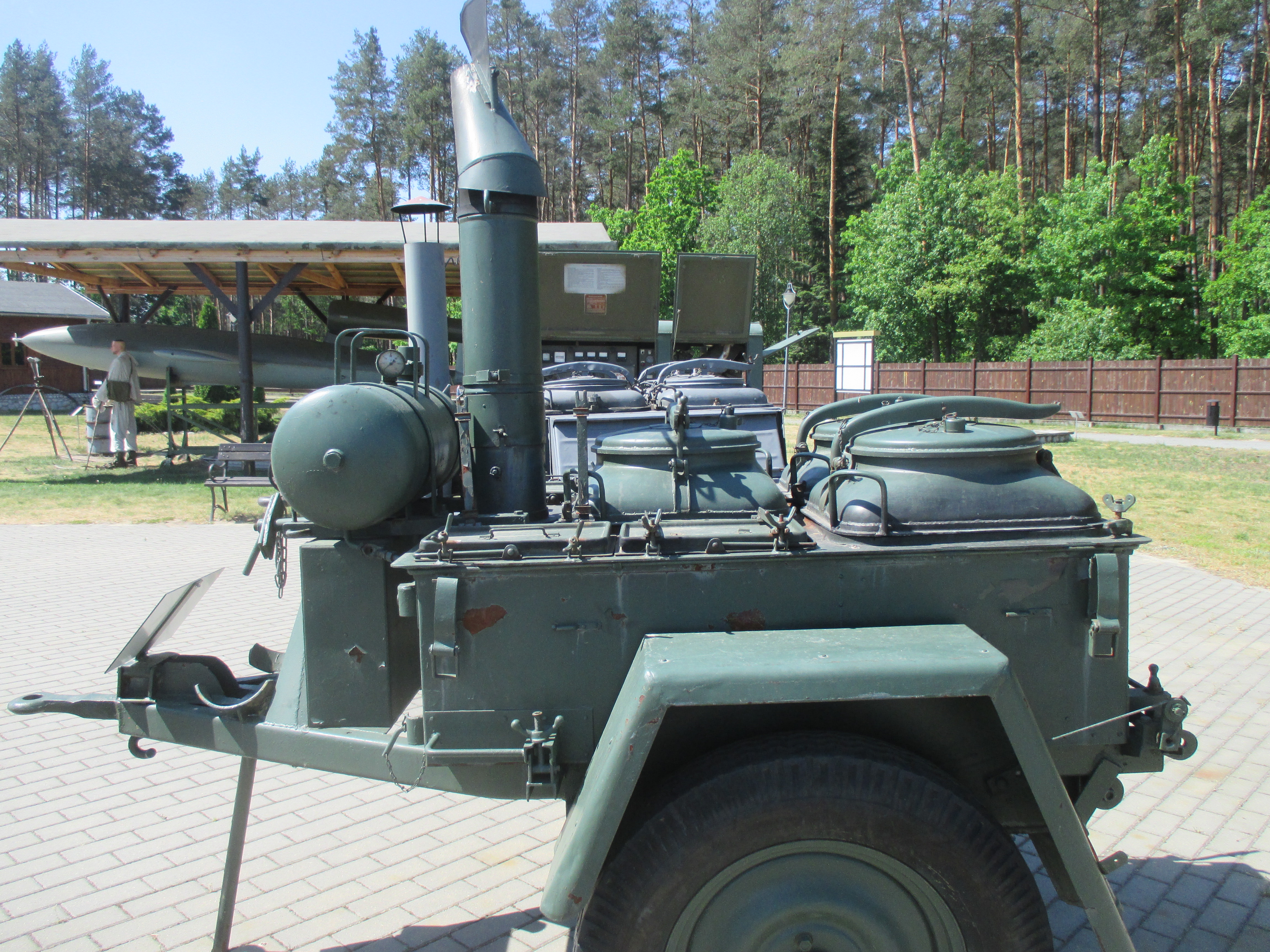
Portable WWII Mess Kitchen
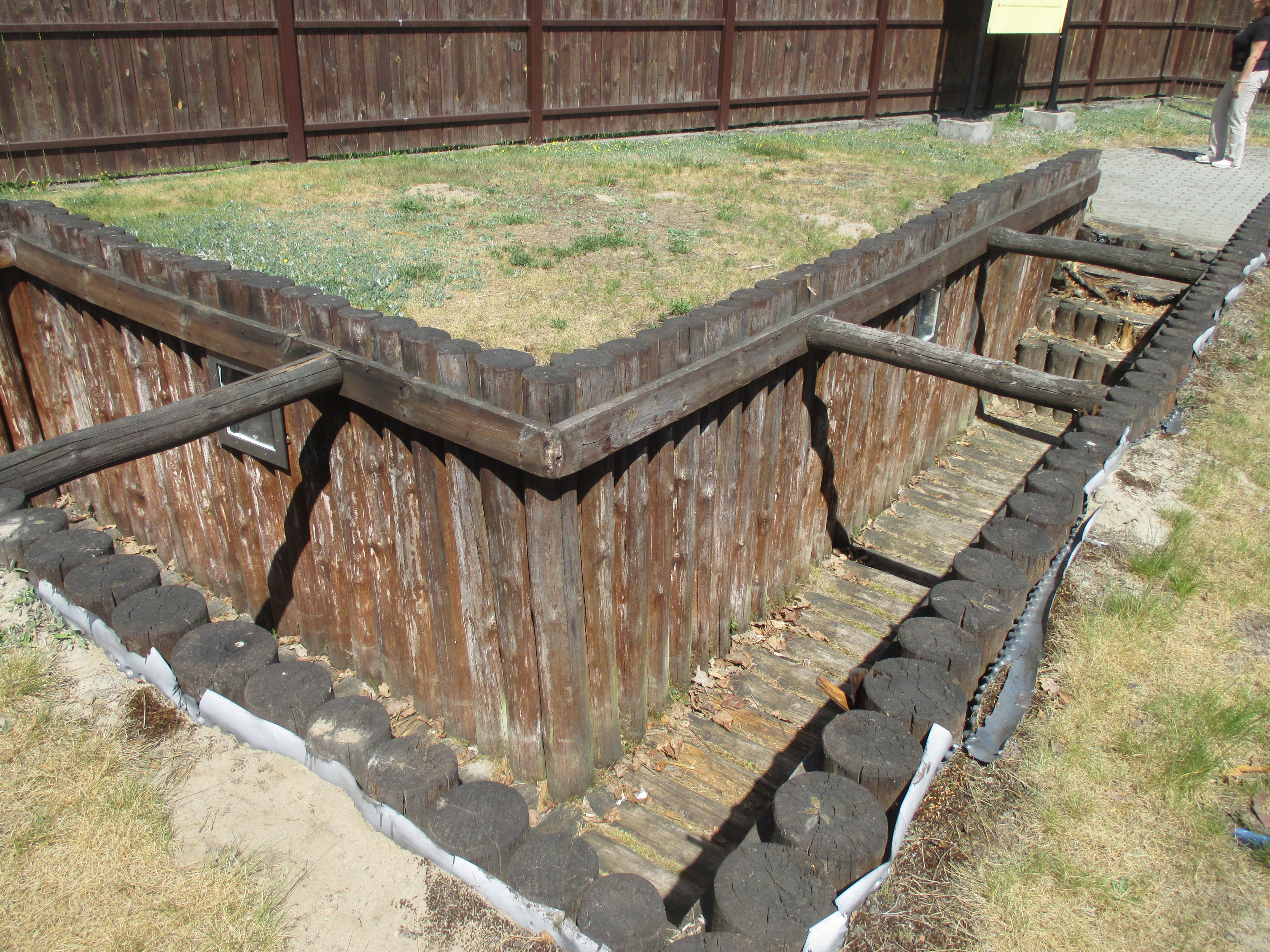
Outline of V-1 launching platform
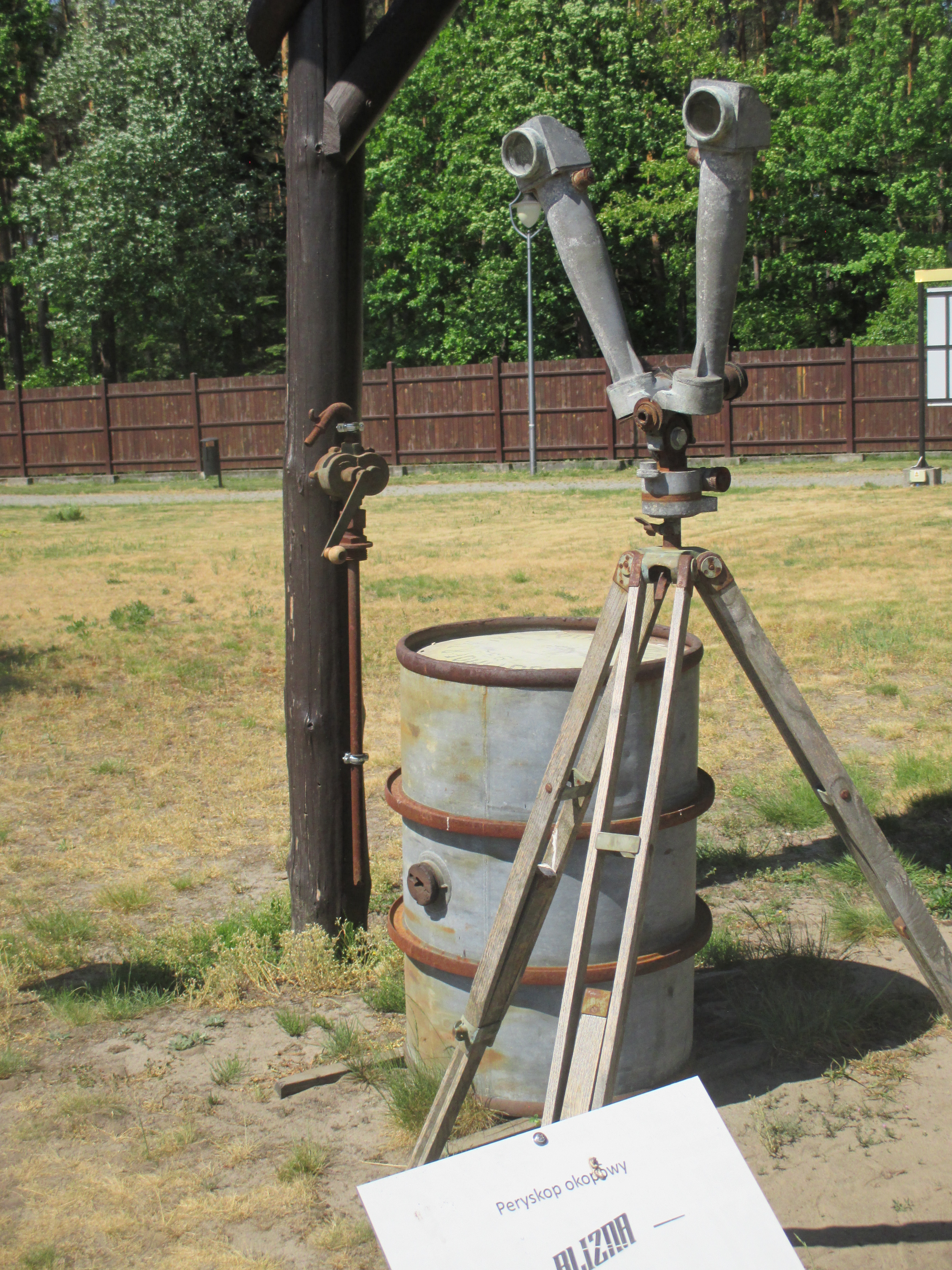
A telescope used to view launches from the trenches
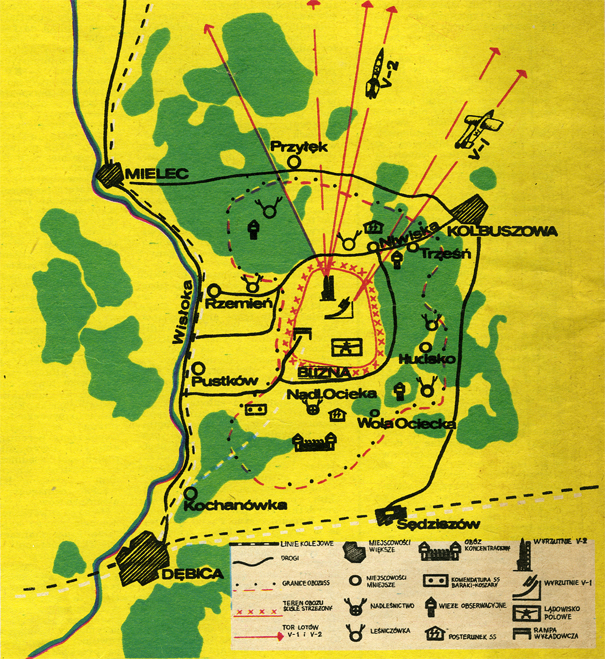
Allied Survellience map of Blizna
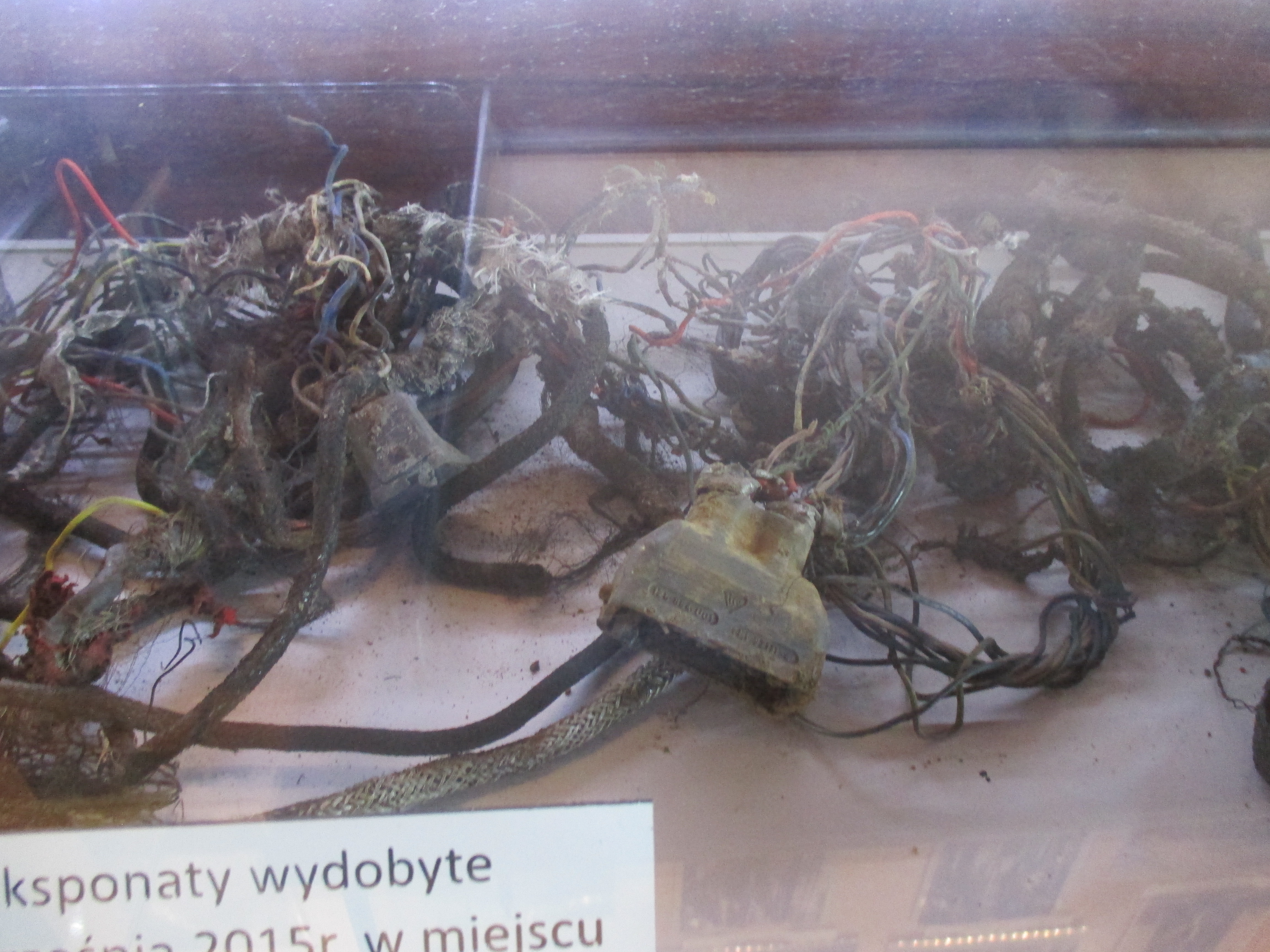
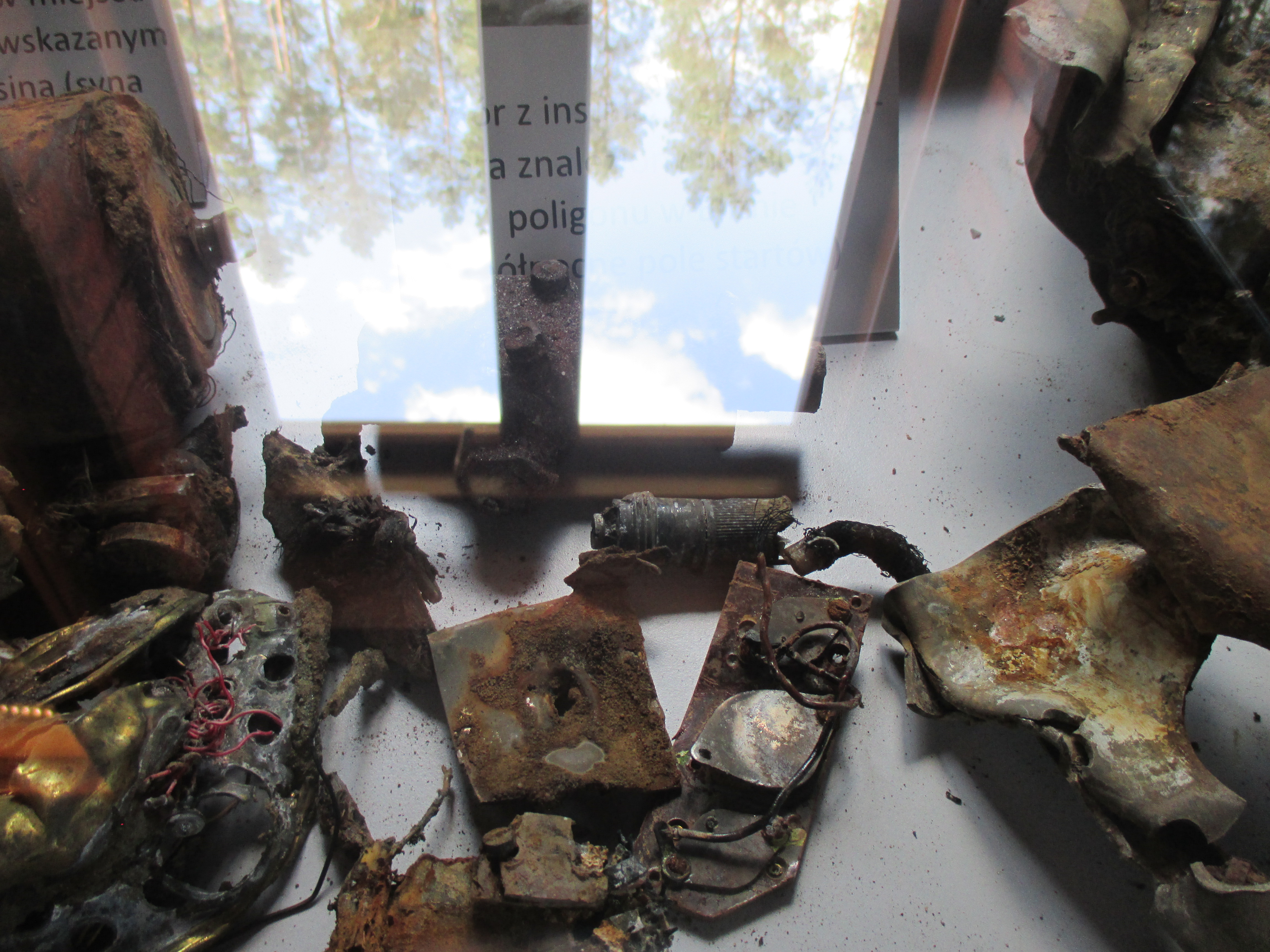
Two of the many displays of V-1 and V-2 material fragments recovered
by Home Army partisans near Blizna
Bunkers near Blizna
Be sure to visit the beautiful wild horses that live in the woods near Blizna
Hitler’s plans for extermination of Poles were first stated in his 1927 book Mein Kampf. He called for Germans to give up their attempt to regain their former colonies (lost after WWI) and to revert instead to their ancient “Drang nach Osten” (Push Eastwards) so as to conquer new territories for German expansion (“Lebensraum”) in Poland. Twelve years later, in a speech to the leaders of German armed forces on August 22, 1939 Hitler ordered: “Kill without pity or mercy all men, women or children of Polish descent or language. Only in this way can we obtain the living space (Lebensraum) we need. The destruction of Poland is our primary task. The aim is… annihilation of living forces.”
Nazi Germany’s Lesser Known SS Military Complex and Death Camp
Part One: History
Hidden in a wilderness region of southwest Poland is the Blizna Historical Park, a memorial museum dedicated to the preservation of one of Hitler’s top-secret projects. It is difficult to imagine that in this lovely and heavily forested area was once the largest SS training camp outside of Germany. Few foreign visitors even know about its existence, but a visit provides a unique step back into history to learn of the horrors suffered by the prisoners and the local Polish population at the hands of the Nazis.
On my first visit in 2016 to my grandfather’s village in Niwiska, I was astounded that any major atrocities could have happened so close to my grandfather’s birth home. A massive model of a V-2 missile rests ominously in the center of the park. A rocket such as this had been launched and sometimes crashed hundreds of times over my Polish family’s home, just a fifteen-minute walk through the woods!
At the outset of WWII, the Germans had been well acquainted with every square mile of Poland as the Austria-Hungarian Empire encompassed this territory for over 150 years during the era of the Great Partitions from 1772 to 1918 when Poland ceased to be a nation. Set in this wilderness area of southeastern Poland, Blizna and the surrounding villages provided a secluded area for the very worst of the Nazi’s military forces: the SS or Schutzstaffel.
The SS was founded in 1925 to serve as bodyguards for Adolf Hitler. By WWII, it had evolved into the most powerful and feared organizations in all of Nazi Germany. Recruits had to prove none of their ancestors were Jewish and received elite military training. The SS had more than a quarter million members engaged in activities ranging from intelligence operations to controlling the Nazi concentration camps.
Setting up military training centers began almost immediately after Germany’s takeover of Poland in September 1939. The Supreme Command of the Armed Forces of the Reich (OKW) issued an order on December 21, 1939, to build the SS training base on the area of the former counties of Debica, Mielec, and Kolbuszowa. Important transportation routes (railways and roads) and industrial facilities such as chemical and tire plants, the aerospace plant in Mielec, and numerous sawmills made an ideal location for Camp Debica, later renamed as SS Heidelager.
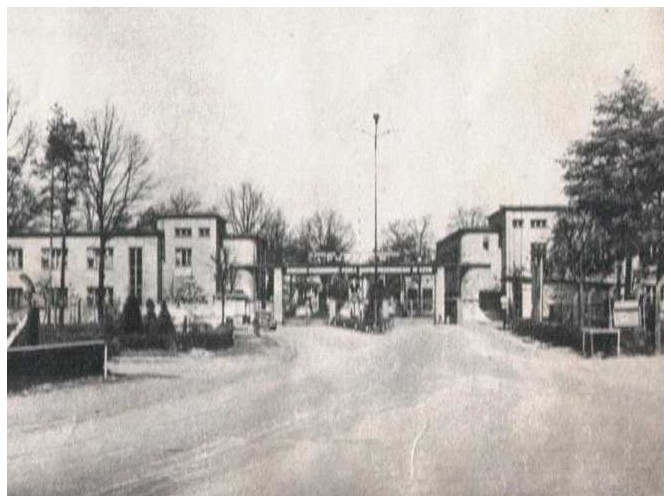
Entrance to the plant near Pustkow
The main task of Camp Heidelager was the training of collaborationist military units and for the reorganization of branches that supplemented the units’ losses. The Estonian SS legion and the Ukrainian Division “Galizien” were created in Pustków.
A concentration camp was created by prison and forced labor in Pustkow. It is estimated that about 15,000 prisoners were killed or murdered at these camps: 7,500 Jews, 5,000 Soviet prisoners of war, and 2,500 Poles. The camp originally opened on June 2, 1940, with the arrival of the first forced laborers, mostly Jews and Belgian prisoners. The conditions were so terrible that most prisoners did not survive the first few months.
The second major group was Soviet prisoners who arrived in October 1941. In the beginning, the POW camp was no more than an enclosed area, and prisoners received minimal or no food and were reduced to eating grass and roots. There were no barracks, so prisoners had to sleep out in the open. A third camp for Polish forced prisoners was established in September 1942, and the conditions were no better than those at the first two camps.
In order to build this massive camp, most of the Polish villagers were displaced from their homes by mid-1940 and often had no more than two days to evacuate. The Germans took no responsibility for finding any housing resources for these people. It was the sad destiny for many to wander to a family member’s village outside the camp area in the hope a relative would take pity on them. Many of their houses were torched for new building projects, or some salvageable parts might be moved to build barracks for worker’s settlements. Displaced families were paid a meager compensation and porridge and black coffee was provided once a week.
Everyone above the age of sixteen was required to register and be accountable for their work serving the Reich. Without their land to farm or a trade to pursue, these Poles were forced to accept work at the camp for building projects. Many of their younger people were captured in group roundups and taken to Germany to work on farms or factories.
These local villagers were employed in the construction of the training ground to build railroads, concrete roads, sewage and water systems, and barracks. A large number of prisoners and workers from the Baudienst (the agency that registered and assigned the local villagers) were assigned for agricultural and horticultural work, and in workshops, warehouse, and in cleaning and food services. Large farms were established to ensure the proper amount of food for the crew and the troops staying at the training ground.
Captain Albrecht, a man of incredible evil and one of the characters in my novel.
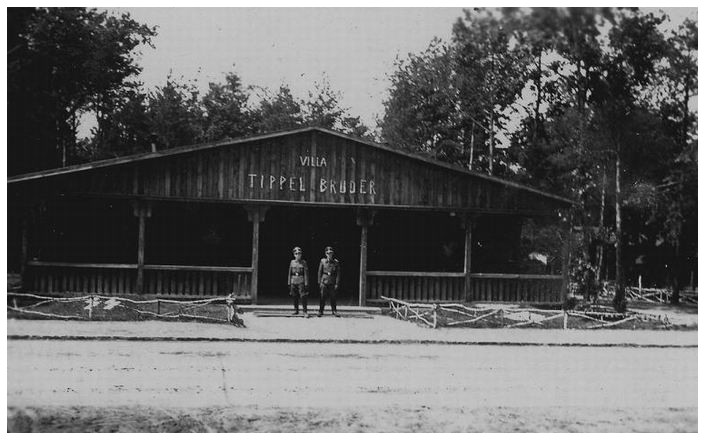
The Germans used pre-war factory buildings and manor and housing estates consisting of thirteen large, two-family villas and several blocks of flats. The more stately homes were taken over as housing for the officers, and the more impressive buildings were used as SS headquarters. For example, the city hall in Kolbuszowa became the Gestapo Headquarters, and the Hupka manor house in Niwiska was taken over as housing for Colonel Ludwik Heiss.
A Villa at Heidelager
The camp included most of the features of a typical German town with entertainment, cultural, and recreational facilities for their soldiers. There was a cinema-theater that could accommodate over 2,500 people, a newspaper (“Der Rufer”), sports fields, large dining halls, and barracks. For officers, there were impressive villas and ranges for hunting parties.
Entrance to Camp Heidelager
Camp Heidelager was open every Sunday for civilians who visited soldiers staying at the training camp. The guests and soldiers enjoyed facilities such as sports fields for recreation. Visitors often brought food and alcohol. They also brought news from the front that had a negative effect on the morale of the soldiers, and there were often desertions.
There was also a brothel that was located in the forest far from the rings and barracks called “Waldkaffe” (Forest Cafe). The entire area of this place was fenced and included a guard who kept order and a cook from the camp.
One bizarre feature of Camp Heidelager was a small fake village. The empty houses were painted, clothes were hung permanently on a clothesline, and statues of farm animals graced the farm. The purpose of this small village is not known, but the locals and foresters found it puzzling.
In the summer of 1943, Hitler moved his top-secret V-1 and V-2 missile research program to Blizna located near the center of the camp. The project had been centered in Peenemunde, Germany but Allied bombing almost destroyed the program. With that devastation, the Germans thought it was more prudent to divide the program between three different regions. The first launch of V-2 rockets took place in Blizna on November 5, 1943, and the V-1 missiles launches began in the spring of 1944. Hundreds of missiles were launched, but many failed, leaving huge craters along their paths.
The Polish Home Army (Armia Krajowa or AK) had the entire area under surveillance and performed heroic acts of sabotage and numerous raids on the missile program. The local foresters, railway workers, and farmers risked their lives on missions to covertly obtain exploded missile fragments that were then smuggled to the Allies.
Once the Germans saw the war was turning in the Allies’ favor, they began to move equipment, prisoners, and anything of value to Germany and torched the wooden structures to erase proof of their actions and atrocities.
The activity at Camp Heidelager came to an abrupt end when the Russians moved into the area in early August 1944.
Map of the rings and barracks in Camp Heidelager near Pustkow
Himmler on a visit to Camp Heidelager in 1943.
*(Part One of Three Articles)
Next: My 2016 and 2018 Visit to Blizna Historical Park
I have just completed “War in the Wilderness,” a historical novel set in WWII in Camp Heidelager. The story is based on the true events and real people who lived under Nazi Germany’s Rule of Terror. I will notify you when the actual publication date is assigned!
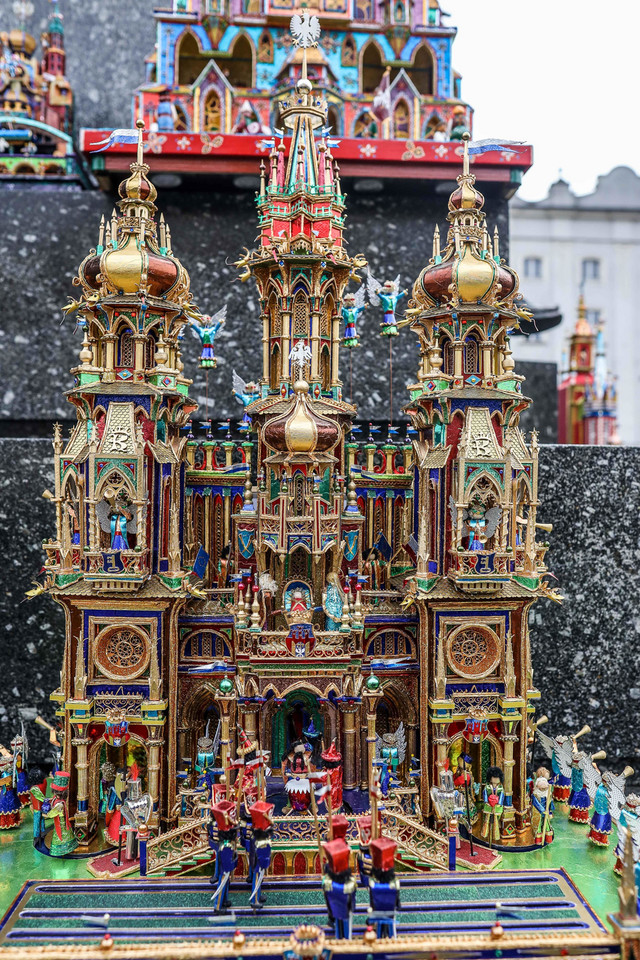
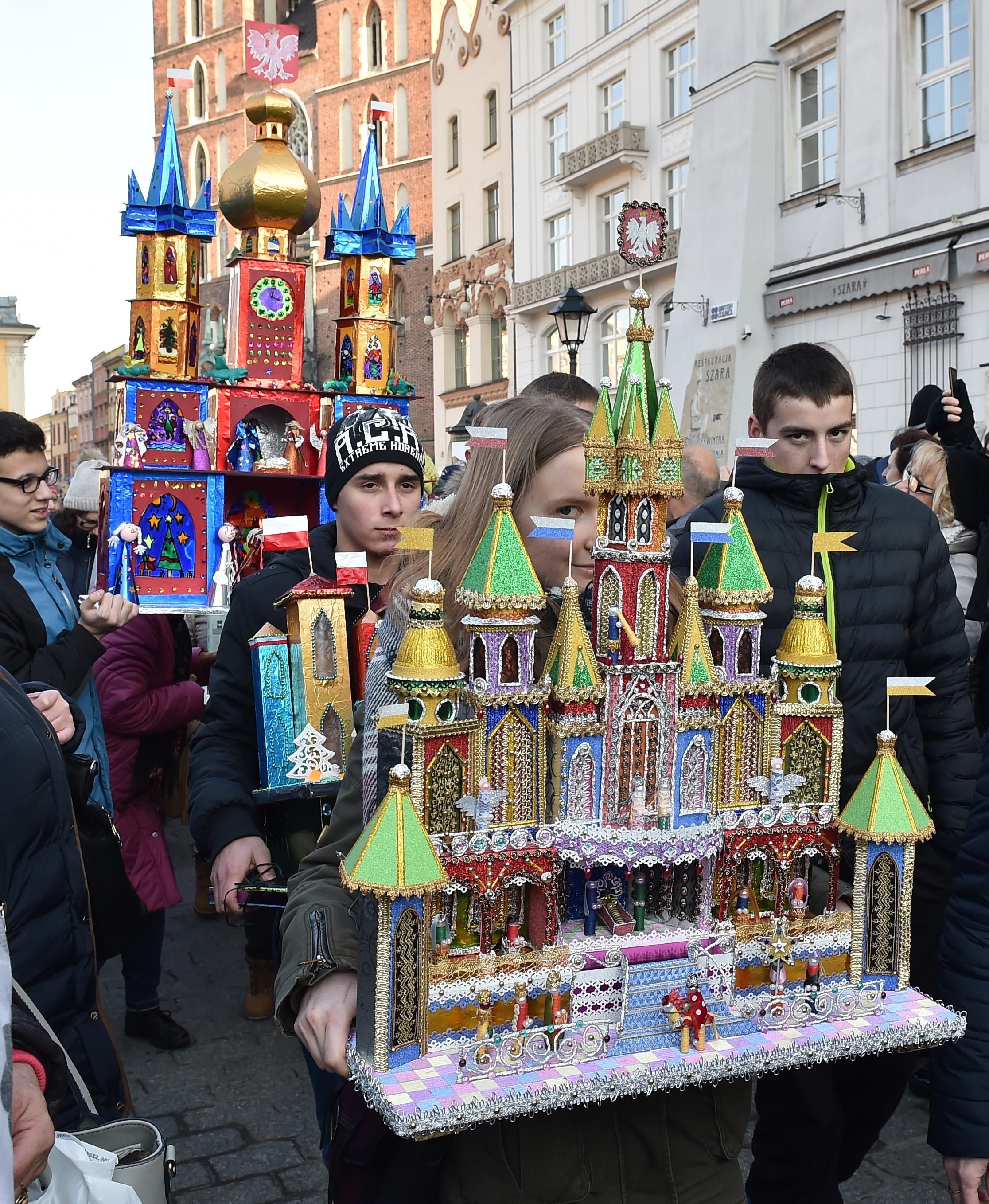
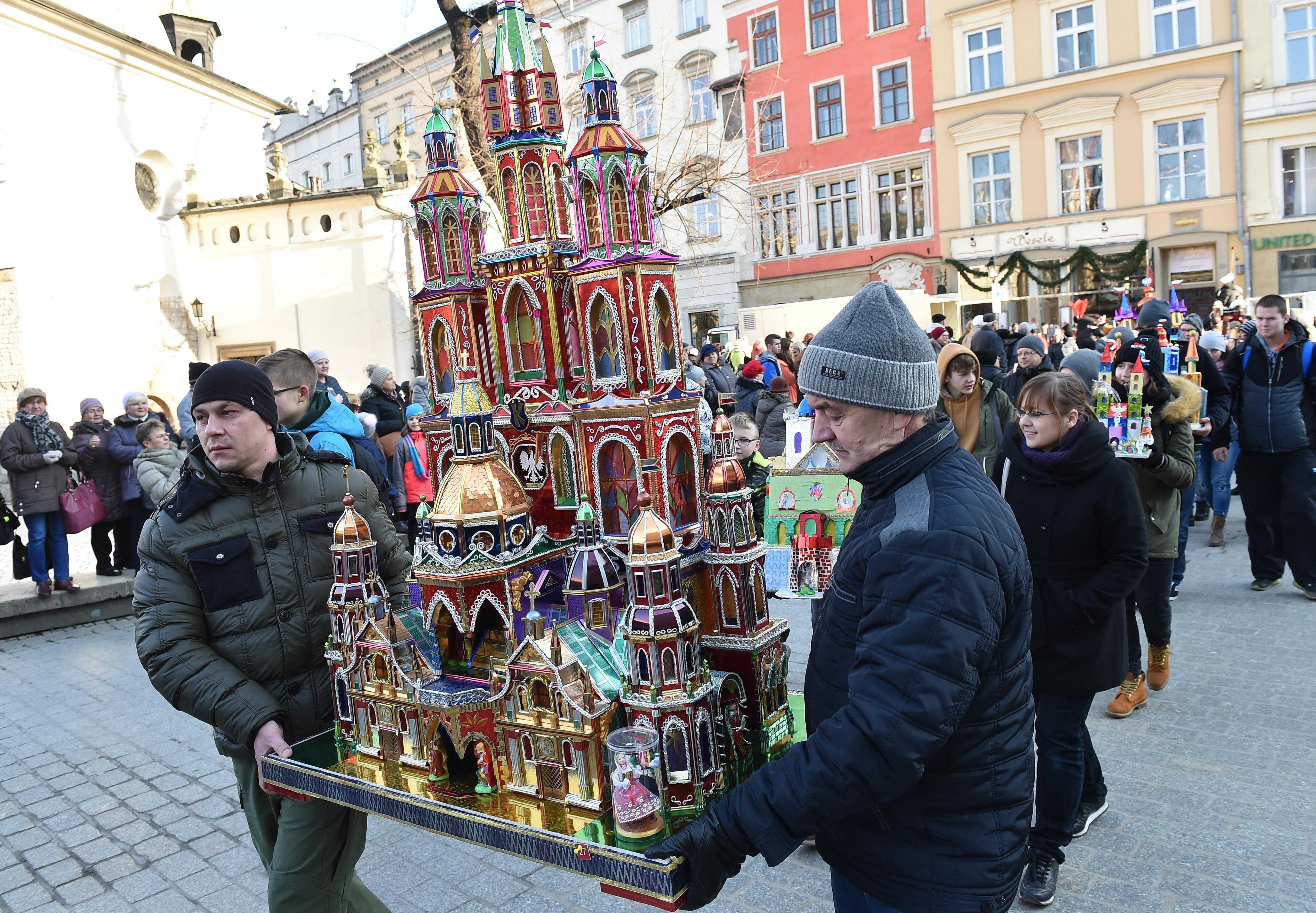
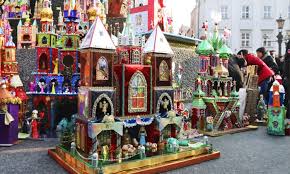
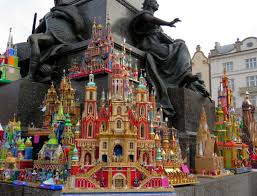
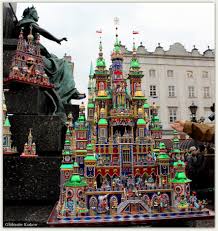
One of Krakow’s favorite holiday traditions dating back to the Middle Ages is the creation of szopki or Christmas cribs. These unique lightweight structures resemble the historic castles, houses, or churches around Krakow in miniature. Other scenes inside a szopka depict historical and contemporary events and contain figurines illustrating elements of Polish culture, such as politicians, artists, the Pope or the Dragon of Wawel. The main materials to build the structure are wood or plywood. Smaller parts are made of cardboard and then are decorated with colorful tinfoil.
The 2018 winners of Krakow’s Szopka or Christmas Crib Competition were announced on December 9, 2018, after the noontime trumpet call from the towers of St. Mary’s:
Kryspin Wolny is the winner in the category of large cribs
Renata and Edward Markowscy in the category of a medium nativity
Wiesław Barczewski in the category of small cribs
Jan Kirsz is the creator of the most beautiful miniature crib.
(I will include photos of the winners when they are available.)
Every year on the first Thursday in December, the szopka creators place their splendid entrees on the steps of the monument to Adam Mickiewicz located in Krakow’s medieval town square. There, with the 800-year-old Cloth Hall and St. Mary’s in the background, thousands of visitors to the Christmas Market view the newest szopki. Following tradition, the artworks are again presented in a parade before announcing the winner. The szopki are then displayed in the Historical Museum of the City of Kraków.
Started in the 14th century, the szopka represented the birth of the Baby Jesus, with the calls of the angels, the homage of the shepherds, and the three gifts brought by the Magi. A gallery of other characters representing various regions or countries, occupations, and ethnic groups were often included to honor the holy infant.
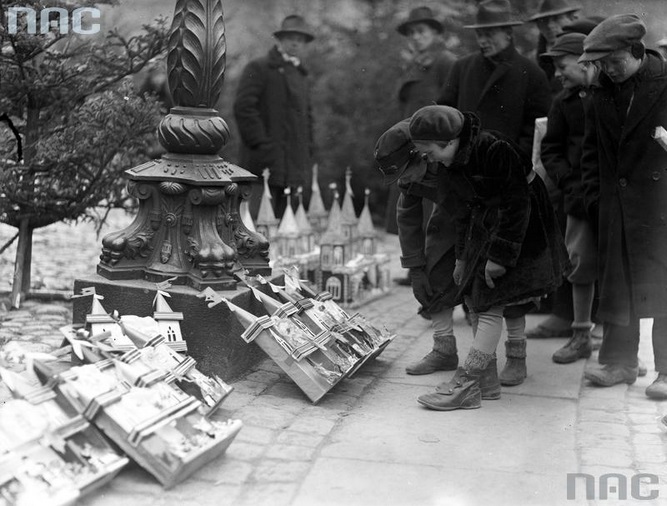
Szopki for sale in 1934 in Krakow
The modern tradition began in 1937 but came to a stop during the German occupation. The event resumed in 1945 on the steps of the destroyed Adam Mickiewicz statue.
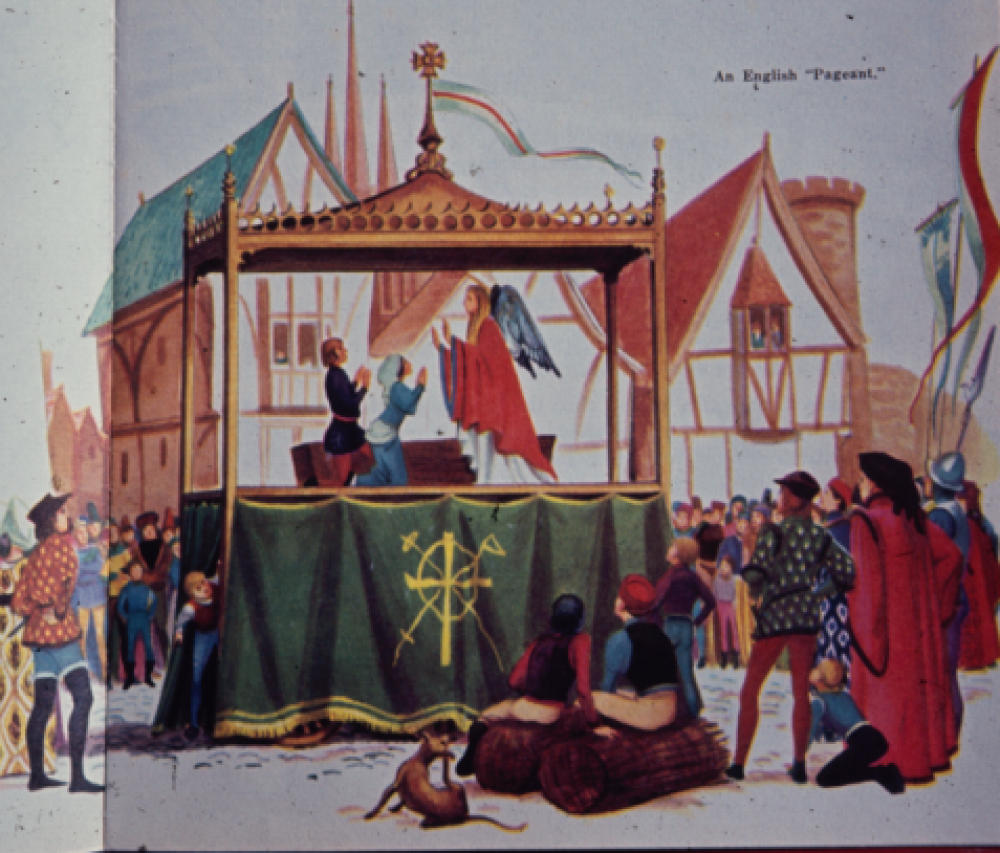
The origins of the szopka were likely from mystery plays performed at Christmas in the early 1200s when the Church organized processions. Other historians related the earliest szopki to the portable medieval altars and the evolution of its theatrical function when they appeared in the form of a mobile puppet show in the late 1600s.
In the past, the Christmas cribs were mostly the works of Krakow craftsmen (bricklayers and construction workers) during their idle weeks of the rain late autumn. In recent year, it is a passion of many Poles from all walks of life. Several families construct new creches every year.
This year’s competition is even more special. UNESCO placed the Krakow tradition of building szopka nativity scenes on the Representative List of the Intangible Cultural Heritage of Humanity. UNESCO recognized the szopka’s important educational functions, as it passes on knowledge about the history of the city, its architecture, and customs.
Some szopki are quite unique and don’t follow the traditional format. This one resembles the bread sold on Krakow’s streets.
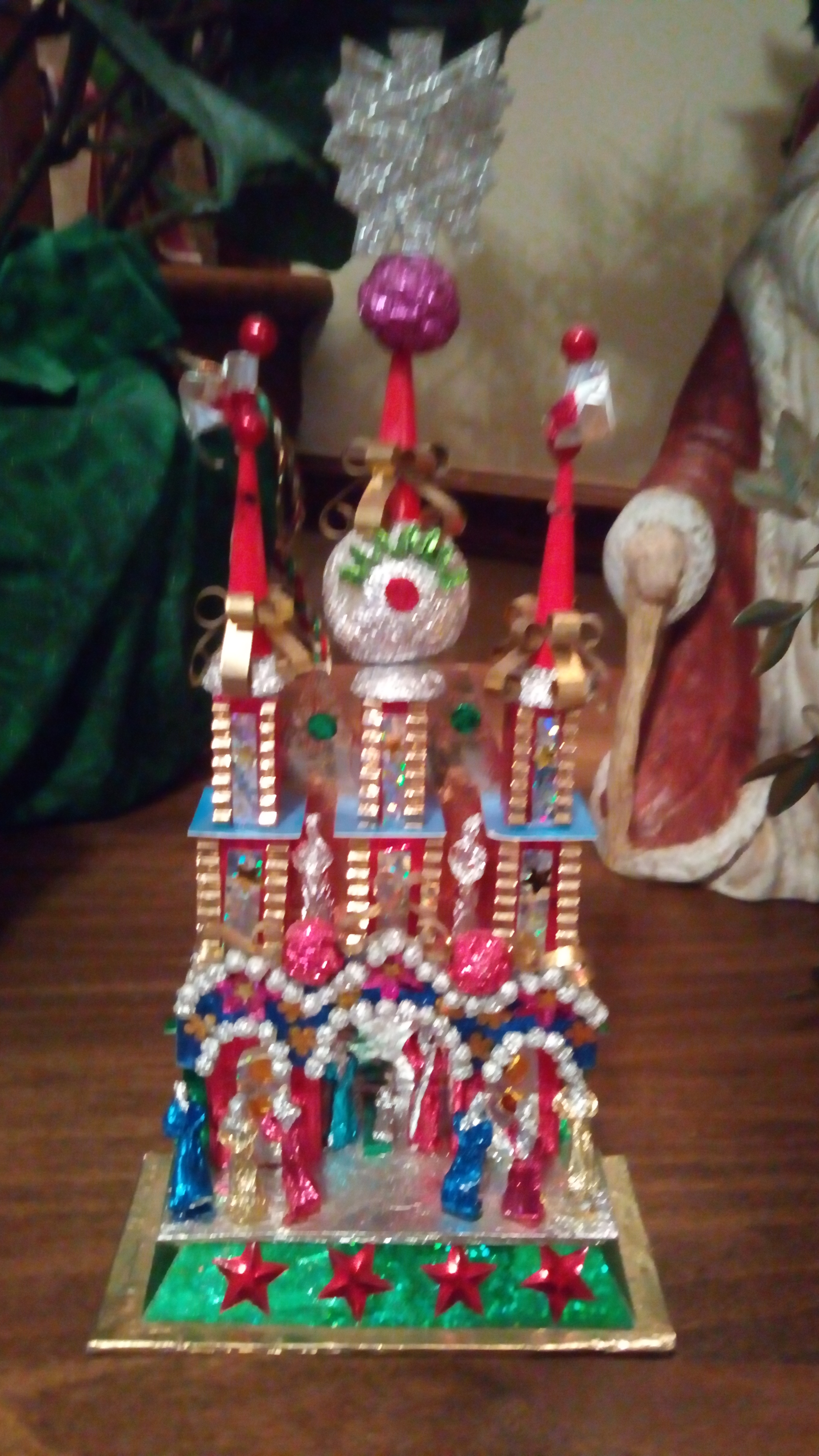
Szopki can be purchased at the museum shop and in local stories throughout Krakow. We purchased this small szopka in a Warsaw gift shop selling items made in Poland. It sits in a place of honor on a table passed down from my Polish grandparents.
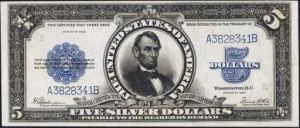
My Polish immigrant grandparents who immigrated around 1906 sent $5 twice a year to thirteen sets of families they left behind in Poland. The Polish cousins who told me this story didn’t mention the years but emphasized how this gift helped them get through some very desperate times. The entire family in this small Polish village was severely impacted by the two world wars, the worldwide depression, and then the decades behind the Iron Curtain. A few of their oldest siblings also immigrated, but the immigration act of 1924 made coming to America almost impossible for most Central and Eastern Europeans. The law discriminated in favor of those immigrants who came from Northern and Western Europe. The younger siblings were forced to stay behind in the villages and work as poor farmers.
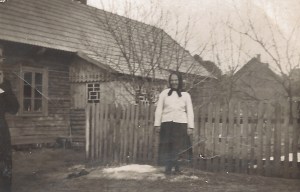
My great-grandmother Jadwiga, a widow in Poland, born in 1865.
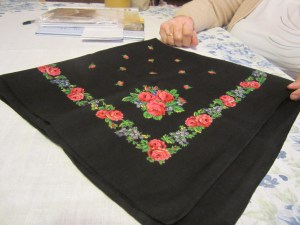
My Polish cousins whom I met on two trips in 2016 and 2018 remember the stories of my grandparents’ generosity to this day−a hundred years later! Like the scarf my grandfather sent to my cousin, the stories were handed down through the generations.
Scarf my grandparents sent to my cousin Maria
My cousins were shocked when I told them my grandparents, in my opinion, were rather poor. They assumed my grandparents had become rich Americans. They owned their own house, but my grandfather, according to the 1940 census was a floor sweeper at a local steel mill. He became a crane operator in later years.
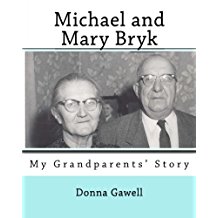
A family history book I wrote about my grandparents’ family history
My cousins’ perceptions made me wonder how much this $10 a year gift was worth in today’s dollars, so I did some research.
$10 a year in today’s dollars*
Total to 13 families
1910
$258
$3,354.00
1920
$122.56
$1593.28
1930
$146.78
$1898.00
1940
$175.08
$2276.04
1950
$101.70
$1322.10
*From US CPI index
Those are pretty hefty sums of money, but then consider how much more they would have been worth in a depressed economy such as Poland’s during these decades. In addition, my grandparents sent medicines and clothing. I remember my First Communion dress being sent. It probably was sold on the black market for more necessary items.
Zofia, an elderly cousin who was about twenty during WWII, told me a poignant story that brought tears to my eyes. After the war, the villagers who had to evacuate their homes in 1942 were allowed back in the village. Zofia had only one tattered and worn dress, but my grandparents sent her some printed fabric. This is what she said: “Because of your grandparents’ gift, I made some nice printed dresses for myself, and I was the prettiest girl in the village. A nice man asked me to marry him, and it was all because of your grandparent’s gift of that fabric!”
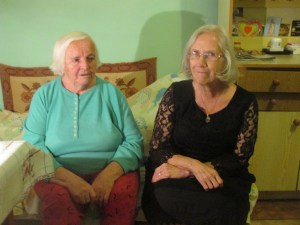
My visit with Zofia in 2016
I remember her telling me that story with the same seriousness as she would have related any other war story. The end result of this gift was a good marriage, and that was a fact!
Those of us with such generous immigrant ancestors should be so proud!
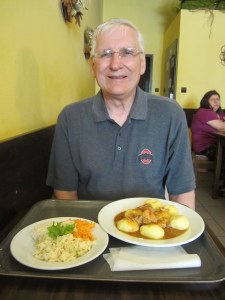
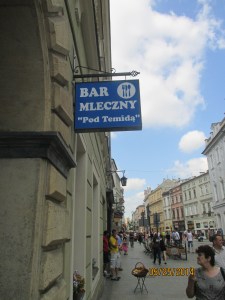
In Poland, tourists won’t find milk bars in a “Top Ten Places to Go” list. Malbork Castle, the Salt Mines, Zakopane, and the Old Town in Krakow are all there, but milk bars (“bar mleczny” in Polish) should be near the top if you are seeking a unique experience not found anywhere else. Some refer to milk bars as “ Poland’s version of cheap fast food,” but it is more accurate to view them as “good traditional food served fast.”
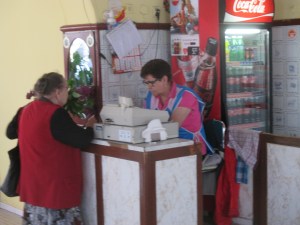
Milk bars are very inexpensive restaurants found mostly in Poland’s larger cities and offer traditional polish cooking, just like your grandmother used to serve. The only difference is that the women servers in their flowered aprons won’t remind you of your sweet, solicitous grandma. These women are cooks, not chefs, are efficient and hard-working, but have a reputation for being impatient with those who don’t know how these cafeteria-like eateries work. Seinfeld’s hilarious episodes about the man referred to as “the Soup Nazi” in New York might be the closest comparison.*
History of Milk Bars
Milk bars have nothing in common with lounges and bars as you won’t find alcohol. The milk part of the name harkens back to their origins in urban dairies in the late 1800’s when the abundant supply of milk made it possible to help feed those on a very limited income. Early milk bar meals consisted of milk, egg, and flour-based foods and no meat
After WWII, when Poland was satellite country within the Soviet Union, milk bars became state-subsidized. Workers were quite poor but could find an inexpensive, hot meal at these eateries. There were more than 40,000 in their heyday, but the numbers shrank to about 140 by 2016.
Milk bars began closing after Poland gained total independence in the 1990’s and embraced capitalism. During these transition years, milk bars represented a holdover from the decades of communism and patronage fell into decline. Today, the younger Polish people aren’t burdened with memories of socialism, making milk bars popular with university students. The average Pole and lucky tourist will not find a better deal for dining.
Finding a Milk Bar
My favorite way to find the best milk bars and other inside information is to ask Trip Advisor Forum experts. These very knowledgeable and generous people will provide information for planning your trip or at the last minute “on the ground” (where is a recommended milk bar in Krakow, Rzeszow, Warsaw, Gdansk, etc.? Where can I find a store in Krakow that sells Polish pottery? etc.).
You will find milk bars in the large cities in Poland but not in the smaller towns. If you haven’t received recommendations, Google map your city and then search with the term “bar mleczny” (milk bar). Cities such as Krakow and Warsaw have quite a few so check out the reviews.
You will discover there are two types of milk bars: government subsidized and not subsidized. Neither is necessarily better than the other, but the ones who rely on government subsidies have their prices with odd numbers in the ones or cents place. These eateries, likely the less expensive of the two choices, change their prices based on the current costs. The menu and prices on a chalkboard, whiteboard or similar board is a clue.
The non-subsidized tend to keep their prices more stable, are slightly more expensive, and their prices are often listed in rounded up numbers: 9.50, 3.20, etc.
A new trend is what some refer to as “hipster milk bars.” Entrepreneurs often purchase milk bars that are going out of business and remodel them to make them more appealing. They often receive very good reviews with mention of friendly servers, nice atmosphere, table service, and the most important attribute: English speaking workers. The food tends to be a bit pricier, and you will find a menu with an international flare: Irish breakfast, crepes, lattes, paninis, etc. These restaurants are highly regarded by many locals and maybe a great place to start your milk bar adventure.
Atmosphere
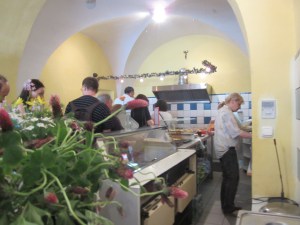
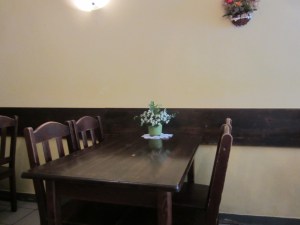
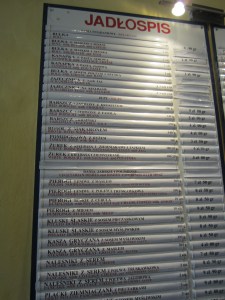
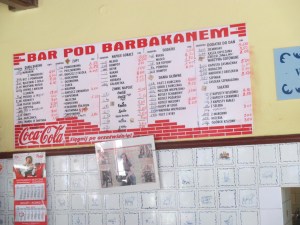
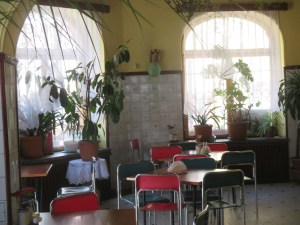
Depending on the milk bar’s popularity and the time of day, you can expect a relatively long line at lunchtime. The large menu on the wall will list the items in Polish and the price per serving. The interior will be low frills, usually metal-framed tables and chairs for 2 or 4 people, and minimal décor.
Milk Bars in Warsaw and in Krakow
The typical patrons are university students and professors, local workers, and pensioners. They order, eat, and leave since the ambiance doesn’t lend itself to leisurely dining. The expectation is to eat and move on.
Menu
Each milk bar is unique, but all the menu items are familiar to Poles and may not be in English. Milk bars that cater to tourists have the foods listed in Polish and English. There is nothing wrong with that if it encourages visitors to order. Some milk bars offer an English translation on paper without prices.
One of the best features of milk bars is that they serve fresh foods without artificial preservatives. Some favorite and traditional foods at a milk bar are:
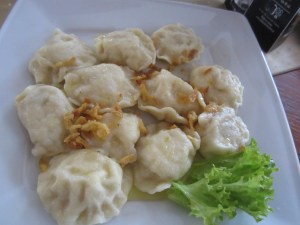
Pierogi filled with meat, sauerkraut, mushrooms or potatoes and cheese.
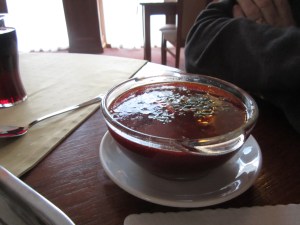
Soups: Zurek (my favorite), barszcz, chicken noodle, mushroom, or tomato
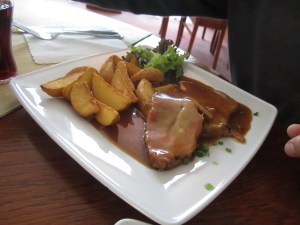
Meat Dishes: breaded pork cutlet, fried chicken legs and thighs, beef roulades, golabki (stuffed cabbage), and Bigos.
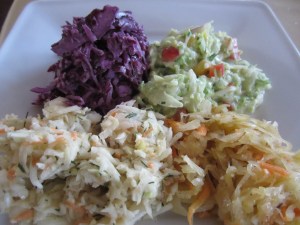
Sides: potatoes, sauerkraut, small salads such as coleslaw, cucumber salad, or mixed vegetables, potato pancakes, and bread
Beverages: coffee, tea, Kefit, or kompot (homemade fruit juices made with fruit, sugar, and raisins)
Desserts: Apple cakes, cheesecake, paczki, etc.
How to order:
Since milk bars are mostly cafeteria style, patrons will see the menu displayed above the serving or ordering area. Stand back and study it before you approach one of the servers.
The goal in ordering is to be quick and efficient. If you are a person with very limited Polish skills, study the menu and do a bit of translation. You might want to write down the food you desire before approaching the line and can ask other patrons for help. The younger people in Poland tend to have very good English skills. Many Poles in larger cities do speak some English, but the middle-aged and older populations were forced to learn Russian in school and often are not able to help.
Even if it is not reciprocated, smile while you order and start with “please” which is prosze (pronounced “proh-sheh”). Then say how many you want. You can also show the server with fingers, but it is preferable to learn the Polish number words:
one (jeden, pronounced “yeh-den”)
two (dwa, pronounced “dvah”)
three (trzy, pronounced “chrih”)
Many milk bars now offer carryout for a small fee. The cashier may ask you “na miejscu? (pronounced nah myay stsu) which means “For Here?” If you are finished ordering, say either “Tak” for yes or “Nie” (neeyeh) for no and continue to order.
Some milk bars are just a cafeteria line with most of the food in steam trays, but most have windows for picking up the order. You will receive a receipt to hand to the worker at the window. Soups and drinks are served immediately, but there is some wait for the popular dishes like pierogi. You can take the ready items to a table and begin to eat while waiting for the rest of your food. Listen for your order to be announced and be sure to bring your receipt. Confirm that the order is yours.
The patrons are expected to dispose of their trash and return the dishes in the appropriate area.
Now that you have the basic strategies, you are equipped to partake in a bit of history not on most tourist’s radar. Enjoy your dining as a cultural adventurer!
* If you want to see the Seinfeld episode, search youtube.com for Seinfeld and Soup.
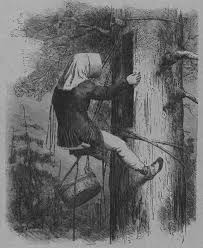
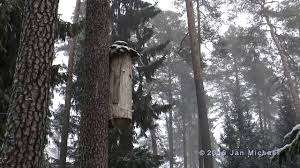
Honey produced in Poland has always been esteemed as a type of liquid gold. Historically, many bee colonies were under control of the royal landowners. Stealing honey from their estates was often met with death on the gallows. Destroying an entire colony of bees, even if they belonged to the accused, resulted in an unimaginable punishment: evisceration. The person would “be handed over to the executioner, who shall take out the entrails and wind them round the tree in which the bees were willfully destroyed and shall afterwards hang him on the same tree.”[1]
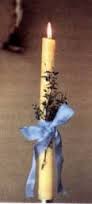
One of the most unique gifts I have ever received came from a cousin who lives in a small village in Poland. He handed me a precious gift at our first meeting with these words of caution, “Now this candle is special. It should only be lit during lightning storms or if someone in your house is on their death bed.”
This lovely candle is a gromnica (plural gromnice) and is also known as a Thunder Candle. The Polish word “grom” means a clap of thunder. Almost every Catholic home in Poland will have at least one of these long and relatively thick candles that are decorated with religious symbols and images. In modern times, the gromnice is stored away carefully for important ceremonies such as a christening, First Communion, Confirmation or Anointing.
The most important function of gromnice has not been ceremonial but protective. As its name implies, the gromnica was believed to protect against thunderstorms and was lit and placed in windows to keep lightning away. My ancestors’ village was in the middle of a huge forest, and I can imagine the villagers knew how the destructive havoc of a bolt of lightning. Likely they saw many homes that were destroyed that way. As a child, I can recall how terrified my Polish aunt was of lightning storms. Even though she didn’t live in a forest, her intense fear of lightning was obviously passed down through the generations. Polish prayer books often contain a prayer to say during storms.
Travel Back to Your Roots has just been released on Amazon.com. My goal in writing this book was to inspire others who wish to research their European immigrant ancestors and hopefully discover cousins back in the old country.
Travel Back to Your Roots is for beginning genealogists and those who may not know how to make the jump over the pond to research parish and village or town records in Europe. The reader will learn how to first find the necessary US census, church, and immigration records before tackling those in European churches and archives.
One chapter on immigration will give the reader insight into the reasons for immigration and details the Ellis Island experience to better understand our ancestors’ bravery and the struggles they encountered.
I’m optimistic you will have success in your research and therefore have chapters to explain how to find living descendants in Europe and then how to contact them. The reader will also learn how to plan a budget-friendly ancestral heritage trip.
Finally, another chapter explains how to self-publish beautiful and professional family history books and genealogies at no cost using Create Space. Check out my Amazon site to see examples of these types of books.
Starting genealogy just six years ago, I been able to go back to the 1700’s in the European records with seven out of eight of our immigrant ancestors (Polish, Swedish, and German.) I also found eight groups of cousins in Poland and Sweden and was enthusiastically welcomed to visit them in 2014 , 2016 and 2018. They all exemplified the saying “A Guest in the House is God in the House.”























 Donna Gawell