Dedicated to my historical novels: War and Resistance in the Wilderness, In the Shadow of Salem, The Young Partisans and History, and Travel to Europe and Australia
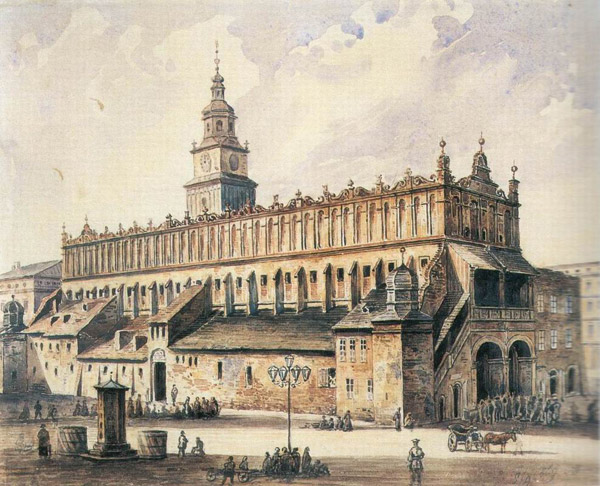
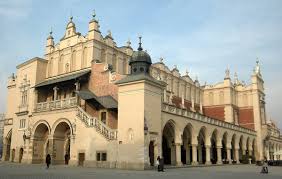
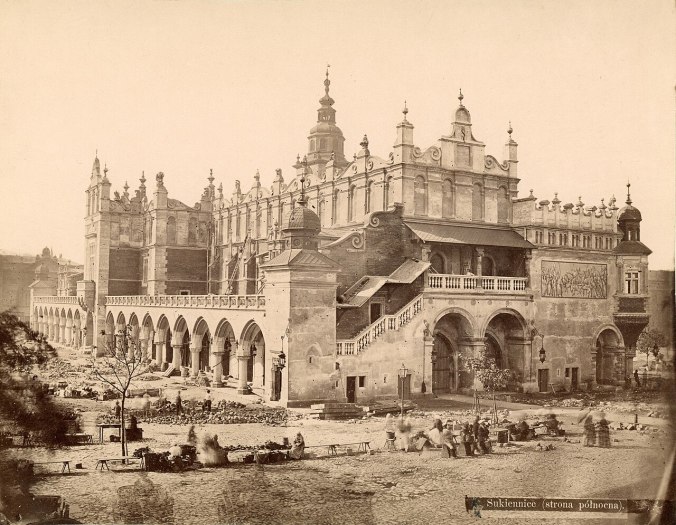
For centuries, the Cloth Hall, also known as the Sukiennice, has stood at the center of Kraków’s Rynek or main market square, welcoming merchants, students, kings, and travelers. Few buildings in Europe combine so much history, architectural beauty, and living tradition in one place. When you walk beneath its arches today, you’re experiencing a marketplace that has been operating for more than 700 years.
Cloth Hall is perhaps the most spectacular site in the town square, and St. Mary’s, the magnificent 800-year-old basilica, sits opposite it. The medieval town hall tower lies on the other side, providing great views and photo opportunities.
A Marketplace Born from Medieval Trade Routes
Kraków’s rise as a trading hub began early. The city sat at the crossroads of major medieval trading routes connecting Western Europe with the kingdoms of Ruthenia and the Black Sea, and the Baltic region with Hungary and the Mediterranean.
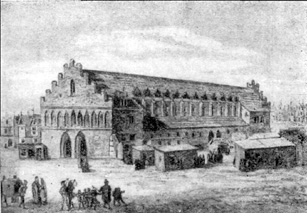
By the late 13th century, shortly after the city was rebuilt on a new grid plan under Magdeburg Law, a covered market hall stood in the center of the enormous Main Square. King Boleslaw the Bashful (1243-1279) is often credited with the design of the city square.
Merchants from England, Flanders, Germany, Italy, and the East passed through Kraków, making the town one of the major commercial stops in Central Europe. It is also believed that the counters’ exteriors provided lodging for traveling merchants.
The Gothic Hall and Medieval Trade
The earliest Cloth Hall was a long Gothic-style building with market stalls lining a central passageway. Here, cloth merchants sold English broadcloth, Flemish linen, and local Polish textiles. The hall also served as a customs point where city officials inspected and taxed imported goods. Sukiennice, which literally means “little cloth shops”, quickly became the economic heart of Kraków.
But it wasn’t just cloth that moved through Kraków. Records from the Middle Ages show an astonishing variety of merchandise:
Baltic amber
Hungarian copper and lead
Spices and leather goods from southern Europe
Beeswax, salt from the Wieliczka mine, and metalwork
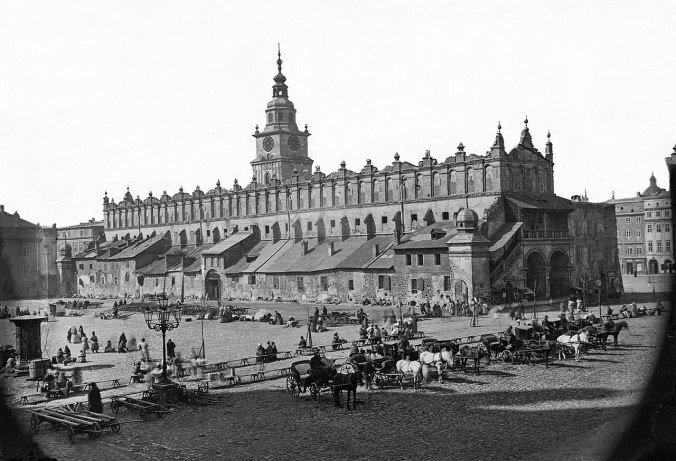
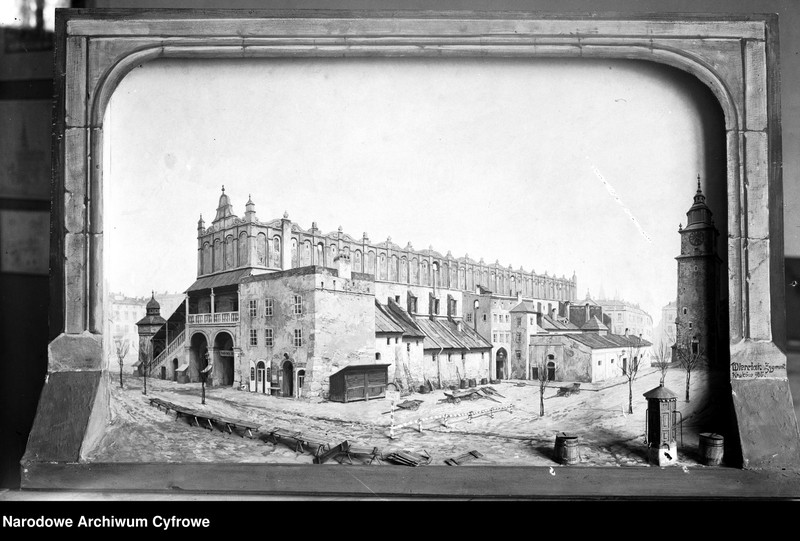
A devastating fire in 1555 allowed Kraków to rebuild the Cloth Hall in a more elegant style. Under the influence of Italian Renaissance artists and architects working throughout Poland, the Sukiennice gained a beautifully decorated attic parapet (a low wall that runs along the edge of the roof), with carved faces and ornate details. It was also given a grander, more harmonious façade and improved interior stalls.
This Renaissance reconstruction created the iconic appearance most visitors recognize today. It also reflected the prosperity of Kraków’s Golden Age, when the city was home to the royal court, wealthy guilds, and a thriving university.
From Prosperity to Decline
The fortunes of Kraków changed over the next few centuries. Wars, invasions, and shifts in European trade routes brought economic decline. By the 18th century, the Cloth Hall had grown shabby and outdated.
Everything changed in the 19th century. During the era of the Austrian Partition, when Poland no longer existed on the map, Kraków’s leaders set out to restore the Sukiennice as a symbol of Polish pride and cultural identity.
The Great 19th-Century Restoration
Between 1875 and 1879, Architect Tomasz Pryliński was contracted to redesign the exterior in a stylish Neo-Gothic manner. He created elegant arcades along both sides, and the interior was reorganized and repaired.
The upper floor became home to the National Museum’s Gallery of 19th-Century Polish Art, the first national museum in Poland. This transformation solidified the Cloth Hall as both a cultural institution and a marketplace.
Sukiennice Today
A visit to Kraków wouldn’t be complete without stepping inside the Cloth Hall. Today, it remains a vibrant working marketplace and center for art and culture. The main hall still hosts rows of stalls, many run by artisans selling Polish folk art, amber jewelry, wooden carvings, embroidered linens, and other traditional crafts. In many ways, the Cloth Hall continues the commercial traditions of the medieval merchants who once worked here.
Upstairs, the National Museum displays some of Poland’s most important 19th-century paintings. Visitors can view dramatic historical scenes, romantic landscapes, and portraits that capture the spirit of the era.
A Window Underground
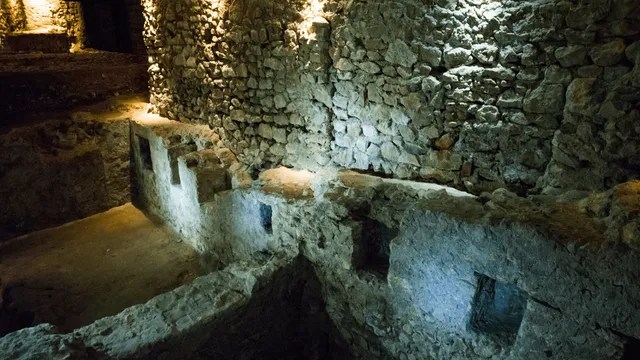
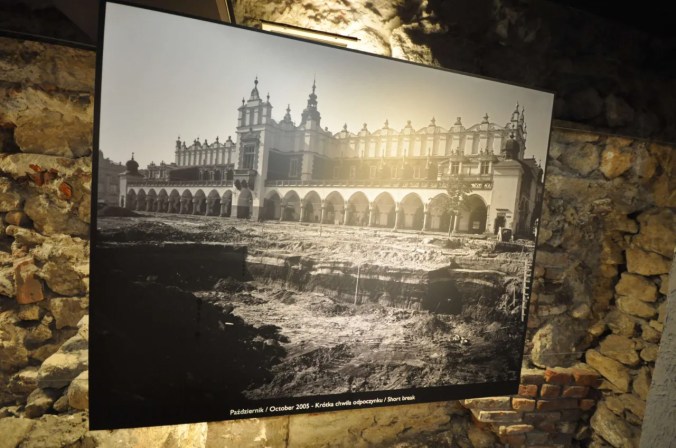
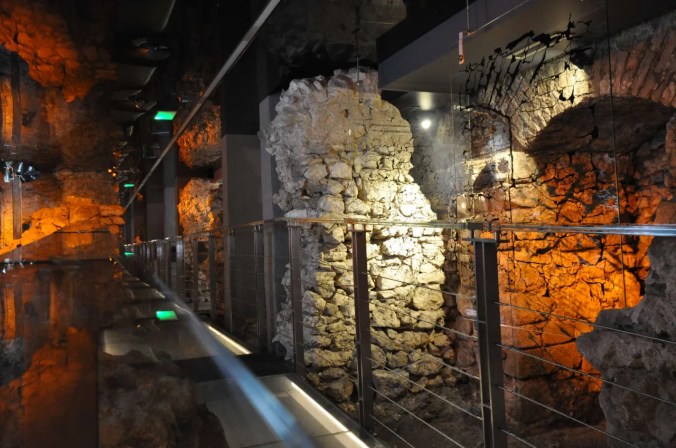
Beneath the building, the Rynek Underground Museum reveals the preserved foundations, stone roads, and merchant installations from medieval Kraków. It is one of the most fascinating archaeological museums in Europe. The entire town square was excavated from 1974 to the early 2000s.
The museum lets visitors walk through 800 years of Krakow’s history in a single underground corridor, revealing how the bustling market square evolved from a modest trading post to a Renaissance hub. You can see the foundations of the medieval town hall that burned down in 1498. The archaeologists found skeletal evidence of vampire burials that are on display.
More than anything, the Sukiennice brings together the threads of Kraków’s identity, trade, culture, architecture, and community into a single, beautifully preserved building.
If you are interested in the history of the Polish people, please check out my newly released book on Amazon: Our Polish Ancestors: The Cultural History of the Polish People from the Middle Ages to WWI. https://www.amazon.com/dp/B0G2GN43RH
Jesus brought his disciples to the region of Caesarea Philippi before his final journey to Jerusalem, as described in the Gospel of Matthew. They had been together for almost three years and were followed by crowds wherever they went. Here, in this northeastern area of Israel not frequented by pious Jews, Jesus would have some private time to prepare his disciples for the inevitable.
Jesus’ teaching in Caesarea Philippi would be the first time he spoke about his future church, and it seems curious why Jesus chose this faraway, pagan location for one of his most important lessons and revelations. Jesus, however, was a masterful, intentional teacher and storyteller. He must have selected this area for a powerful visual illustration of the disciples’ future challenges and responsibilities.
I had the privilege of visiting Caesarea Philippi, now known as Banias, in November 2022. Banias, on the foothills of the beautiful Mt. Hermon, is lush and teeming with trees and wildlife. The beautifully shaded, rocky area gives shelter to rock badgers, or hyraxes, that scamper in and out of the crags. Driving from the northern Galilee region to this most northern area of Israel caused me to consider the long distances Jesus and his disciples walked. The terrain is rugged and hilly, and as we drove, I reflected on how Jesus’ journey must have been long and arduous. I wondered if any of his disciples complained about their sore leg muscles like I would have.
Some researchers say Jesus and his disciples would have traveled by boat from Magadan to Bethsaida before their trip to Caesarea Philippi. Bethsaida is located on the northern shore of the Sea of Galilee. This body of water is nearly 700 ft below sea level. From there, they likely spent some days making the 25 mile ascent to Caesarea Philippi, which was located at an elevation 1,150 ft above sea level.
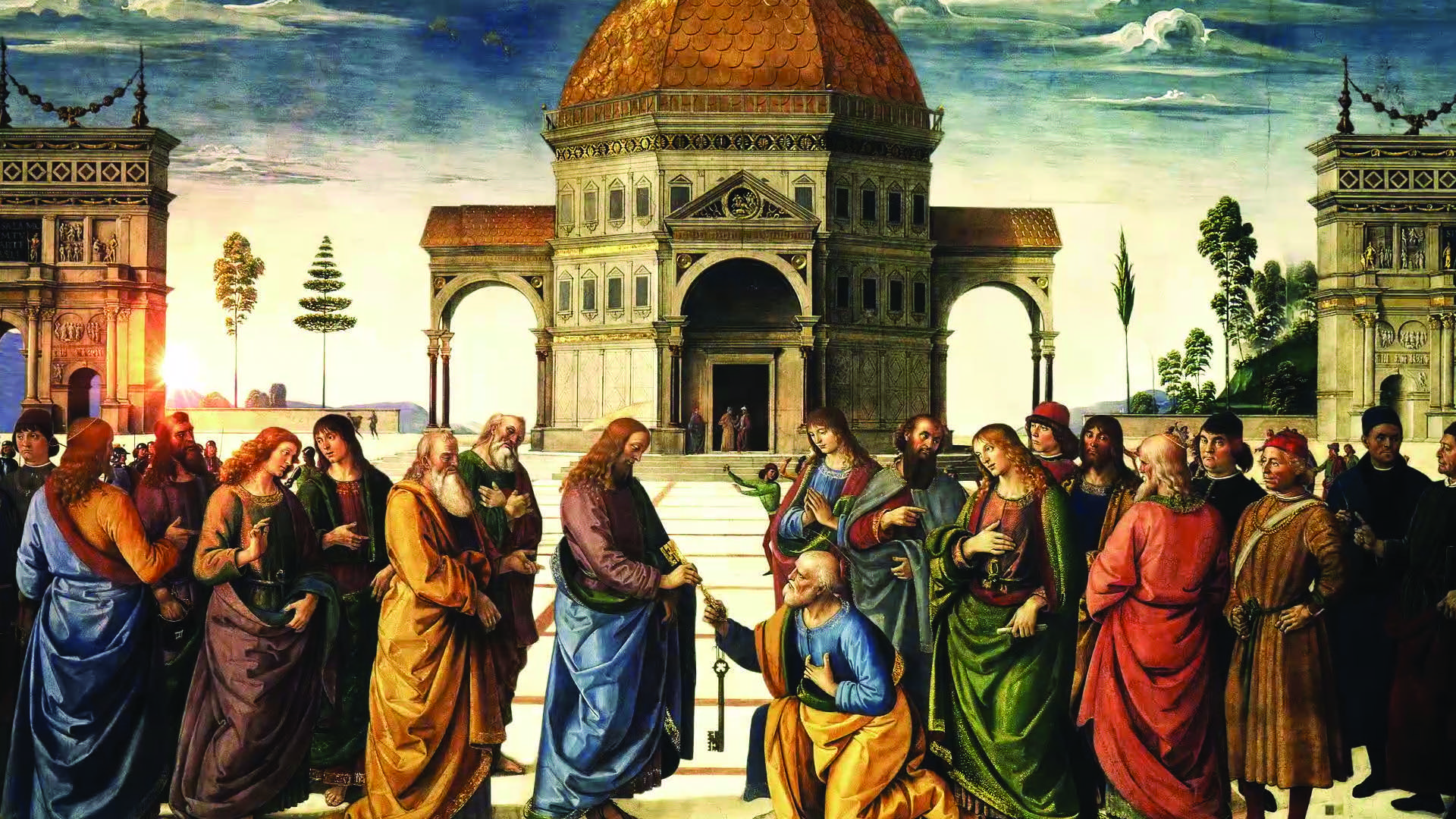
At Caesarea Philippi, Jesus and his disciples would have seen the largest rock formation in Israel with pagan statues and at least fourteen temples in the background. Without understanding the uniqueness of this visual context, a person reading Matthew 16:13 might imagine the setting to be what classical painters of religious stories created. We can’t be too upset with these Renaissance artists, as they had no opportunity to travel to the real setting. Below is a painting without an accurate background.
Figure 1 Renaissance Painting of Jesus handing Peter the Keys to Heaven at Caesarea Philippi
The Ancient History of Caesarea Philippi
In Old Testament times, Caesarea Philippi, then known as Banias, sat at the base of Mount Herman. The early Canaanites worshiped Baal at Banias, and prisoners were thrown into the “Gates of Hell”, to determine guilt for a crime. Ferocious waters gushed from a very large spring of this limestone cave. In ancient times, the water was fast-moving and would have propelled the bodies over the rocks, and death was guaranteed. The waters filled with human or animal corpses must have been a frightening sight. Eventually, the cult of Baal was replaced with the worship of Greek fertility gods and Caesar.
Figure 2 The Cave of Pan at Banias today
To the ancient Greeks who settled in this area, the cave at Caesarea Philippi was the gate to the underworld, where fertility gods dwelt during the winter and then returned to the earth each spring. The people also believed the cave held the “Gates to Hades.”
The location of Caesarea Philippi is significant because the entire region was considered the domain of the Nephilim and their disembodied spirits. Mount Hermon was ground zero for the Genesis 6 transgression and where we are told in 1 Enoch that the fallen elohim made their pact to take human women. Additionally, this is also the location where King Jereboam constructed his adulterous center of worship.
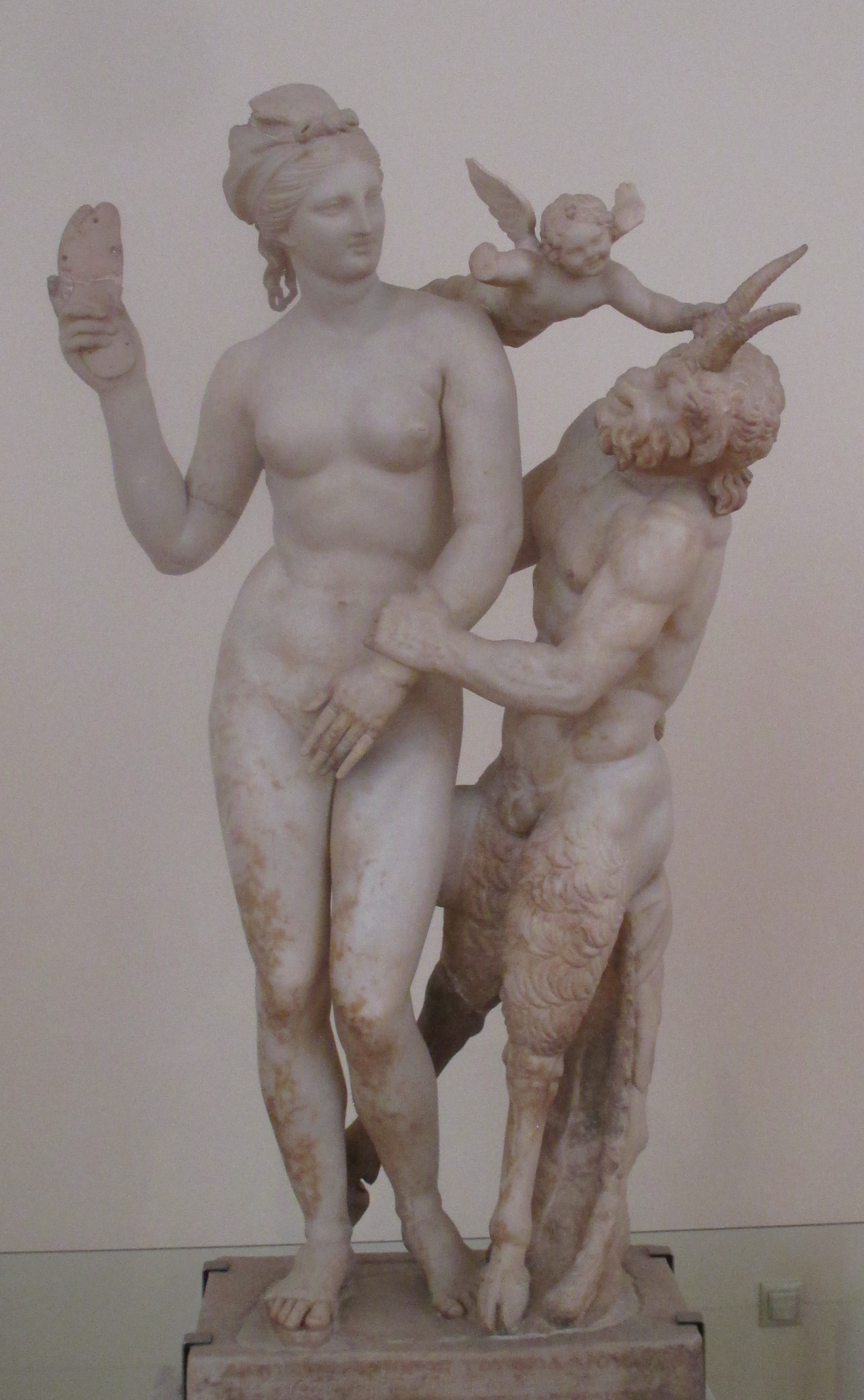
At the time of Jesus, the most important god in Caesarea Philippi was Pan, the Greek god of shepherds and the wild. Pan’s hindquarters, legs, and horns are like that of a goat, while his upper body was of a man. The Greeks believed Pan was born in this cave, and he is often associated with music and fertility. Each spring, the people of Caesarea Philippi engaged in wicked deeds, including prostitution and sexual interaction between humans and goats to entice the return of Pan.
Statue of Pan at the Athens Archeology Museum
When the Romans conquered this territory, Herod the Great gave it to his son Philip who rebuilt the city, named it after Caesar, with his name inserted to distinguish it from Caesarea Maritima, and added a Roman temple. During the early years of the Roman occupation, the local people continued to focus their worship on Pan and other Greek gods at the shrines and temples.
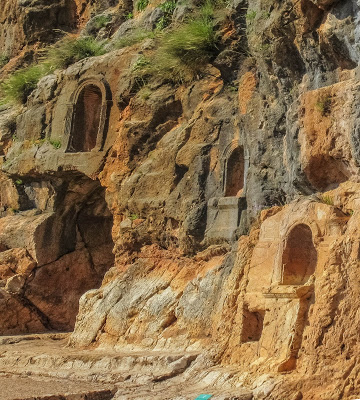
Figure 4 Niches in the limestone where Greek Statues were placed are still seen today
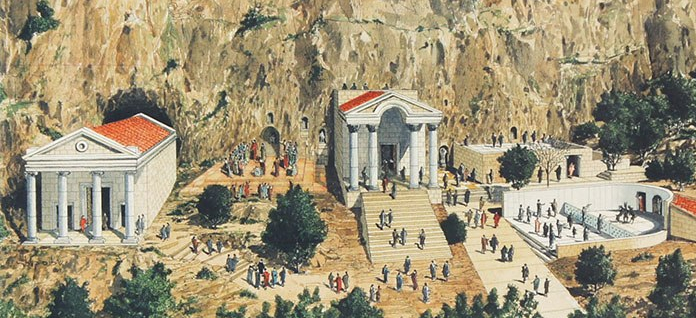
The ruins of the temples still exist today, and visitors can see the inscription of dedication to Pan inside the largest niche. In ancient times, statues were placed by the Greeks in these large niches carved into the limestone of the massive cliff. Most prominent were the Temple of Pan and the Temple of the Dancing Goats.
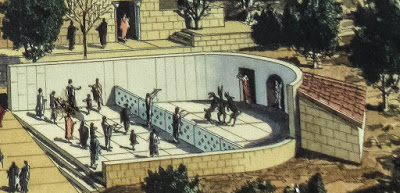
Figure 5 Temple of the Dancing Goats
Yes, there were dancing goats back then. A large market was a short distance from the temple area where goats were sold for sacrifice to Pan. An orchestra near the temple provided music, and worshipers would “dance” with the goats before leading them for sacrifice.
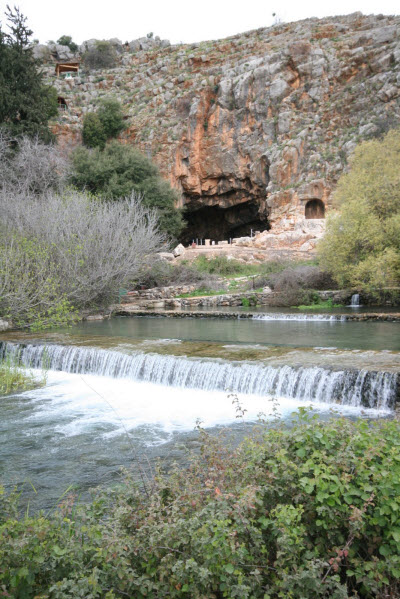
At the rear of a temple was the Cave of Pan. It was at the foot of a cliff where spring water flowed directly from the cave’s mouth. This fast-moving stream, the beginning of the Jordan River, was created by seventy-two springs originating in the bowels of the mountain. The waters were so deep that ancients were unable to plumb the depths and therefore considered it bottomless. Over the centuries, earthquakes have destroyed the cave, and modern engineering has diverted the waters, so we no longer see the furious torrents of water.
Figure 6 Cave of Pan or the Gates of Hell/ Hades today
It was in this cave the worshipers threw their slaughtered goats into the powerful waters. The sacrifice was accepted by Pan if the goat sank. If the goat floated, it meant Pan had rejected their offering, and the worshipers were required to purchase another goat and try again. The goat’s bodies were retrieved and buried in the Sacred Temple of the Goats. I believe that the goat carcasses were likely retrieved, and their meat was sold in the commercial area of Caesarea Philippi, as was the practice of many pagans in ancient times. It was said the waters of the Cave of Pan were always colored red from the blood.
Jesus Challenges His Disciples at Caesarea Philippi
The gospel in Matthew 16:13 provides the most detail of Jesus’ important teaching in this setting, rife with references to pagan symbols.
“Now, when Jesus came into the district of Caesarea Philippi, he asked his disciples, “Who do people say that the Son of Man is?” And they said, “Some say John the Baptist, others say Elijah, and others Jeremiah or one of the prophets.” He said to them, “But who do you say that I am?” Simon Peter replied, “You are the Christ, the Son of the living God.” And Jesus answered him, “Blessed are you, Simon Bar-Jonah! For flesh and blood has not revealed this to you, but my Father who is in heaven. And I tell you, you are Peter, and on this rock I will build my church, and the gates of hell shall not prevail against it. I will give you the keys of the kingdom of heaven, and whatever you bind on earth shall be bound in heaven, and whatever you loose on earth shall be loosed in heaven.”
Jesus proposed two questions to his disciples. The first, “Who do people say the Son of Man is?” could be easily answered by their observations as they traveled with Jesus. Herod promoted a rumor that Jesus was the resurrected John the Baptist. Some people believe Jesus to be Elijah, whose return was anticipated as he would announce the coming Messiah. Some thought Jesus was Jeremiah because of their similar warnings.
Jesus’ second question is one we should all answer, and Peter’s response was perfect: “You are the Christ, the Son of the living God.” Peter wasn’t the first to declare this revelation. The Gospel of John tells us the disciples knew Jesus was the Son of Man, the Messiah or Christ, and the Son of God when they began to follow him. At Caesarea Philippi, Jesus wanted each disciple to fully understand His identity, not only God the Father’s. For three years, the disciples had heard his teachings and witnessed his healing ministry, but Jesus wasn’t just a miracle worker and healer. He wanted to be certain these disciples understood his complete, divine nature and to know the sovereignty of his Father’s kingdom was available for everyone to experience for all time.
Now, imagine Jesus standing at a distance, looking at this cliff with the pagan statues in the niches. Since this was a pagan “red light zone,” it is unlikely Jesus and the disciples were standing close to this heathen area of worship. He then said to Peter and his disciples, “And I tell you, you are Peter, and on this rock I will build my church, and the gates of hell shall not prevail against it.”
This day in Caesarea Philippi is when Jesus founded his church. His church would symbolically be built on the “rock” of Caesarea Philippi, one then filled with niches for pagan idols and where ungodly beliefs and values dominated. This huge rock’s destiny was like so many ancient tels in Israel: to be crushed and destroyed as rabble, and where God’s kingdom would be built on its ruins.
Anyone familiar with this part of the ancient world knows earthquakes, wars, and other forms of destruction will surely decimate not only man-made buildings but also massive outcrops like in Caesarea Philippi. Jesus wasn’t suggesting a church building would be constructed on top of these pagan sites, but that his church was to be built stone by stone using people like Peter, the disciples, and you, and me. Jesus had given Simon Peter a new name, “Petros,” meaning a single stone. “Petra,” the term Jesus used for his future church, means a massive rock or formation; fixed, immovable, enduring.
In the ancient world, gates were defensive structures to keep the enemy out, but Jesus doesn’t want us cowering behind them. When he stated, “and the Gates of Hell will not prevail,” Jesus was suggesting those gates should be attacked. His followers were challenged to not hide from evil and would be commanded to storm the Gates of Hell, which would not hold up under the triumphant forces of Jesus’ church.
Then, Jesus said, “I will give you the keys of the kingdom of heaven, and whatever you bind on earth shall be bound in heaven, and whatever you loose on earth shall be loosed in heaven.” Catholic theologians have historically believed this passage proves Peter was intended to be the head of the Christian church. But, if we look at the early church, it was both Peter and James, the brother of Jesus, who would lead the church then centered in Jerusalem.
Who exactly holds the keys to Heaven is a topic that is widely debated. Some people believe that Peter was given the keys, and that point of view can be supported as Jesus intended to use him in unique and miraculous ways. Peter was the first to use the keys of the kingdom when he delivered the first sermon after Pentecost that would electrify and grow this new church. Peter would break down the Kingdom’s barriers between Jews and Gentiles when he met with Cornelius. Jesus Christ’s church’s gate was now unlocked and would remain wide open for all who enter through the precious blood of Jesus Christ.
Others believe the keys were given to the disciples. This is supported by Matthew 18:18, when Jesus repeated his instructions, where he was clearly speaking to all of them. “…whatever you bind on earth shall be bound in heaven, and whatever you loose on earth shall be loosed in heaven.” In our individualist culture, we often interpret “you” in scripture as singular. Often, a more correct way is to view “you” as plural.
Many theologians point out there was more than one key as Jesus used the plural, “keys.” They emphasize that all believers hold the keys to the kingdom of Heaven as we believe, forgive, serve, trust, and pray. Perhaps the keys to the Kingdom of Heaven were meant to set us free from bondage to grow Jesus’ church and bring glory to God.
Figure 7 Caesarea Philippi in ancient times
After the visit to Caesarea Philippi, Jesus presented the disciples with another word of caution: “If anyone is ashamed of me and my words, the Son of Man will be ashamed of him when he comes in his glory” (Luke 9:26). He understood his followers would face ridicule and resistance as they tried to confront evil.
The disciples must have felt overwhelmed by Jesus’ challenge and teachings. He was now commissioning them to an enormous task: to attack evil and to build his church on the places that were filled with moral corruption. His kingdom would grow and expand to glorify God.
Now, look at these photos again and imagine you are amongst the disciples on that day in Caesarea Philippi listening to Jesus’ message. Jesus isn’t talking to just those in church buildings and Christian schools; He is talking to each of us in our daily lives. Are you on defense or offense in the Kingdom of God?
In the Book of Job 36:2, Elihu says, “I have yet something to say on God’s behalf.” as he chastens Job’s three friends. Many people might think the privilege and responsibility to speak on God’s behalf only applies to clergy who are gifted in teaching or evangelism, but scripture reminds all believers we are not to hide our candle under a bushel but be “a city set on a hill.”
Even if we have a nervous temperament or a retiring disposition, we’re not to indulge our weaknesses and be useless to the church. Like Peter and John said, “I have no silver and gold, but what I do have I give to you.” Don’t cower and hide because your fears of family disharmony or of appearing foolish or ill-equipped are greater than sharing what God has set on your heart.
We might not have the opportunity to preach on the mountaintop, but the praises of Jesus should be heard in our homes and during our ordinary daily lives. As Charles Surgeon once preached, “Our simple words will be refreshing to ourselves, cheering to the saints, useful to sinners, and honoring to our Savior.”
Scripture is taken from the New International Version (NIV)
Travel Back to Your Roots has just been released on Amazon.com. My goal in writing this book was to inspire others who wish to research their European immigrant ancestors and hopefully discover cousins back in the old country.
Travel Back to Your Roots is for beginning genealogists and those who may not know how to make the jump over the pond to research parish and village or town records in Europe. The reader will learn how to first find the necessary US census, church, and immigration records before tackling those in European churches and archives.
One chapter on immigration will give the reader insight into the reasons for immigration and details the Ellis Island experience to better understand our ancestors’ bravery and the struggles they encountered.
I’m optimistic you will have success in your research and therefore have chapters to explain how to find living descendants in Europe and then how to contact them. The reader will also learn how to plan a budget-friendly ancestral heritage trip.
Finally, another chapter explains how to self-publish beautiful and professional family history books and genealogies at no cost using Create Space. Check out my Amazon site to see examples of these types of books.
Starting genealogy just four years ago, I been able to go back to the 1700’s in the European records with seven out of eight of our immigrant ancestors (Polish, Swedish, and German.) I also found three groups of cousins in Poland and Sweden and was enthusiastically welcomed to visit them in 2014 and 2016. They all exemplified the saying “A Guest in the House is God in the House.”
A ebook version was released just a few days ago, so both versions are now available on Amazon.



 Donna Gawell