The Cloth Hall in Krakow: the Sukiennice

For centuries, the Cloth Hall, also known as the Sukiennice, has stood at the center of Kraków’s Rynek or main market square, welcoming merchants, students, kings, and travelers. Few buildings in Europe combine so much history, architectural beauty, and living tradition in one place. When you walk beneath its arches today, you’re experiencing a marketplace that has been operating for more than 700 years.
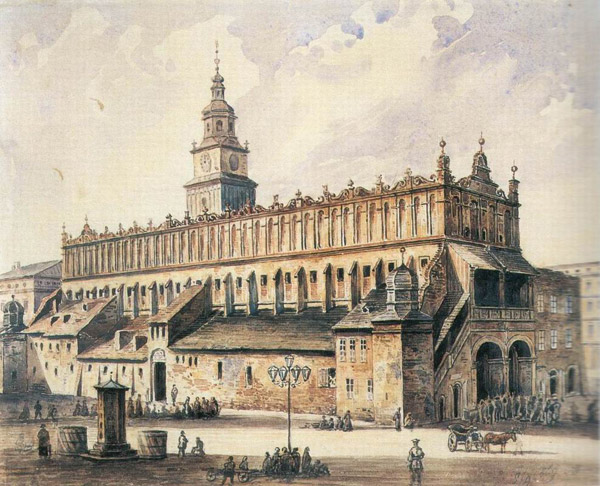
Cloth Hall is perhaps the most spectacular site in the town square, and St. Mary’s, the magnificent 800-year-old basilica, sits opposite it. The medieval town hall tower lies on the other side, providing great views and photo opportunities.

A Marketplace Born from Medieval Trade Routes
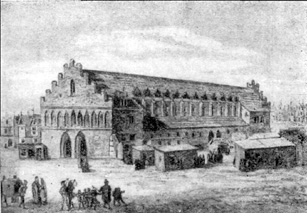
Kraków’s rise as a trading hub began early. The city sat at the crossroads of major medieval trading routes connecting Western Europe with the kingdoms of Ruthenia and the Black Sea, and the Baltic region with Hungary and the Mediterranean.

By the late 13th century, shortly after the city was rebuilt on a new grid plan under Magdeburg Law, a covered market hall stood in the center of the enormous Main Square. King Boleslaw the Bashful (1243-1279) is often credited with the design of the city square.

Merchants from England, Flanders, Germany, Italy, and the East passed through Kraków, making the town one of the major commercial stops in Central Europe. It is also believed that the counters’ exteriors provided lodging for traveling merchants.

The Gothic Hall and Medieval Trade
The earliest Cloth Hall was a long Gothic-style building with market stalls lining a central passageway. Here, cloth merchants sold English broadcloth, Flemish linen, and local Polish textiles. The hall also served as a customs point where city officials inspected and taxed imported goods. Sukiennice, which literally means “little cloth shops”, quickly became the economic heart of Kraków.

But it wasn’t just cloth that moved through Kraków. Records from the Middle Ages show an astonishing variety of merchandise:

  • Baltic amber
  • Hungarian copper and lead
  • Spices and leather goods from southern Europe
  • Beeswax, salt from the Wieliczka mine, and metalwork

A devastating fire in 1555 allowed Kraków to rebuild the Cloth Hall in a more elegant style. Under the influence of Italian Renaissance artists and architects working throughout Poland, the Sukiennice gained a beautifully decorated attic parapet (a low wall that runs along the edge of the roof), with carved faces and ornate details. It was also given a grander, more harmonious façade and improved interior stalls.

This Renaissance reconstruction created the iconic appearance most visitors recognize today. It also reflected the prosperity of Kraków’s Golden Age, when the city was home to the royal court, wealthy guilds, and a thriving university.

From Prosperity to Decline
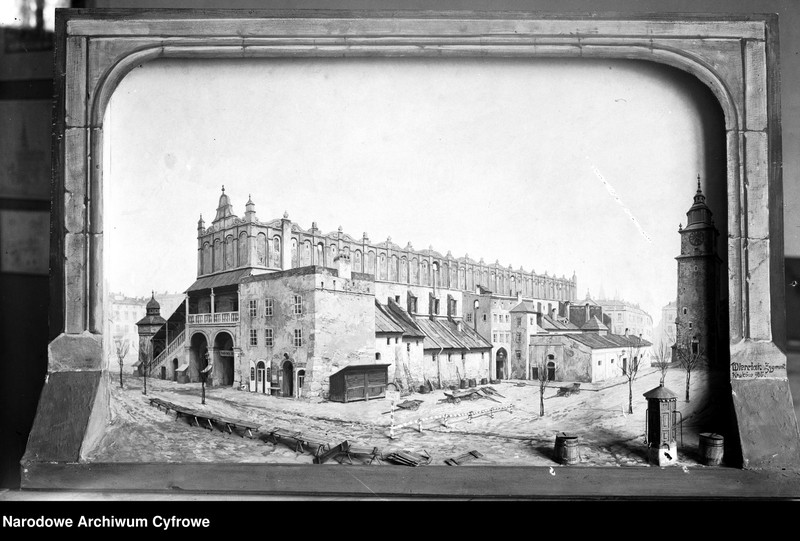
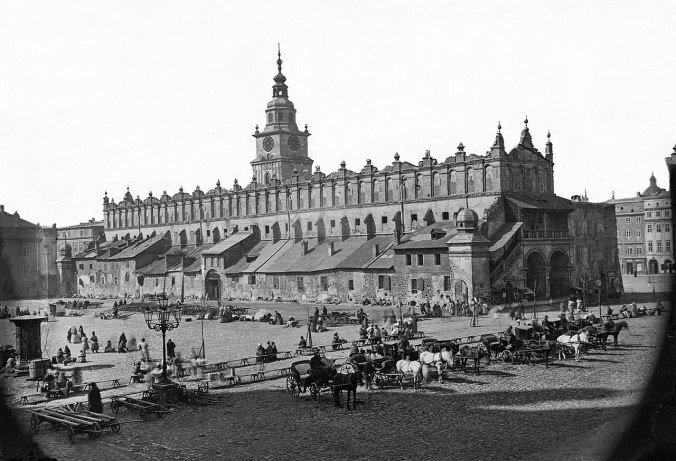
The fortunes of Kraków changed over the next few centuries. Wars, invasions, and shifts in European trade routes brought economic decline. By the 18th century, the Cloth Hall had grown shabby and outdated.

Everything changed in the 19th century. During the era of the Austrian Partition, when Poland no longer existed on the map, Kraków’s leaders set out to restore the Sukiennice as a symbol of Polish pride and cultural identity.

The Great 19th-Century Restoration

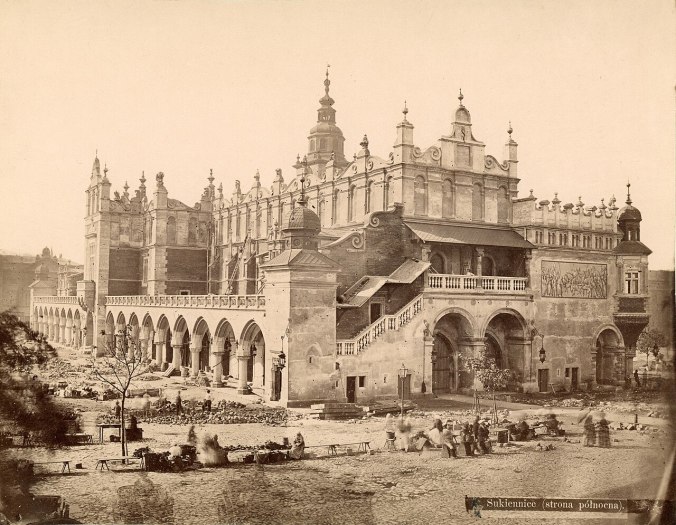
Between 1875 and 1879, Architect Tomasz Pryliński was contracted to redesign the exterior in a stylish Neo-Gothic manner. He created elegant arcades along both sides, and the interior was reorganized and repaired.

The upper floor became home to the National Museum’s Gallery of 19th-Century Polish Art, the first national museum in Poland. This transformation solidified the Cloth Hall as both a cultural institution and a marketplace.

Sukiennice Today
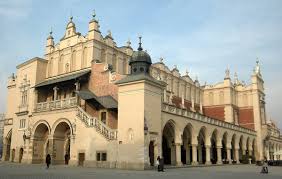
A visit to Kraków wouldn’t be complete without stepping inside the Cloth Hall. Today, it remains a vibrant working marketplace and center for art and culture. The main hall still hosts rows of stalls, many run by artisans selling Polish folk art, amber jewelry, wooden carvings, embroidered linens, and other traditional crafts. In many ways, the Cloth Hall continues the commercial traditions of the medieval merchants who once worked here.

Upstairs, the National Museum displays some of Poland’s most important 19th-century paintings. Visitors can view dramatic historical scenes, romantic landscapes, and portraits that capture the spirit of the era.

A Window Underground
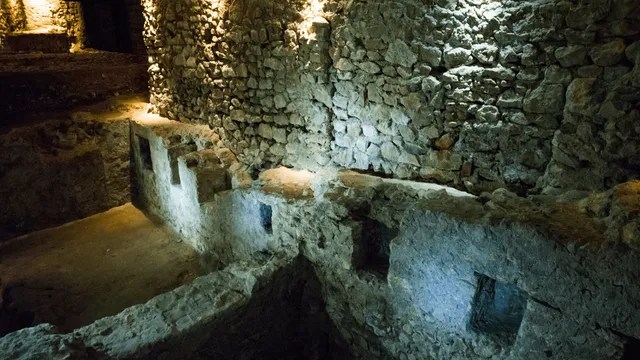
Beneath the building, the Rynek Underground Museum reveals the preserved foundations, stone roads, and merchant installations from medieval Kraków. It is one of the most fascinating archaeological museums in Europe. The entire town square was excavated from 1974 to the early 2000s.  
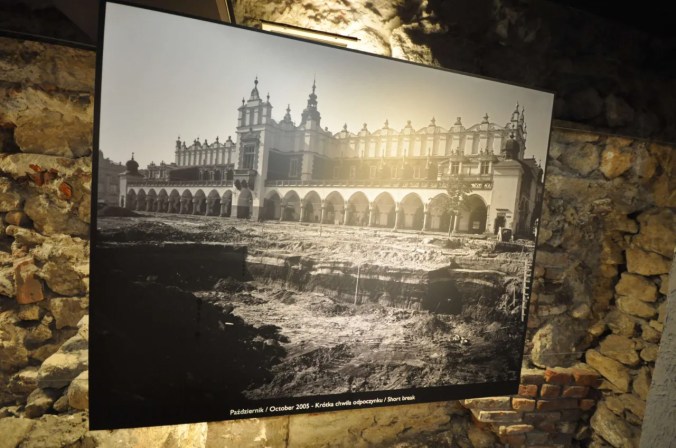
The museum lets visitors walk through 800 years of Krakow’s history in a single underground corridor, revealing how the bustling market square evolved from a modest trading post to a Renaissance hub. You can see the foundations of the medieval town hall that burned down in 1498. The archaeologists found skeletal evidence of vampire burials that are on display.
More than anything, the Sukiennice brings together the threads of Kraków’s identity, trade, culture, architecture, and community into a single, beautifully preserved building.

If you are interested in the history of the Polish people, please check out my newly released book on Amazon: Our Polish Ancestors: The Cultural History of the Polish People from the Middle Ages to WWI. https://www.amazon.com/dp/B0G2GN43RH
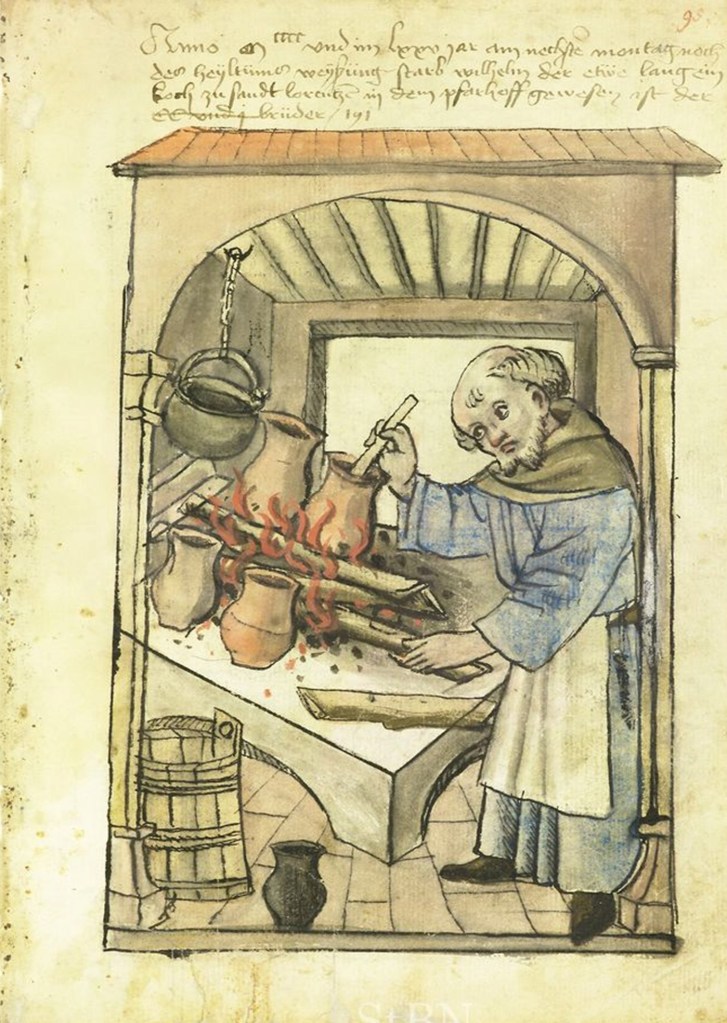
The Book of Crafts from the Middle Ages

From the Rynek Underground Museum in Krakow

Walking between the Cloth Hall and Saint Mary’s Church in Krakow, visitors may not realize that hidden under the ground is a treasure trove of knowledge about Kraków’s past. To discover it, you just step down into the Medieval Rynek (town square) below Cloth Hall.

The establishment of this interactive exhibition began with the archaeological study conducted from 2005 to 2010. There, researchers discovered traces of the many centuries of history. An archaeological reserve unique in Europe, covering nearly 43,000 sq. ft, was fashioned under the surface of the Rynek to provide a display for the treasures.

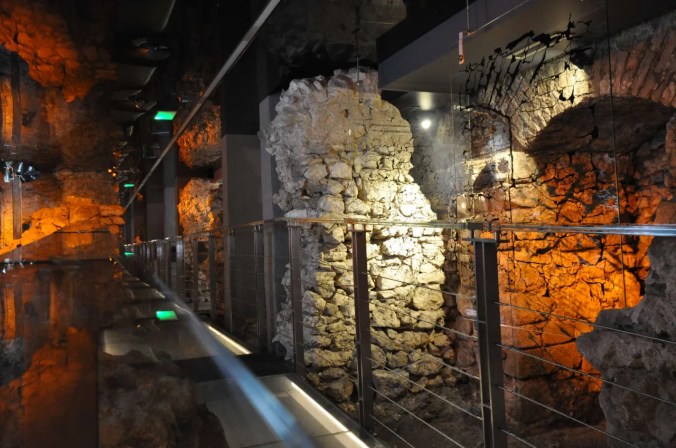
The Rynek Underground exhibition presents the connections between the city and medieval Europe’s chief centers of trade and culture and portrays the significance of the capital of Poland in the operation of the Hanseatic League. The historical objects on display are proof of the European cultural and trade exchange that continued here for hundreds of years. The tourist route under the Main Market Square leads between the stone and brick walls of the cellars and stalls of former trading sites, the Great Scales, and the Cloth Hall.

The exhibition shows medieval tools, historical coins, clay figures, decorations, dice, and toiletry articles used over 600 years ago, together with the Tartar arrowheads, beads, and medallions from the Orient.

Visiting the tourist route in the Rynek Underground, one can also become familiar with the history of Kraków from before the city’s foundation. A picture of the pre-charter settlement destroyed during the Tartar raid of 1241 emerges from the original foundations of cottages from the late 12th and early 13th century, as well as reconstructions of goldsmiths’ and blacksmiths’ workshops. The oldest history of the site is shown in reconstructions of 11th-century burials. The visitor will also learn about the vampire burials found during the excavations. Yes, vampires!

Visitors are immersed in Kraków’s Medieval market’s hubbub of bargaining. The exhibition is enriched with interesting models and multimedia – touchscreens, holograms, projections, and documentary films presented in the spaces of the cellars under the Cloth Hall arranged especially for that purpose.

The Book of Crafts

In 2023, I twice visited Kraków’s Rynek’s Underground Museum. Especially impressive was an electronic book displaying “The Book of Crafts,” pictures from the 1400s of men engaged in their skilled jobs. I carefully photographed all of them. On my return visit, I inquired about the origins of the pictures representing craftsmen from the Middle Ages. No tour guide had any information, nor was there any explanation.

Searching online for “The Book of Crafts” revealed nothing about this book. I then discovered what the museum called “The Book of Crafts,” a manuscript created in 1426 by Marquard Mendel (1425-1438). He was the caretaker for “The Twelve Brothers House Foundation,” founded by his ancestor, Konrad Mendel, in 1388.

In 1388, the wealthy merchant Konrad Mendel built a retirement home to accommodate twelve old Nuremberg craftsmen needing job training. He equipped the enterprise with enough capital for permanent management to train these men and future “brothers” with employable skills. 

Since around 1425/26, every “Mendel brother” has been depicted in 765 pictures that have been restored and carefully preserved. The pictures show the brothers practicing their craft, with authentic descriptions of the manufacturing processes, tools, workshop equipment, materials, and products. Initially, only the brothers’ names and biographical data were included, but expanded in later centuries to include short biographies.

These pictures from the Middle Ages portray workers from central European towns and cities such as Prague, Krakow, Nuremberg, etc., who traded and learned from their interactions and travels. The ones in this article are from the 1400s.

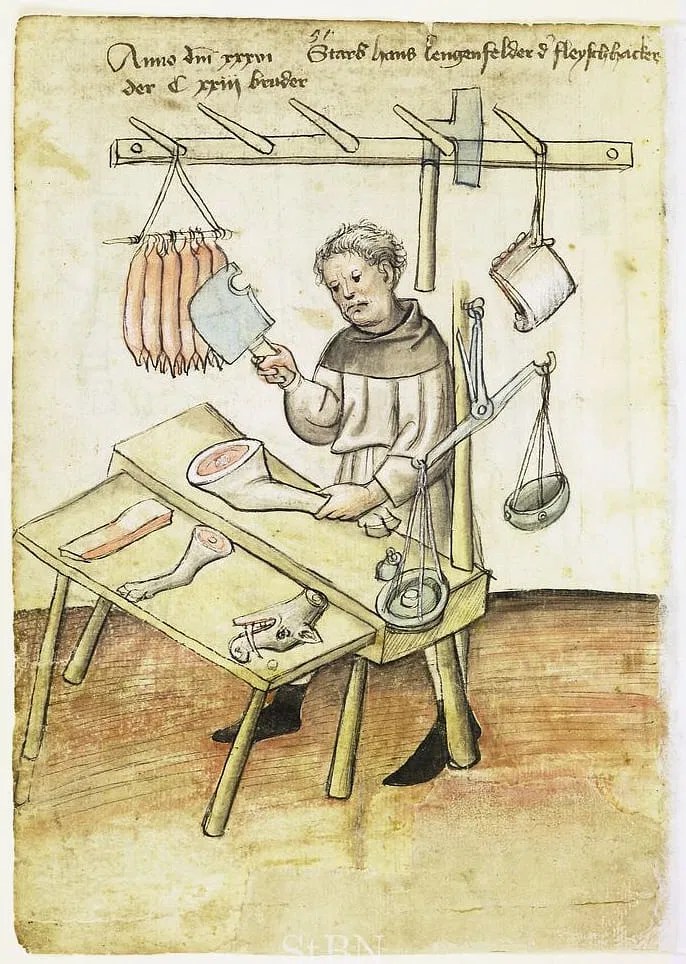
Hans is cutting meat and selling other products, such as sausages. The job of butchering animals created a lot of smell and waste. Towns regulated where they could process the meat.

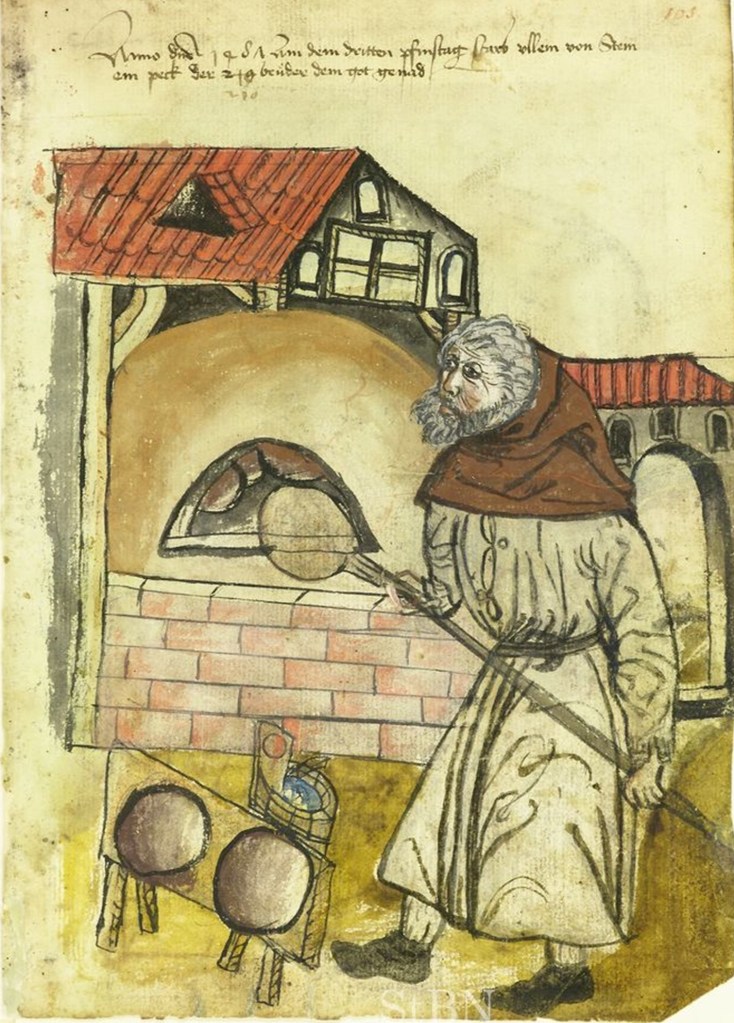
 Ulrich, the baker, stands in front of his brick oven and takes out baked loaves of bread with a baking shovel. Below is a pail with water, and two loaves of bread lie on a somewhat unfortunately rendered storage table.  

Continue reading

Krakow’s Christmas Tradition: the Szopka

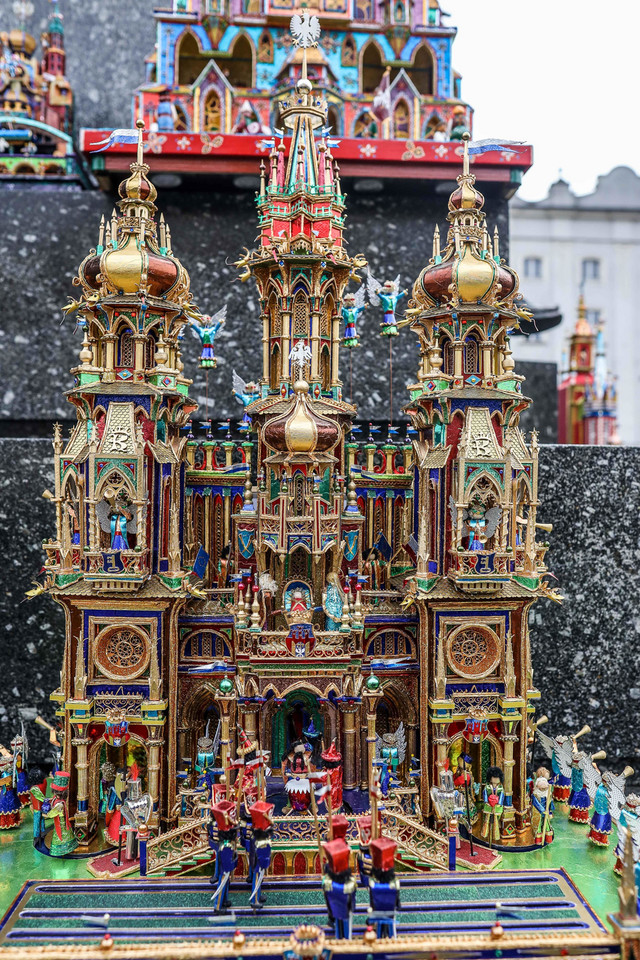
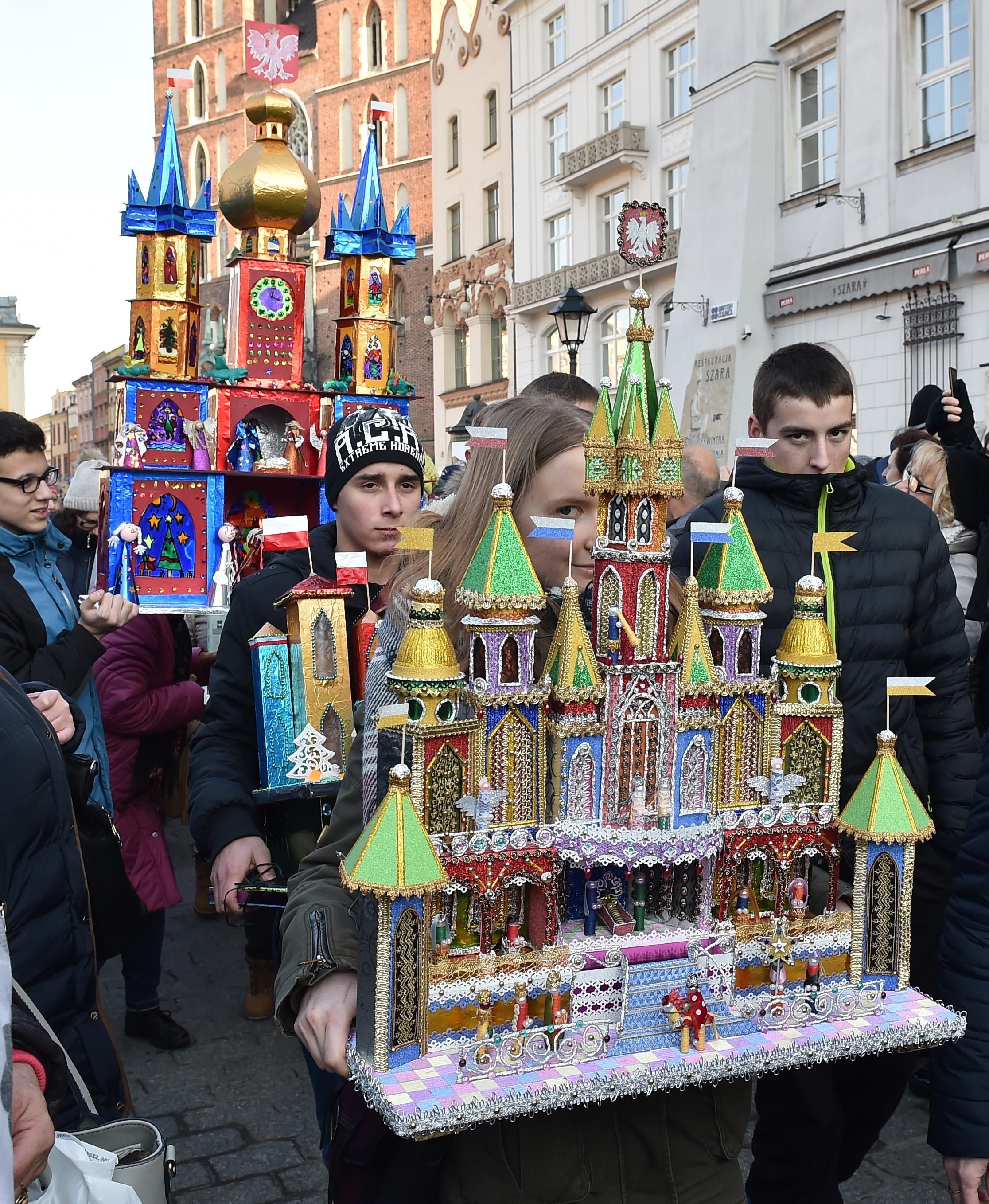
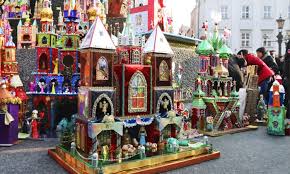
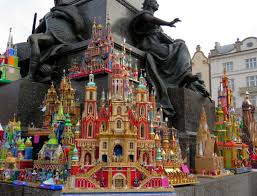
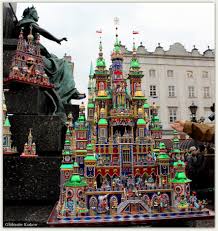
One of Krakow’s favorite holiday traditions dating back to the Middle Ages is the creation of szopki or Christmas cribs. These unique lightweight structures resemble the historic castles, houses, or churches around Krakow in miniature. Other scenes inside a szopka depict historical and contemporary events and contain figurines illustrating elements of Polish culture, such as politicians, artists, the Pope or the Dragon of Wawel. The main materials to build the structure are wood or plywood. Smaller parts are made of cardboard and then are decorated with colorful tinfoil.

BzsktkqTURBXy9jYmRmZjcyN2FmOTRiNzcwMDU0OWVmNjBiYTk5ZWYzMC5qcGVnkpUCzQPAAMLDlQIAzQPAwsM

The 2018 winners of Krakow’s Szopka or Christmas Crib Competition were announced on December 9, 2018, after the noontime trumpet call from the towers of St. Mary’s:

Kryspin Wolny is the winner in the category of large cribs

Renata and Edward Markowscy in the category of a medium nativity

Wiesław Barczewski in the category of small cribs

Jan Kirsz is the creator of the most beautiful miniature crib.

(I will include photos of the winners when they are available.)

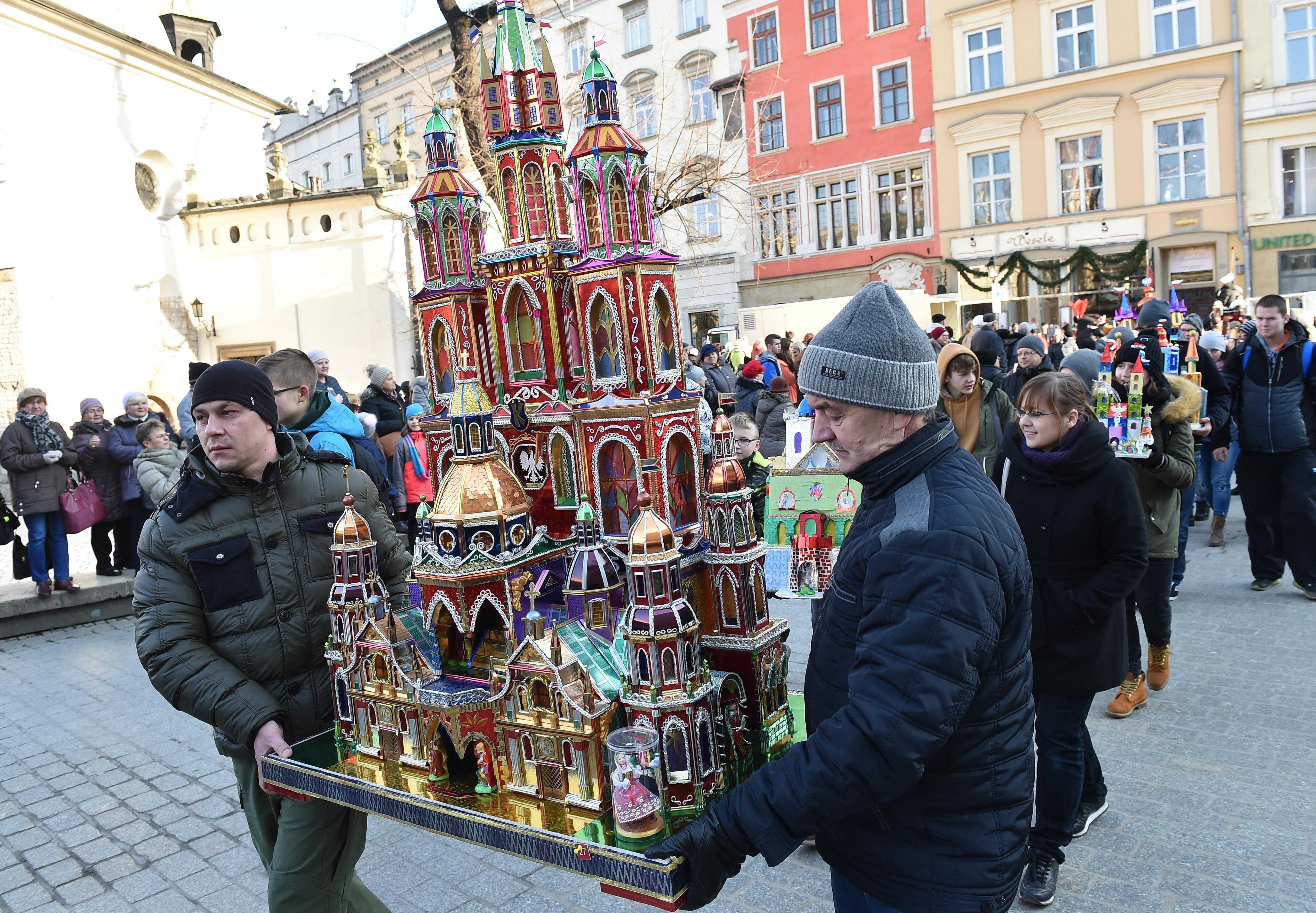
Every year on the first Thursday in December, the szopka creators place their splendid entrees on the steps of the monument to Adam Mickiewicz located in Krakow’s medieval town square. There, with the 800-year-old Cloth Hall and St. Mary’s in the background, thousands of visitors to the Christmas Market view the newest szopki. Following tradition, the artworks are again presented in a parade before announcing the winner. The szopki are then displayed in the Historical Museum of the City of Kraków.

szopki na krakowskim rynku

Started in the 14th century, the szopka represented the birth of the Baby Jesus, with the calls of the angels, the homage of the shepherds, and the three gifts brought by the Magi. A gallery of other characters representing various regions or countries, occupations, and ethnic groups were often included to honor the holy infant.

szopki_oldfashioned

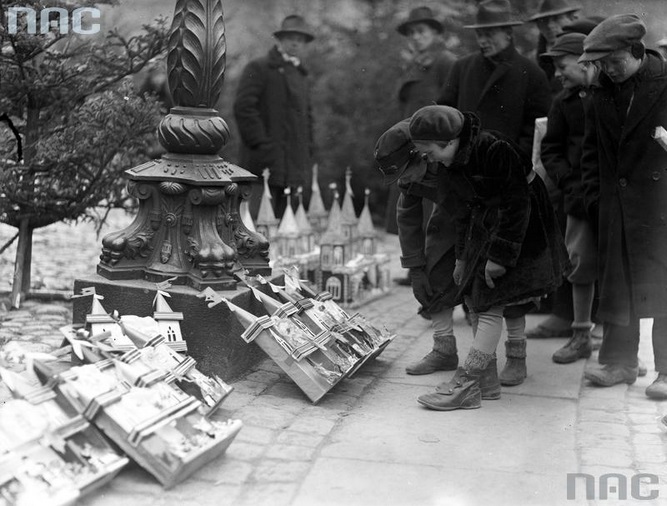
Szopki for sale in 1934 in Krakow

The modern tradition began in 1937 but came to a stop during the German occupation. The event resumed in 1945 on the steps of the destroyed Adam Mickiewicz statue.

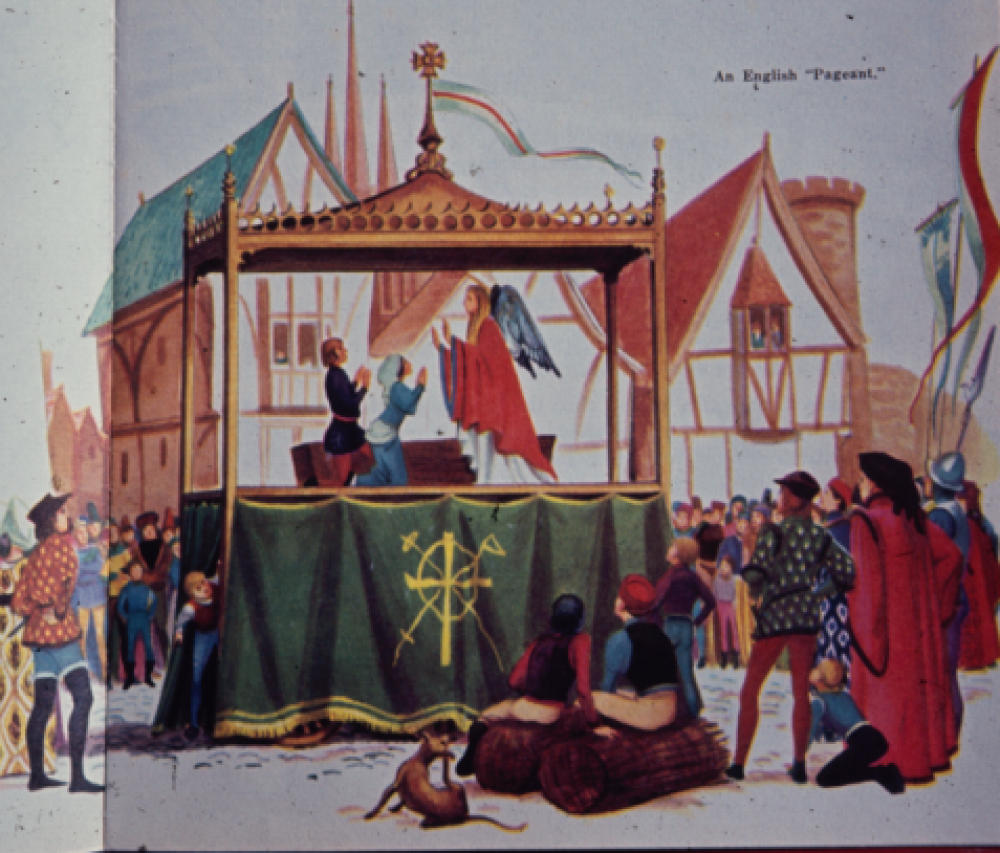
The origins of the szopka were likely from mystery plays performed at Christmas in the early 1200s when the Church organized processions. Other historians related the earliest szopki to the portable medieval altars and the evolution of its theatrical function when they appeared in the form of a mobile puppet show in the late 1600s.

pageant

In the past, the Christmas cribs were mostly the works of Krakow craftsmen (bricklayers and construction workers) during their idle weeks of the rain late autumn. In recent year, it is a passion of many Poles from all walks of life. Several families construct new creches every year.

szopki na krakowskim rynku

This year’s competition is even more special. UNESCO placed the Krakow tradition of building szopka nativity scenes on the Representative List of the Intangible Cultural Heritage of Humanity. UNESCO recognized the szopka’s important educational functions, as it passes on knowledge about the history of the city, its architecture, and customs.

Some szopki are quite unique and don’t follow the traditional format. This one resembles the bread sold on Krakow’s streets.

pbTktkqTURBXy80NTY5MjAxZTM2NThhNzQzZGFkZTU5NjdhNDRmODQzNC5qcGVnkpUCzQPAAMLDlQIAzQPAwsM

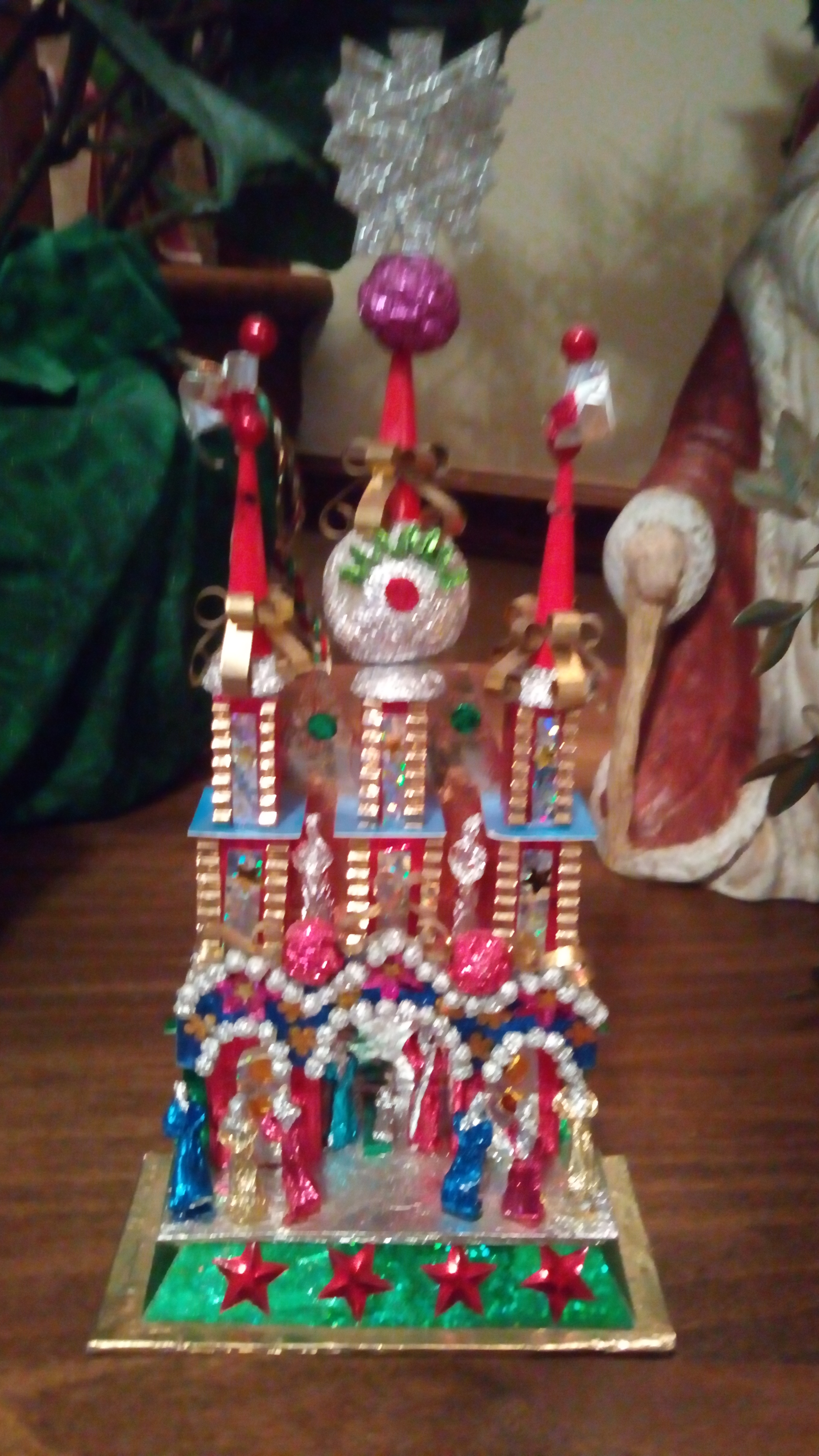
Szopki can be purchased at the museum shop and in local stories throughout Krakow. We purchased this small szopka in a Warsaw gift shop selling items made in Poland. It sits in a place of honor on a table passed down from my Polish grandparents.

IMG_20181208_170407 (1)

Krakow Szopki from past years:

images (2)

download

images (7)