The Cloth Hall in Krakow: the Sukiennice

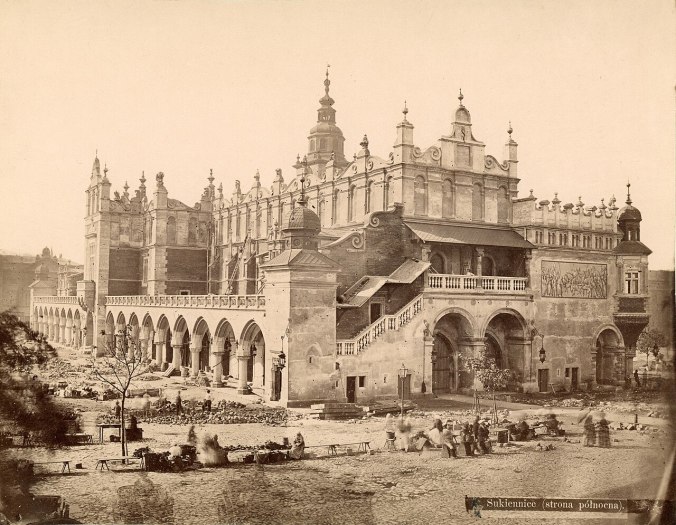
For centuries, the Cloth Hall, also known as the Sukiennice, has stood at the center of Kraków’s Rynek or main market square, welcoming merchants, students, kings, and travelers. Few buildings in Europe combine so much history, architectural beauty, and living tradition in one place. When you walk beneath its arches today, you’re experiencing a marketplace that has been operating for more than 700 years.
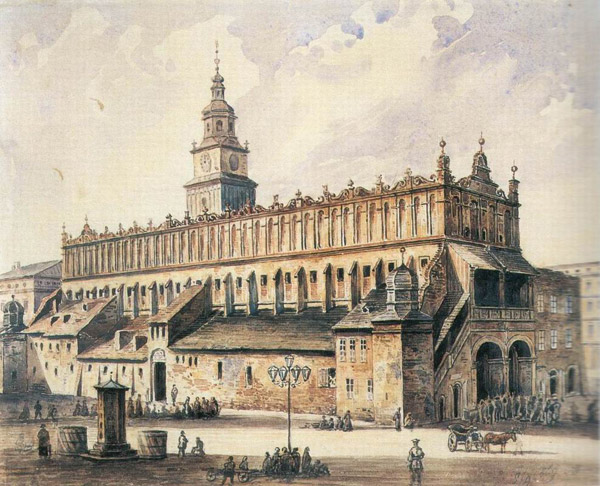
Cloth Hall is perhaps the most spectacular site in the town square, and St. Mary’s, the magnificent 800-year-old basilica, sits opposite it. The medieval town hall tower lies on the other side, providing great views and photo opportunities.

A Marketplace Born from Medieval Trade Routes
Kraków’s rise as a trading hub began early. The city sat at the crossroads of major medieval trading routes connecting Western Europe with the kingdoms of Ruthenia and the Black Sea, and the Baltic region with Hungary and the Mediterranean.

By the late 13th century, shortly after the city was rebuilt on a new grid plan under Magdeburg Law, a covered market hall stood in the center of the enormous Main Square. King Boleslaw the Bashful (1243-1279) is often credited with the design of the city square.

Merchants from England, Flanders, Germany, Italy, and the East passed through Kraków, making the town one of the major commercial stops in Central Europe. It is also believed that the counters’ exteriors provided lodging for traveling merchants.

The Gothic Hall and Medieval Trade
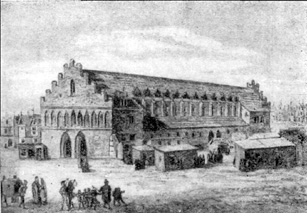
The earliest Cloth Hall was a long Gothic-style building with market stalls lining a central passageway. Here, cloth merchants sold English broadcloth, Flemish linen, and local Polish textiles. The hall also served as a customs point where city officials inspected and taxed imported goods. Sukiennice, which literally means “little cloth shops”, quickly became the economic heart of Kraków.

But it wasn’t just cloth that moved through Kraków. Records from the Middle Ages show an astonishing variety of merchandise:

  • Baltic amber
  • Hungarian copper and lead
  • Spices and leather goods from southern Europe
  • Beeswax, salt from the Wieliczka mine, and metalwork

A devastating fire in 1555 allowed Kraków to rebuild the Cloth Hall in a more elegant style. Under the influence of Italian Renaissance artists and architects working throughout Poland, the Sukiennice gained a beautifully decorated attic parapet (a low wall that runs along the edge of the roof), with carved faces and ornate details. It was also given a grander, more harmonious façade and improved interior stalls.

This Renaissance reconstruction created the iconic appearance most visitors recognize today. It also reflected the prosperity of Kraków’s Golden Age, when the city was home to the royal court, wealthy guilds, and a thriving university.

From Prosperity to Decline
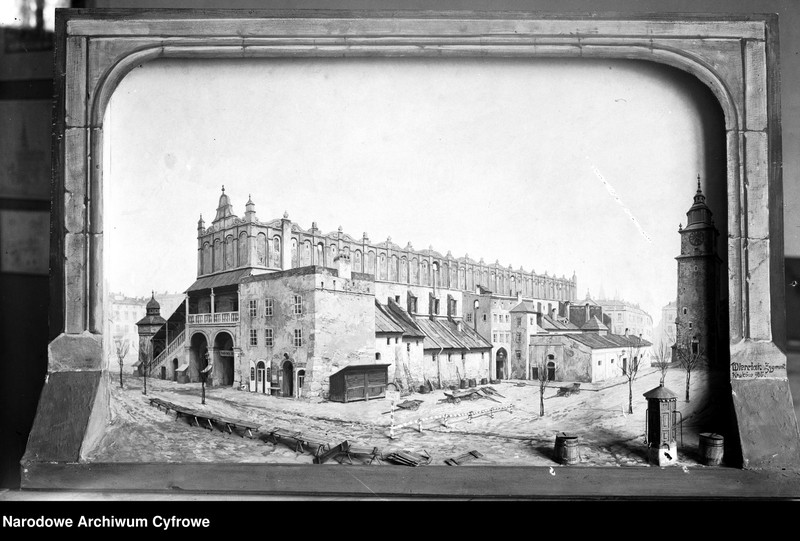
The fortunes of Kraków changed over the next few centuries. Wars, invasions, and shifts in European trade routes brought economic decline. By the 18th century, the Cloth Hall had grown shabby and outdated.

Everything changed in the 19th century. During the era of the Austrian Partition, when Poland no longer existed on the map, Kraków’s leaders set out to restore the Sukiennice as a symbol of Polish pride and cultural identity.

The Great 19th-Century Restoration

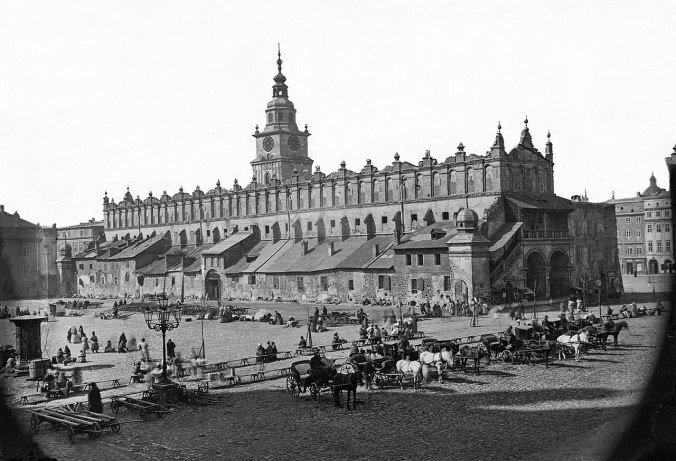
Between 1875 and 1879, Architect Tomasz Pryliński was contracted to redesign the exterior in a stylish Neo-Gothic manner. He created elegant arcades along both sides, and the interior was reorganized and repaired.

The upper floor became home to the National Museum’s Gallery of 19th-Century Polish Art, the first national museum in Poland. This transformation solidified the Cloth Hall as both a cultural institution and a marketplace.

Sukiennice Today
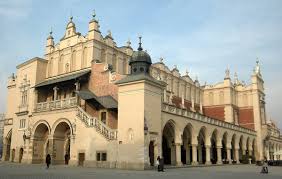
A visit to Kraków wouldn’t be complete without stepping inside the Cloth Hall. Today, it remains a vibrant working marketplace and center for art and culture. The main hall still hosts rows of stalls, many run by artisans selling Polish folk art, amber jewelry, wooden carvings, embroidered linens, and other traditional crafts. In many ways, the Cloth Hall continues the commercial traditions of the medieval merchants who once worked here.

Upstairs, the National Museum displays some of Poland’s most important 19th-century paintings. Visitors can view dramatic historical scenes, romantic landscapes, and portraits that capture the spirit of the era.

A Window Underground
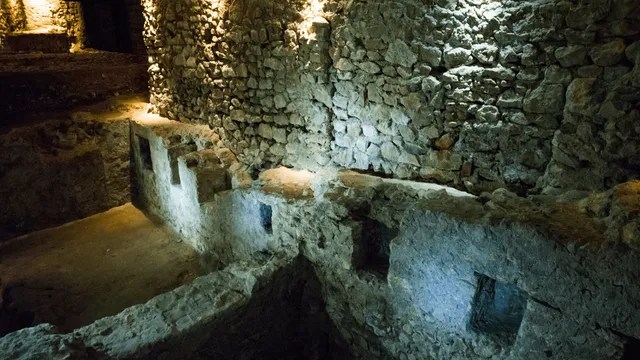
Beneath the building, the Rynek Underground Museum reveals the preserved foundations, stone roads, and merchant installations from medieval Kraków. It is one of the most fascinating archaeological museums in Europe. The entire town square was excavated from 1974 to the early 2000s.  
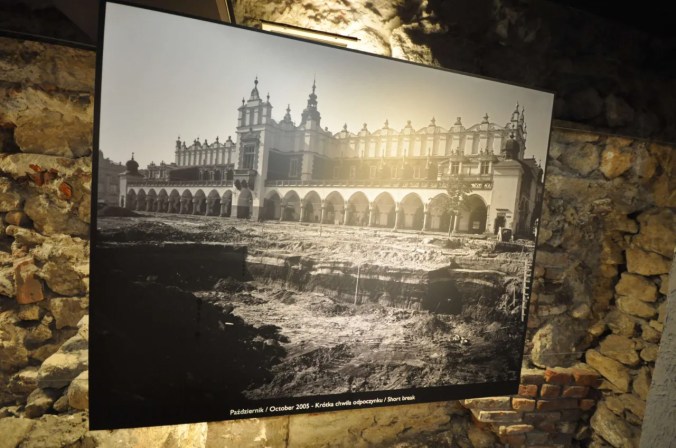
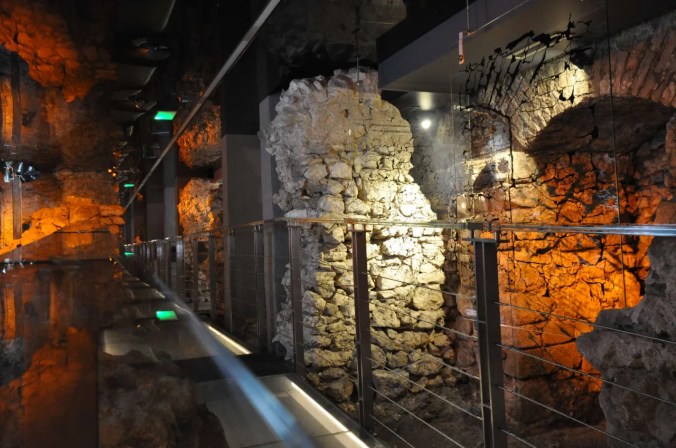
The museum lets visitors walk through 800 years of Krakow’s history in a single underground corridor, revealing how the bustling market square evolved from a modest trading post to a Renaissance hub. You can see the foundations of the medieval town hall that burned down in 1498. The archaeologists found skeletal evidence of vampire burials that are on display.
More than anything, the Sukiennice brings together the threads of Kraków’s identity, trade, culture, architecture, and community into a single, beautifully preserved building.

If you are interested in the history of the Polish people, please check out my newly released book on Amazon: Our Polish Ancestors: The Cultural History of the Polish People from the Middle Ages to WWI. https://www.amazon.com/dp/B0G2GN43RH
A Perfect Gift for those with Polish Ancestry

A perfect gift for those who love Poland or of Polish Ancestry!

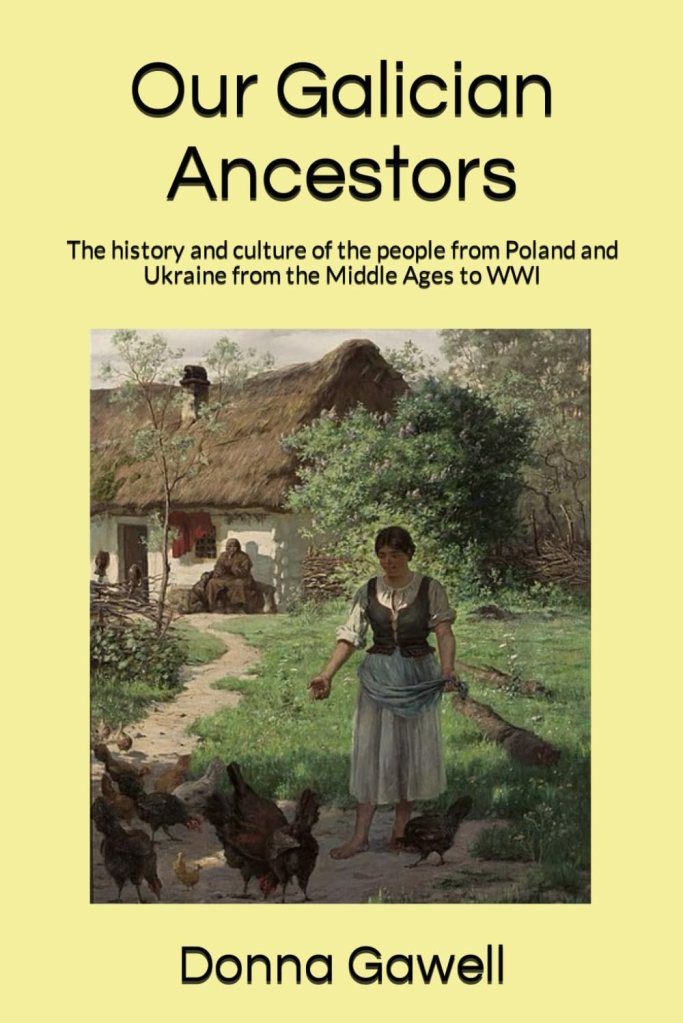
Imagine traveling back to the centuries when our Galician ancestors lived. “Our Galician Ancestors,” published in January 2024, provides fascinating information about the people who once lived in Poland and Ukraine. The book discusses their homes, dress, foods, and social customs and events through historical facts, stories, and pictures. It also explains their complex social, cultural, and political world and why many chose to immigrate.

The author’s comprehensive research and numerous trips to Polish museums, churches, and ethnographic villages allow the reader to understand all aspects of their ancestors’ lives, from the earliest inhabitants to just before World War I. Most ancestors were peasants and lived in extreme poverty and oppression but kept the spirit of independence in their hearts. The many full-color photos in this book will transport the reader to the wooden homes, churches, markets, and peasant villages typical of our ancestors.

The book is available in both paperback and eBook formats:

www.amazon.com/dp/B0CR9CQX3D
Chapters include:

  • The history of our ancestors from the earliest time to WWI.
  • Serfdom
  • Family life and children
  • Marriages and weddings
  • Life on a typical farm and the houses
  • Clothing
  • Market days
  • Education
  • Holidays and holy days
  • Superstitions and Ancient Rites
  • Sickness, epidemics, and plagues
  • Death, funerals, and cemeteries
  • Art, Music, and Literature
  • The Elite and Landowners
  • The Jews in Poland and Ukraine
  • The German Colonists in Galicia
  • What Other Europeans and Americans thought of Galicia
  • Beekeeping and Mushroom Hunting
  • Immigration to the USA and Canada
  • Visiting the land of your ancestors
  •  

The History and Use of Wax Tablets in Antiquity

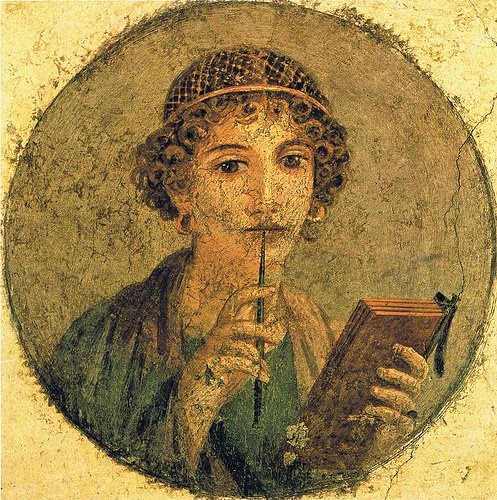
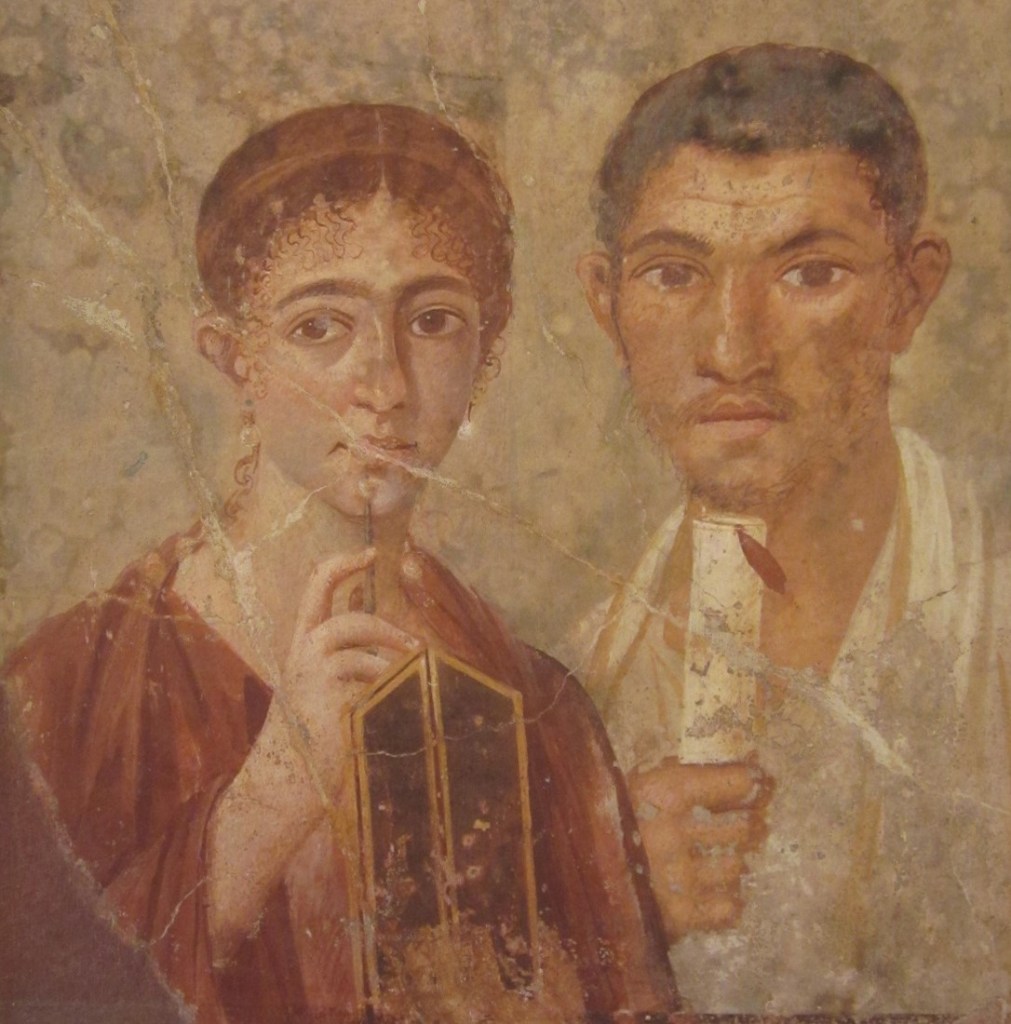
Figure 1 “A young woman from Pompeii with a wax tablet and stylus” on display at the National Archaeological Museum in Naples

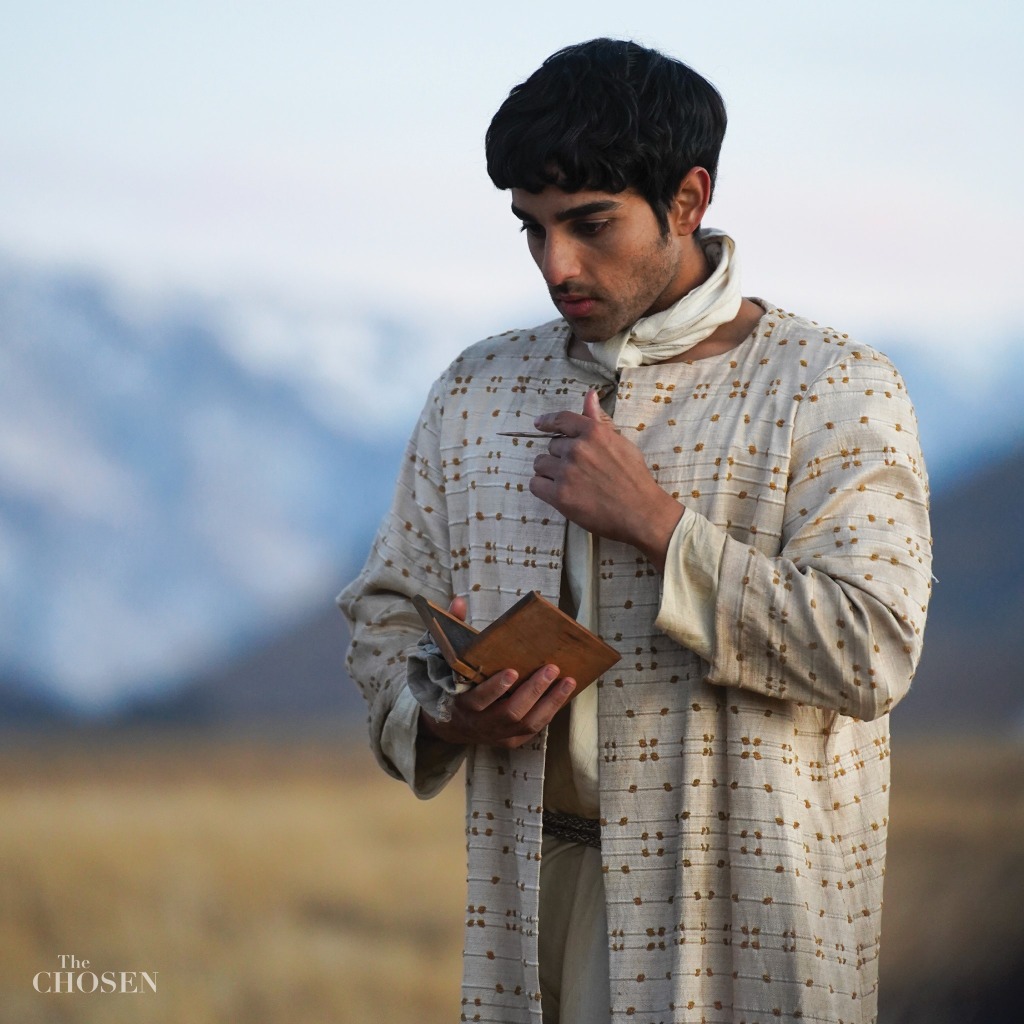
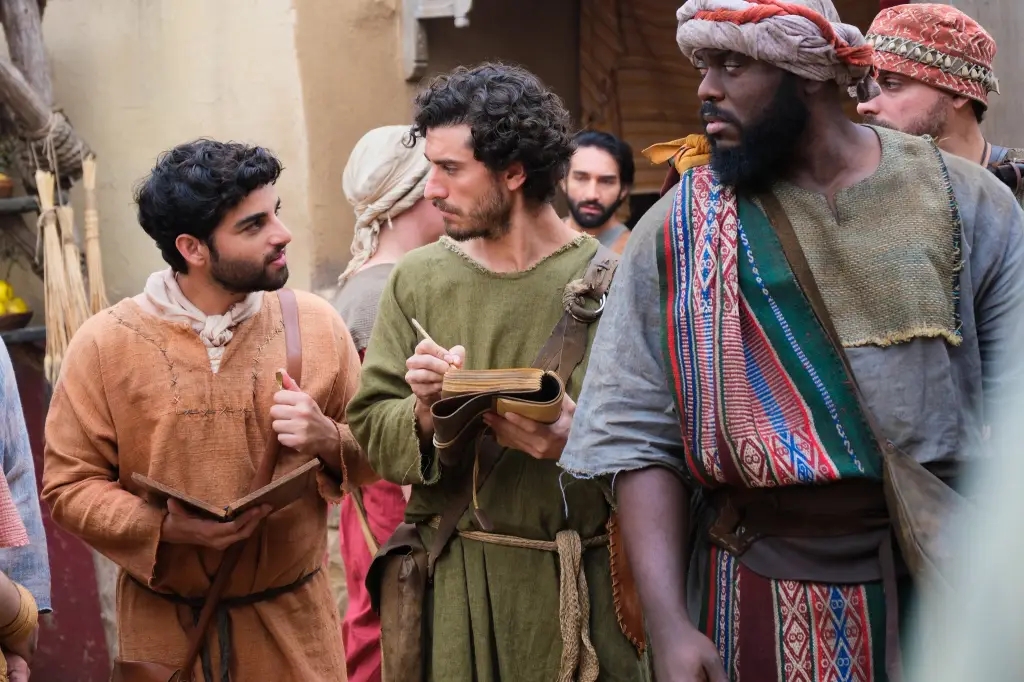
A visit to a history fair, “Days of Knights,” solved a mystery I first considered while watching the popular series The Chosen. What was that book that the character portraying Matthew carried around? The casual viewer probably assumed it was a book with parchment or papyrus, as those were the two types of “paper” used back in the ancient world. I then also remembered the seemingly endless supply of paper Jesus’ little troop of followers always seemed to have handy. I recall Rhema and Mary Magdeline making signs with paper to announce Jesus speaking to the multitudes. I shook my head, knowing that paper had to be quite a valuable and expensive item back then, considering how difficult and laborious it was to make.

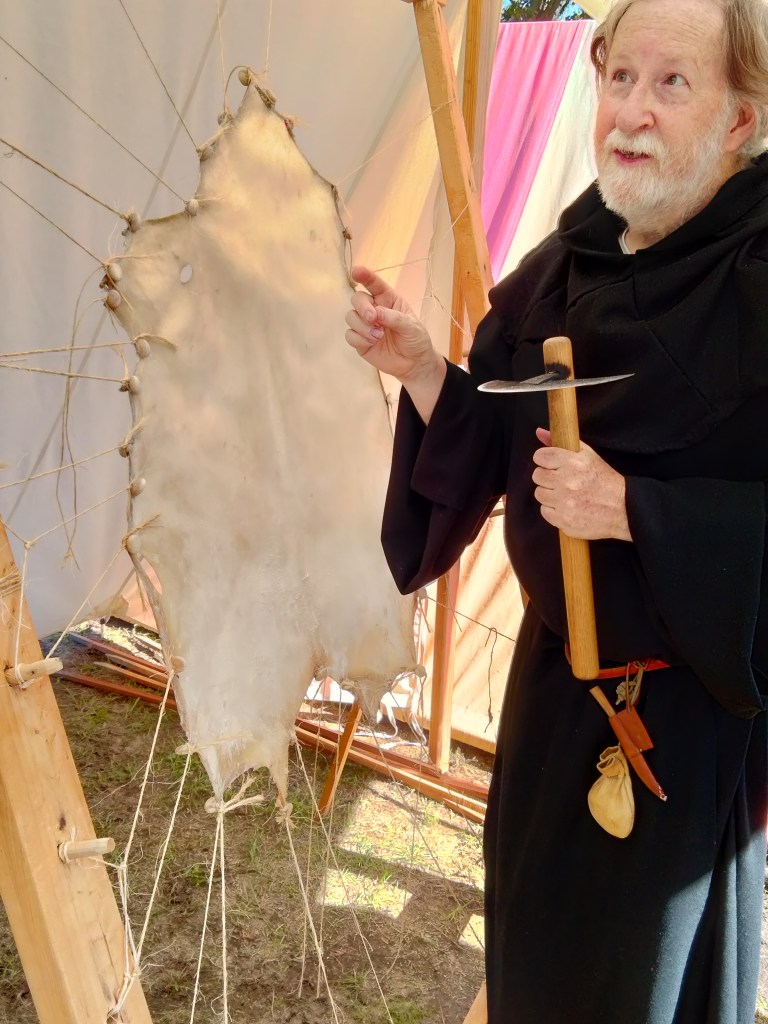
At The Days of Knights, a festival featuring various knights and soldiers from ancient Greece and Rome to the late Middle Ages, I came upon a man depicting a medieval monk. He scraped a stretched animal skin using a rounded tool to make parchment.

Figure 2 Monk at Days of Knights making parchment from an animal skin

All the knights, priests, doctors, and clergy were also fine historians and reenactors. This wasn’t like a typical Renaissance Fair, where pirates, wizards, and Lords and Ladies enchant an audience. These men and women knew their history and dressed in very authentic outfits. They mesmerized the fairgoers with their knowledge and artifacts.

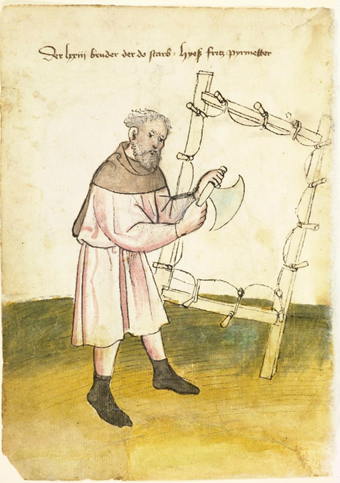
Making parchment was a tedious process involving using animal skins with the hair removed and soaking the skin in lime. The person then used the unique tool called a lunellum to remove the excess tissue from the stretched skin.

Figure 3 Brother Fritz making parchment around 1425 from the Nurenburg House Books.

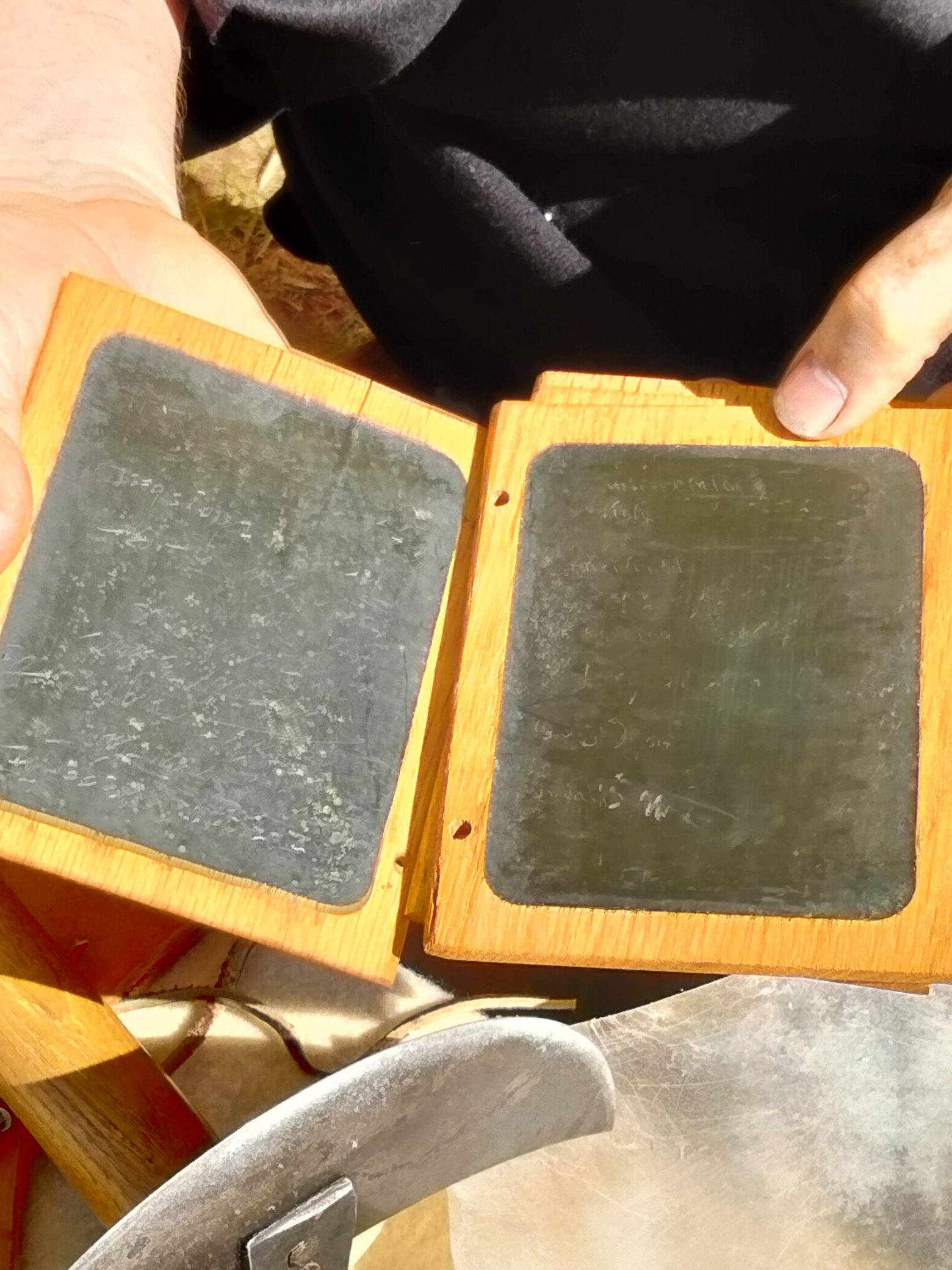
This monk also displayed a wax tablet, which was something quite new to me. These wooden or ivory cases served as mobile “tablets” that could be used for note-taking or list-making. I then thought back to Matthew in The Chosen and considered that a wax tablet would have been what the real Matthew and other disciples must have used to record simple notes for their later writing of the Gospels.

In The Chosen, Matthew appears to keep a journal of sorts in his rucksack and takes it out when something noteworthy is happening. Another photo shows John writing with some instrument in what seems to be parchment or perhaps papyrus, but what was he using to write? Surely, not a pencil, as they were invented until about. It wasn’t an ink pen or quill because he had no ink pot at the ready. Sure enough, it was obvious that Matthew was using a wax tablet, as men and women had used for centuries!

On the other hand, John appeared to be writing in a parchment or papyrus bound book, but no ink bottle was shown. I’m wondering why they chose to be authentic historians with Matthew but rather inaccurate with John.

Figure 4 A modern recreation of a waxed tablet

The earliest record of its use dates back to the 7th century B.C.E. in Italy. Wax tablets were commonly used during the Greco-Roman eras as they were cheap and reusable compared to the other writing surfaces. Beeswax was also readily available. They continued to be used until the nineteenth century. The earliest wax tablet specimen was from the Bronze Age and was found in a shipwreck off the coast of Anatolia. Leaves from two two-page writing boards were discovered in a pithos or large jar. Unfortunately, neither the wax nor the writing on the board survives.

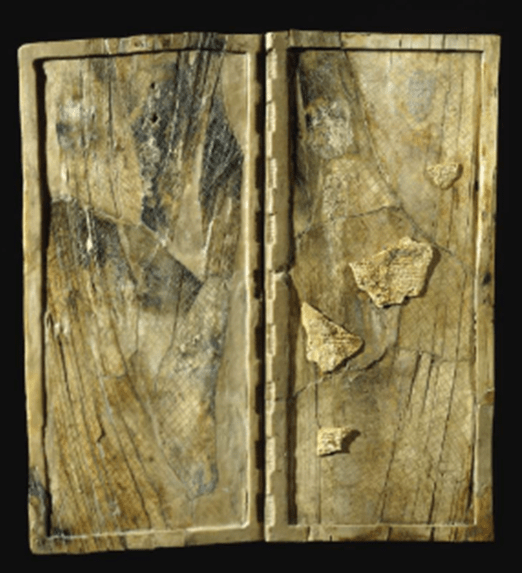
A set of ivory tablets survived from the Neo-Assyrian palace at Nimrud. One of them even has a small amount of wax surviving, and the cuneiform writing is still visible. An inscription carved into the wooden cover tells us that this was a copy of the Enuma Anu Enlil, an astrological text with lists of omens and their meanings.

Figure 5 Wax Ivory Tablet from the Palace of Nimrud housed at the British Museum.

To construct a wax tablet, a flat, rectangular block was hollowed out and filled with beeswax tempered with resin, turpentine, or linseed oil. Black was the most common color, followed by green. These darker colors were favored so the text carved on the wax could be seen more easily. The wooden blocks were then bound together with leather, parchment, or linen thongs.

A metal, bone, or wood stylus was used like a pencil with a sharp end for writing onto the wax. The other end was wide and flattened and used as an eraser. The metal and the wide, flattened end worked like an eraser. A metal stylus was the most practical as it could be heated, and its blunt end was used to smooth the wax for reuse or to erase mistakes.

An entire tablet could be erased by holding the wax close to a flame until it softened. The tablet would be turned over, and the flattened part of the stylus was used to gently smooth over the surface. The tablet would be rocked to even out the melted wax.

Wax tablets served many purposes. Art frescoes and clay tablets from ancient times show wax tablets as learning aids in the classroom (especially throughout Antiquity), a means for drafting more formal documents, and for compiling things such as library inventories. They were also used for keeping administrative records, especially financial transactions, from royal accounts to gaming tallies.

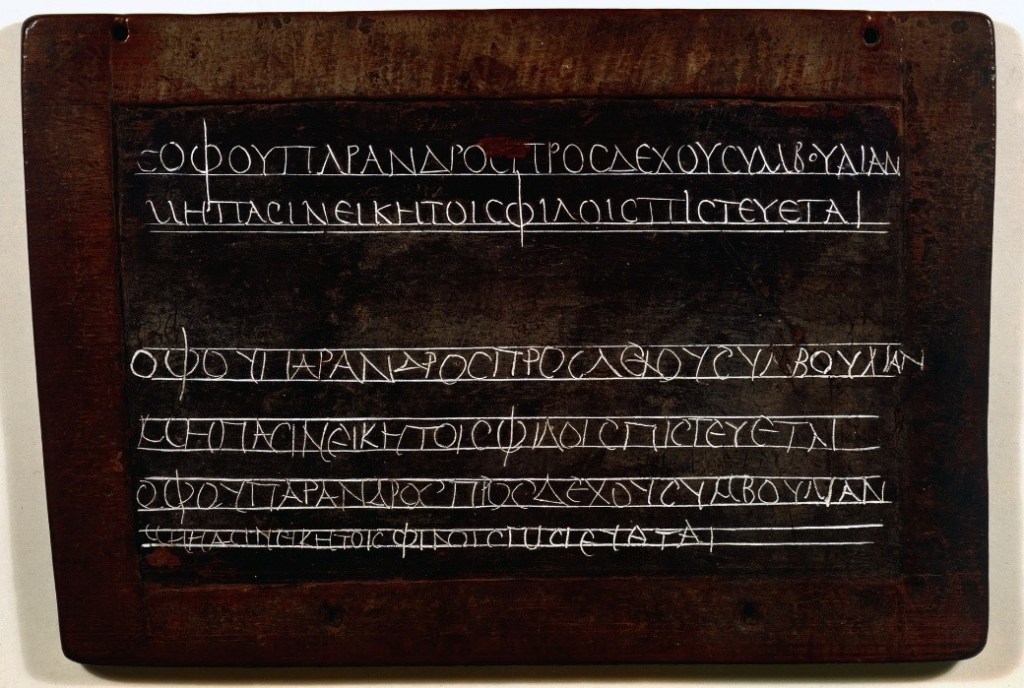
In Egypt, the dry desert climate preserves perishable materials very well. This remarkably well-preserved school exercise wax tablet shows the teacher’s first two lines and then the ones the student copied twice. Notice the student’s less neat and less accurate rewriting as he copies the sentence: Take advice from a wise man/ You should not trust all your friends.” 

From the mid-14th century, improved water-powered paper mills produced large and cheap quantities of paper, and the wax tablet and stylus disappeared completely from daily life.

Figure 6 Wax Tablet from Wikicommons, British Library

Figure 7 Terentius Neo and his wife: A young Pompeiian  woman with a stylus and wax tablet  and a man holding a rotulus from the Archaeology Museum of Naples

For Information on the Days of Knights, visit their website to find out more about their events

Exploring Galician Heritage: A Journey Through Time

Imagine traveling back to the centuries when our Polish and Ukrainian ancestors lived. “Our Galician Ancestors,” published in January 2024, provides fascinating information about the people who once lived in Poland and Ukraine. The book discusses their homes, dress, foods, and social customs and events through historical facts, stories, and pictures. It also explains their complex social, cultural, and political world and why many chose to immigrate.

The author’s comprehensive research and numerous trips to Polish museums, churches, and ethnographic villages allow the reader to understand all aspects of their ancestors’ lives, from the earliest inhabitants to just before World War I. Most ancestors were peasants and lived in extreme poverty and oppression but kept the spirit of independence in their hearts. The many full-color photos in this book will transport the reader to the wooden homes, churches, markets, and peasant villages typical of our ancestors.

The book is available in both paperback and eBook format:


Chapters include:

  • The history of our ancestors from the earliest time to WWI.
  • Serfdom
  • Family life and children
  • Marriages and weddings
  • Life on a typical farm and the houses
  • Clothing
  • Market days
  • Education
  • Holidays and holy days
  • Superstitions and Ancient Rites
  • Sickness, epidemics, and plagues
  • Death, funerals, and cemeteries
  • Art, Music, and Literature
  • The Elite and Landowners
  • The Jews in Poland and Ukraine
  • The German Colonists in Galicia
  • What Other Europeans and Americans thought of Galicia
  • Beekeeping and Mushroom Hunting
  • Immigration to the USA and Canada
  • Visiting the land of your ancestors 

Donna Gawell and Mark, her husband, are descended from Polish immigrants. Donna’s grandparents came from Niwiska, a small village in Poland, in the early 1900s. She found her Polish cousins in 2015 and has visited them several times. Mark’s grandparents came from Ukraine and the Polish villages of Lutcza, Zawoja, and Bielsk.

Please visit Donna Gawell’s website, http://www.DonnaGawell.com, for more information on Poland, World War II in Poland, and travel to Poland and other exciting destinations.

The Lives of Our Viking Ancestors in Jorvik

by Donna Gawell

Ancestry.com recently reconfigured my DNA. Finally, my record, DNA, and ethnicity match up. I should be about 25% Swedish and 25% English but Ancestry says 37% of my ethnicity is Scandanavian. How did the English part get shorted?

The answer is obvious: I am descended from those famous marauders, explorers, traders, and colonizers who transformed northern Europe between 750 and 1100. They are better known as the Vikings!

To learn more about my Viking roots in England, I visited the town of York in England which is now home to Jorvik, the Viking Center. Jorvik is on the site of the Coppergate dig, an archeological excavation by York Archaeological Trust. Part of it is a museum, but mostly Jorvik is an experience.

Visitors walk down a set of stairs, nine meters underground to where the Viking street level once was. Like in ancient middle Eastern regions, years of debris and rubbish caused the ground level to rise. The Viking village remained buried and preserved due to the waterlogged soil. The remains of two houses are protected for viewing under a glass floor. Time cars then transport visitors around a detailed reconstruction of the city in the year AD 960 based on the evidence found in the dig.

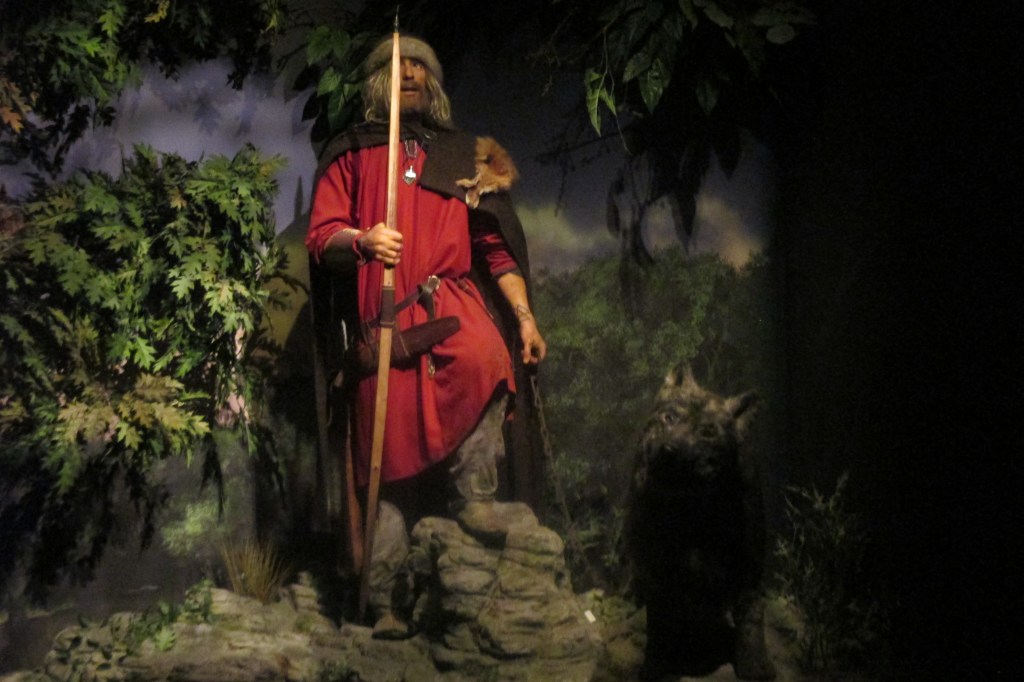
Visitors are greeted by a Viking chieftain. Note the vibrant red color of his clothing. The Vikings were skilled at dyeing fabric.

The first Vikings to arrive in England came from Scandanavia. Their mastery of shipbuilding was the key to their success with vessels shallow enough to navigate rivers and estuaries, yet strong and flexible enough to cross the open sea. They launched surprise summertime attacks on coastal and riverside settlements and could escape quickly with their plunder.

York was a busy and populated trading center. It was formerly the capital of the independent Anglo-Saxon kingdom of Northumbria and was captured by a Viking army in AD 866. Under Viking rule, competing kings ruled until 927 when a new kingdom emerged: England. Eric Bloodaxe, the last independent Viking ruler of Northumbria was expelled in 954.

The English kings delegated control of the city to local earls and made sure York’s archbishop was friendly to their cause. Archbishop Oscytel, himself a man with Viking blood, was a useful agent to promote loyalty among those with Viking heritage.

In AD 960, the people of York lived in relative peace and prosperity and produce goods for import and domestic use. Some traveled from overseas to work and live in the city.

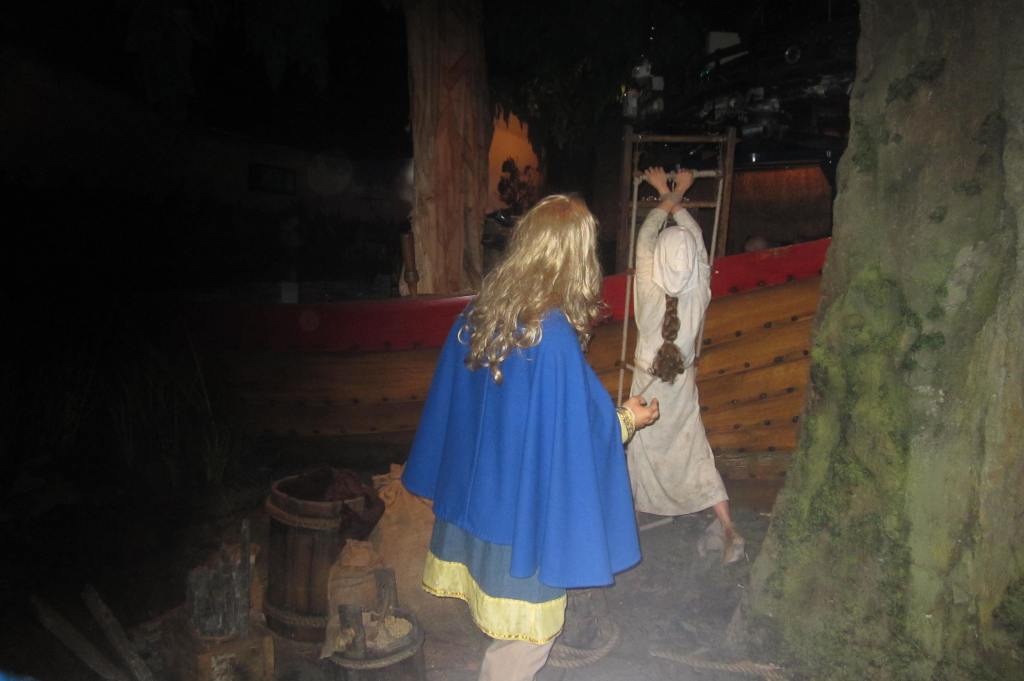
Those captured in raids or warfare were destined to be sold into slavery. Here, a troublesome Irish woman, captured in a Viking trade, is being punished by her capturer. Ireland suffered many large-scale raids aimed at carrying off many slaves. Fetters and shackles, together with tools for heavy labor were found at this site.

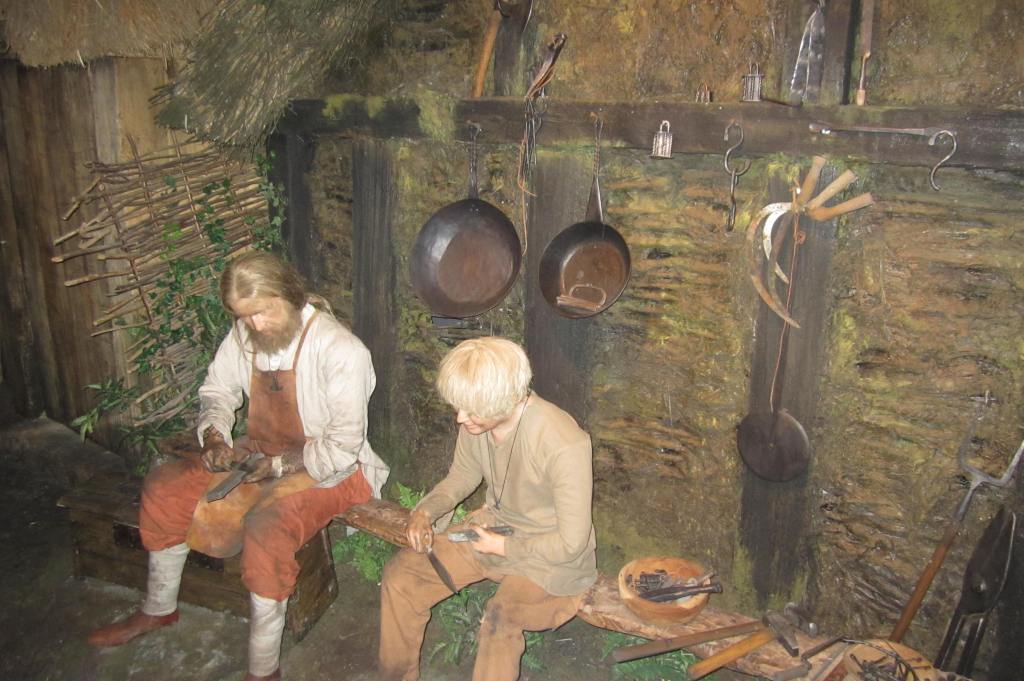
This recreation of a blacksmith’s house shows the older style of building with walls of wattle and daub. It has one story, with a clay floor, and a small, rectangular hearth.

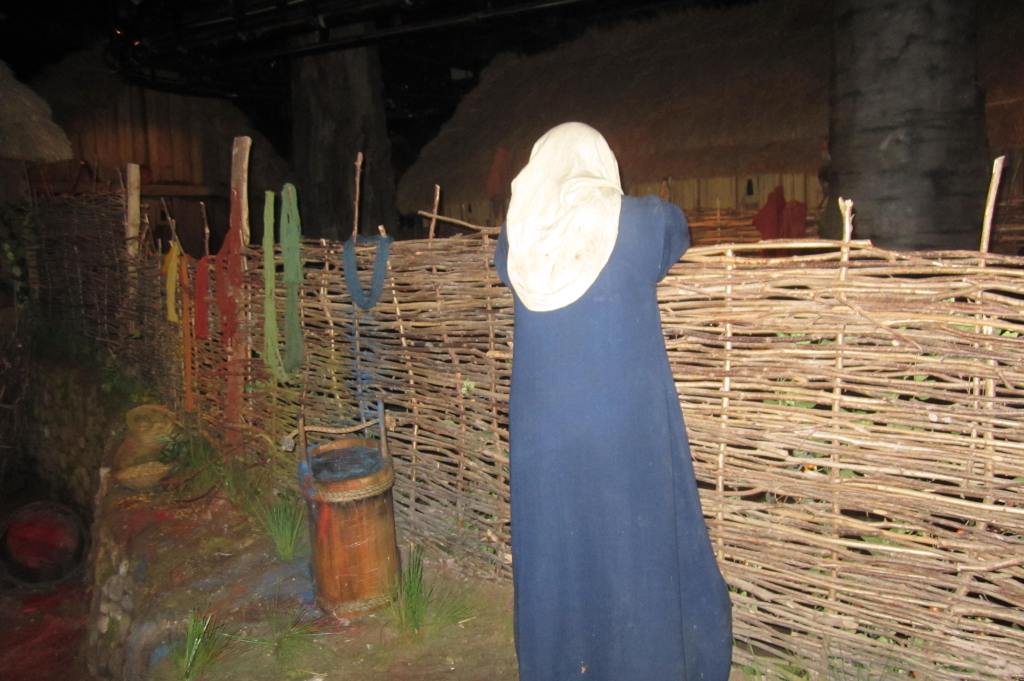
This Viking woman has been treating wool with dyestuffs.

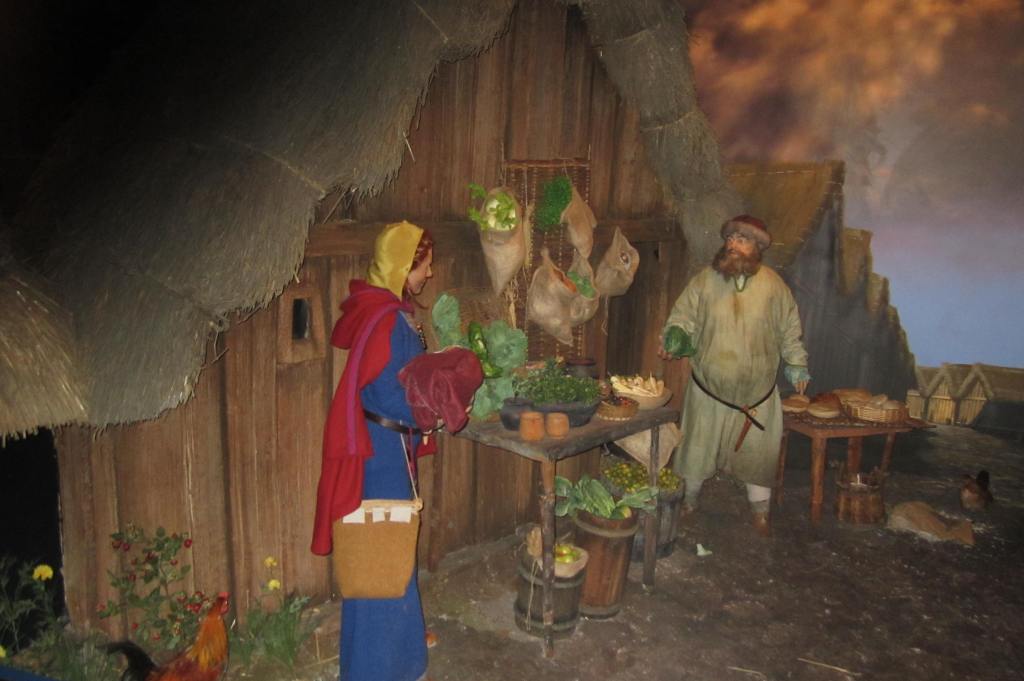
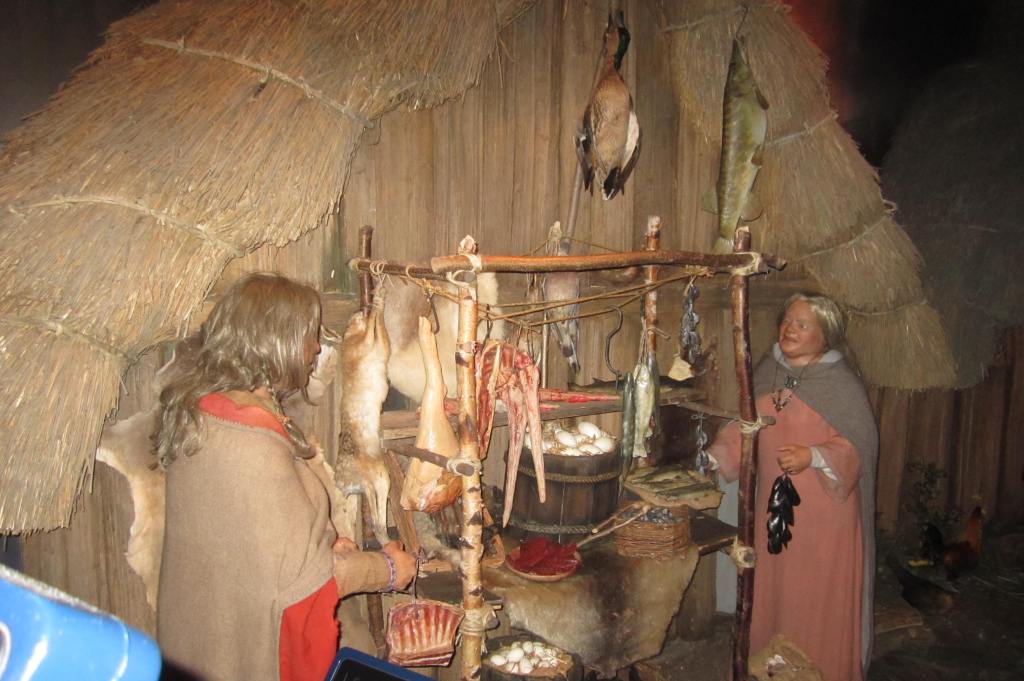
Here, a local woman carrying her baby seeks to purchase fresh vegetables. As the Vikings traveled, they adapted aspects of the cultures they encountered.

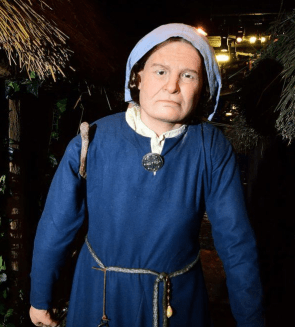
Jorvik’s Viking characters are given personalities and backstories. This is Leoba, a native Norwegian and respected member of her community. She has a severe hip problem and uses a crutch as she struggles through the market. She, like some others, can speak several languages.

The skeletal remains of some of these ancient people like Leoba were examined during the archaeological process. One man named Mord, who the site introduces as a leatherworker, had painfully clawed hands due to suffering from “Viking Disease”. Now known as Dupuytren’s contracture, this hand deformity occurs when the tissue under the palm of the hand begins to knot. This problem causes the fingers to become bent.

Christianity struggled as the Vikings held onto their heroes or monsters of pagan mythology alongside their new religion. Residents of Yorvik offered prayers at sacred wells, stones, or trees and sacrificed animals to unclean spirits. The photo below shows a pagan priest practicing white or black magic. Pre-Christian stories were discovered in York, including the story of Sigurðr the dragon-slayer. This legend was found on a grave slab in the Viking age cemetery excavated below York Minster and was previously passed on through oral storytelling.

Skalds composed poems in praise of their patrons. More than 5,500 skaldic verses have survived and are preserved in more than 700 manuscripts. One medieval saga preserves a single example of a poem composed in York for a performance a the court of King Eric Bloodaxe. Some of these performances may have been set to music with panpipes, flutes made of bird bones, bagpipes, or a lyre.

The Voluspa is an Old Norse poem describing the creation of the word and its coming destruction at an event known as Ragnarok. It is said this poem was first spoken by a volva, shaman, or prophetess to the god Odin.

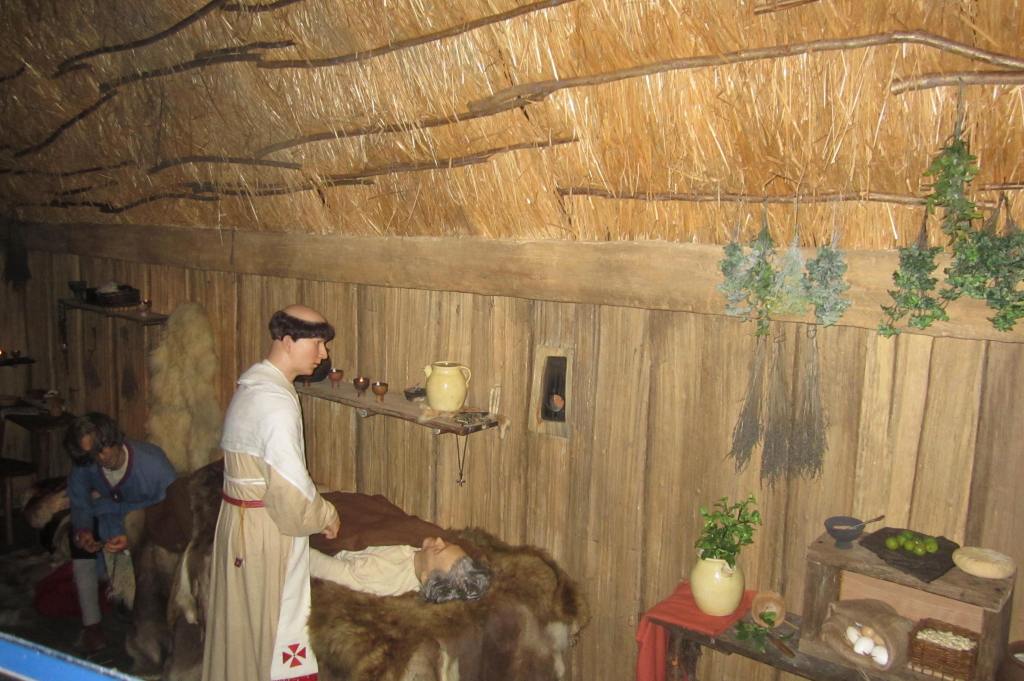
This photo shows a Christian priest offering last rights to a dying woman. She would be expected to confess any idolatry if she wished to be absolved of her sins.

Based on the archaeology and historical documents, Christianity came to Jorvik earlier than first suspected. Some of York’s Anglo-Saxon churches vanished from the historical record during the Viking period. York Minister, established in AD 627, seems to have declined during the Viking period. However, several Viking rulers, from Guthfrith to Sweyn Forkbeard, who died in AD 1014, are buried in York Minster.
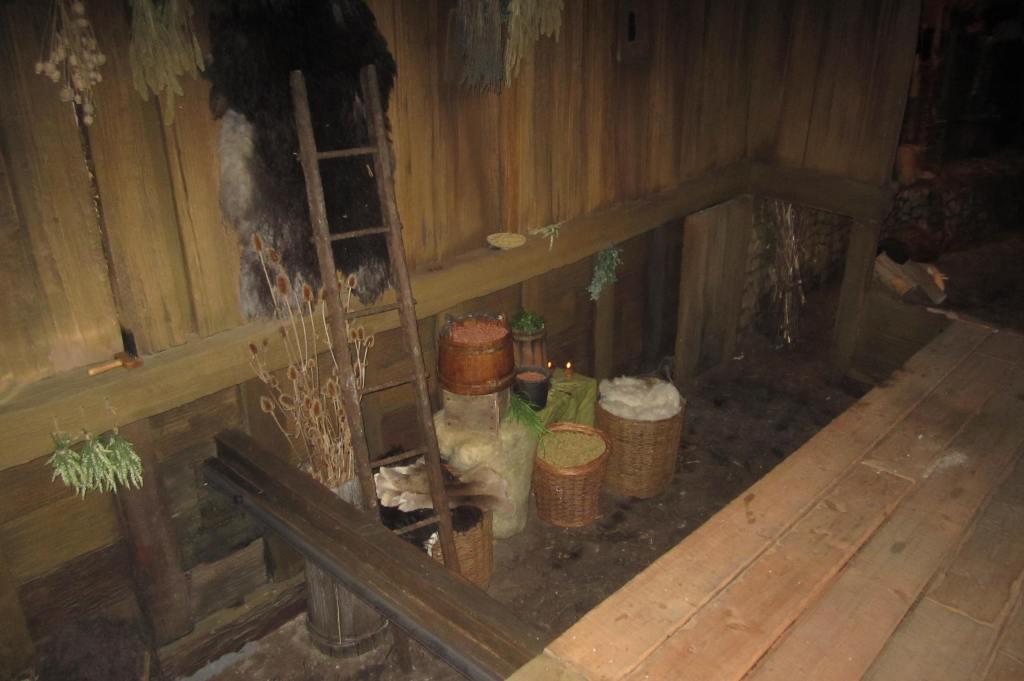
Some homes eventually were built with cellars for food storage.
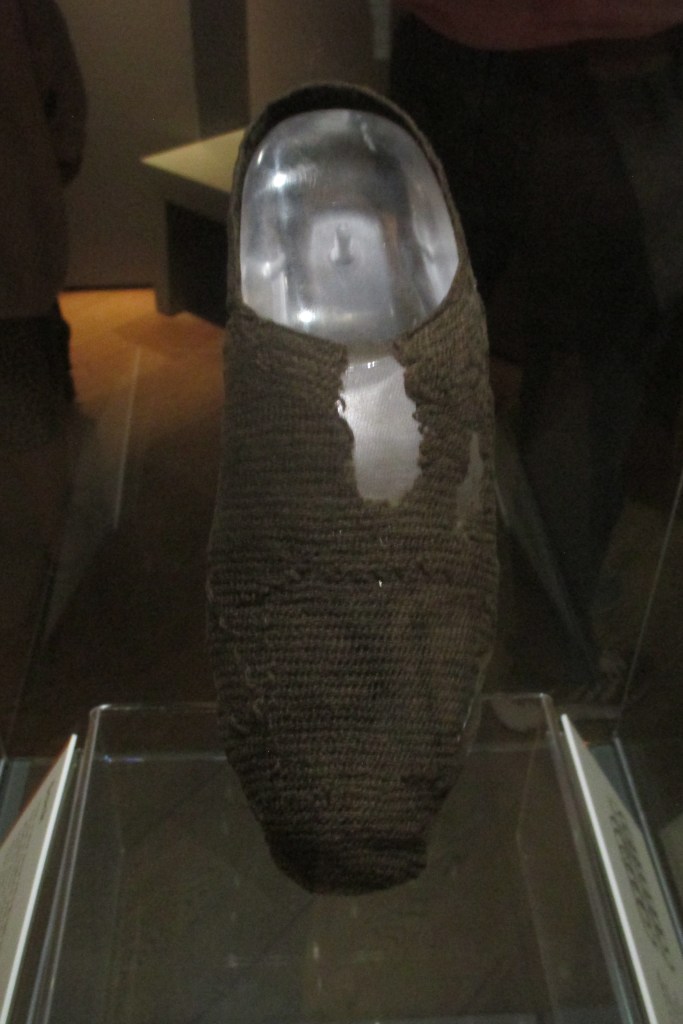
Shoes that are 1,000 years old!
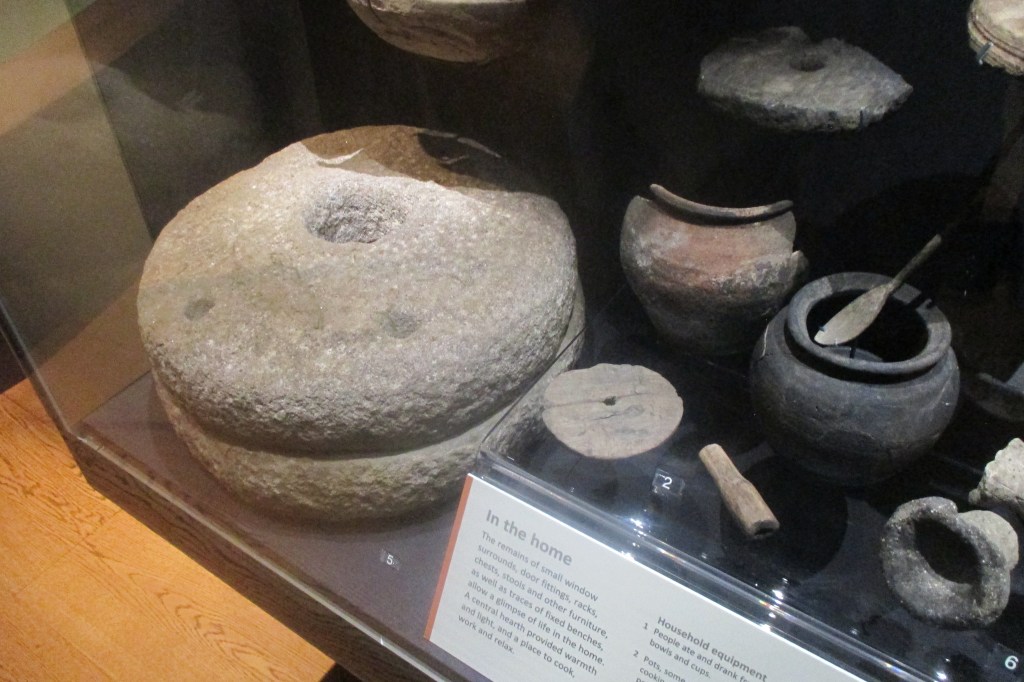
A quern or stone used to grind wheat and grains.
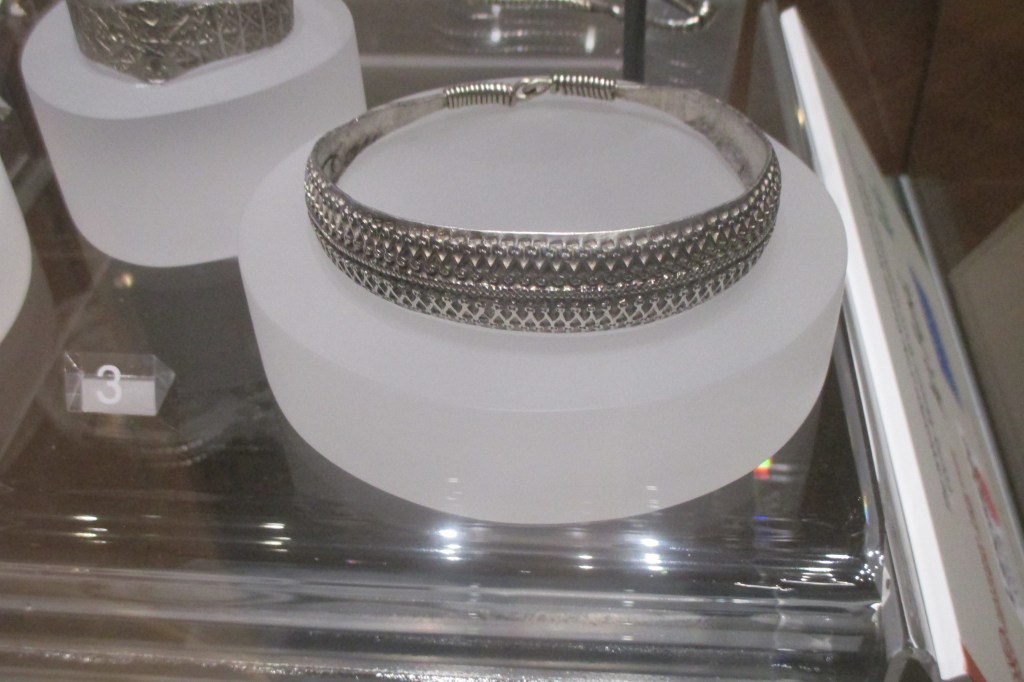
A silver necklace found at the site. Silver was the most used precious metal.

A variety of combs were found in the archaeological site.

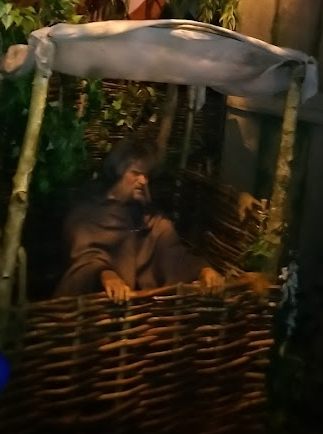
You might not guess what this man is up to, but this is a recreation of a latrine. He appears to be in some distress. I was surprised this scene seemed to be a favorite on the gift shop items.

Jorvik is a wonderful experience for those who seek a more complete understanding of English history. It is open seven days a week and staffed by informative and friendly historical interpreters.

York can be easily reached by a two-hour train ride from London’s Kings Cross station. The city of York is distinctive because it is one of the few cities wise enough to resist tearing down its ancient town walls for the railroads during the Industrial Revolution. The train station is located just outside the town walls.